
IN CONTEXT: President Marcos has said he wants the Philippines to move away from coal. But by 2030, the country’s coal demand is estimated to rise by at least 15 percent. That is not moving away – that is walking deeper into the coal trap the Philippines created for itself.
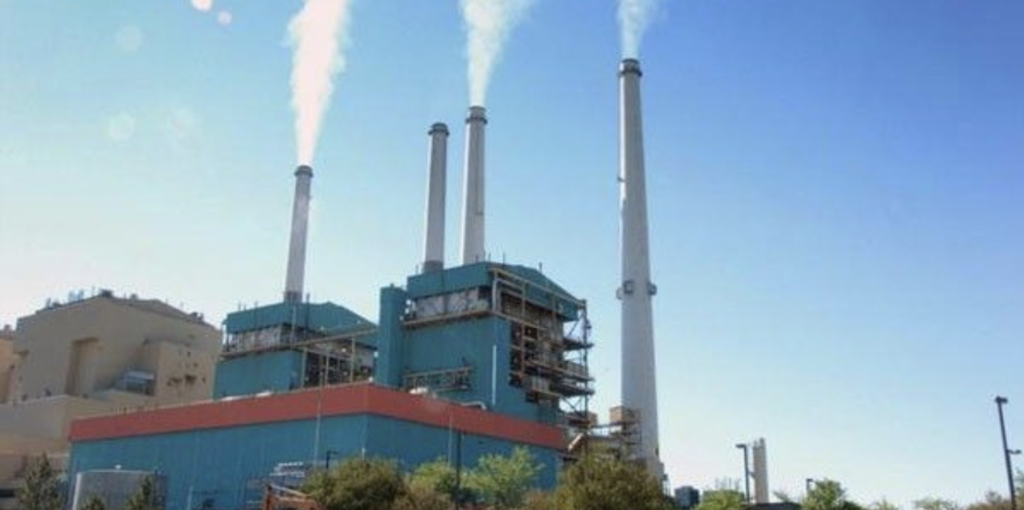
THE announcement came almost as an aside. President Ferdinand Marcos Jr., visiting a school construction site in Mariveles, Bataan last week, told reporters the Philippines would reopen coal imports to keep the lights on as Middle East conflict drives up oil prices. It was framed as a practical, temporary fix.
A closer look at the numbers, the science, and the lives of millions of Filipinos living under coal’s shadow tells a different story.
The Philippines didn’t stumble into coal dependency — it drove into the trap that it created for itself.
Department of Energy data shows coal imports rose from 28.8 million metric tons in 2020 to nearly 40 million in 2024. Coal now accounts for 40.6 percent of total installed power capacity. Energy think tank Ember ranks the Philippines as the most coal-dependent grid in Southeast Asia — surpassing even Indonesia, the country from which it buys 98 percent of its imported coal.
That detail matters. Every time there is a supply shock anywhere in the region, Filipino electricity rates feel it. The Middle East conflict Marcos cited has nothing to do with coal supply. But the country’s grid is already so exposed to global commodity swings that a crisis thousands of miles away is enough to rattle it. The International Energy Agency projected Philippine coal demand will rise another 15 percent to 54 million metric tons by 2030. This is not a transition. It is an entrenchment.
The Reliability Myth
Marcos argues coal is indispensable because it’s cheap and stable. The data says otherwise.
According to the Institute for Climate and Sustainable Cities, recent power shortages and grid alerts have largely been caused not by intermittent renewables but by coal plant breakdowns. The Institute for Energy Economics and Financial Analysis (IEEFA) found that in the first quarter of 2025, eight coal plants with a combined 1.4-gigawatt capacity were offline for more than 30 days each. When those units fail, the grid scrambles to diesel generators — which cost more and pollute more.
Current coal capacity already exceeds the country’s demand, ICSC says. Overcapacity drives up consumer rates through take-or-pay contract obligations. The IEEFA has noted that Filipino households already pay the highest electricity rates in Southeast Asia. Coal hasn’t fixed that problem. It has deepened it.
What Coal Costs in Lives
For communities near coal plants in Bataan, Cebu, and Mindanao, this is not an abstract policy debate.
Research by the Centre for Research on Energy and Clean Air estimated existing coal capacity caused 630 air-pollution-related deaths in 2019 alone. Without stronger emissions standards, the projected 10-year toll is 7,000 premature deaths and $2 billion in economic damage. A broader Greenpeace Philippines study put annual deaths from fossil fuel air pollution at 27,000 — costing up to 1.9 percent of GDP yearly.
Philippine emission standards for coal plants haven’t been updated since 1999 and are nearly triple those of neighboring Indonesia. The country has only 55 government-owned air quality monitors nationwide. “Our community should not be collateral damage just so other regions can have electricity,” environmental campaigner Derek Cabe told Dialogue Earth.
The Philippines is among the world’s most climate-vulnerable nations and among the least responsible for the emissions that caused the crisis. Typhoons are intensifying. Sea levels are rising. The OECD projects GDP losses could reach 20 percent by 2070 under high-emissions scenarios. Yet coal is responsible for 89 percent of the power sector’s emissions, according to Climate Action Tracker, a sector that has more than doubled its CO2 output since 2012.
Alternative But with a Serious Catch
The Middle East crisis Marcos cited is real. Oil price shocks ripple through shipping, inflation, and food supply chains in a country that imports both fuel and large portions of its food. But coal imports don’t solve that problem — they deepen the import dependency that created it.
The cleaner alternative is already gaining ground on its own. Renewables drove a 5.2 percent drop in coal generation in the first half of 2025 — on track for the country’s first annual coal decline in decades. In 2024, the Philippines added a record 794 megawatts of new renewable capacity, surpassing the combined total installed in the previous three years. The renewable project pipeline is already 12 times larger than current installed capacity. The constraint isn’t investment or technology. It’s permitting speed and grid infrastructure.
But here is where the picture complicates. Joan Carling, an Igorot activist from the Cordillera and executive director of Indigenous Peoples Rights International, supports moving away from coal and says the transition needs to happen fast. Her warning, however, is pointed: the rush to renewables is replicating the same patterns of dispossession that coal and mining imposed on indigenous communities for generations.
More than 60 percent of known critical minerals — needed for batteries and clean energy infrastructure — sit in or near indigenous territories globally. Solar and wind farms are land-intensive, and in the Philippines those lands are often ancestral domains. “If we do it fast by ignoring and violating the rights of Indigenous peoples, we will not be able to address the climate crisis effectively,” Carling has said. She calls the current pattern “green colonialism in the name of climate action.”
IPRI has documented 459 allegations of human rights violations in Asia since 2021, with 24 cases directly tied to clean energy projects affecting an estimated 97,000 individuals. In December 2020, the Tumandok people’s opposition to the Jalaur River dam on Panay island was met with a military operation that killed nine indigenous leaders and arrested at least 16 others. “We host dams, geothermal plants, and windmills, but we don’t even get electricity,” Carling has said. “The power is used for industries and businesses, not for our communities.”
Her demand is not that renewables stop. It is that free, prior, and informed consent must be a non-negotiable condition — not a bureaucratic checkbox — for every project that touches ancestral land. Without that, she argues, the transition simply swaps one injustice for another.
Who Pays
Filipinos are already paying — in electricity bills that are the highest in Southeast Asia, in respiratory illness rates among the worst in the world, in typhoon damage that grows year by year. Indigenous communities pay in threatened ancestral lands, squeezed between coal mining on one side and renewable projects imposed without consent on the other.
“We are trying to move away from coal,” Marcos said, standing in Bataan where a coal plant hums nearby. The sincerity isn’t in question. What is in question is whether trying is enough — and whether reaching for coal every time a crisis hits is a policy, or just a habit the country can no longer afford. (Rights Report Philippines)