The Philippines already carries a “Repressed” rating from the CIVICUS monitor, the second worst designation a country can receive.
THE PHILIPPINES has been added to an international human rights watchlist, with a leading global monitor citing a pattern of arrests, violence against protesters, and the use of anti-terror laws to silence critics — deepening concerns about the state of civil liberties under President Ferdinand Marcos Jr.
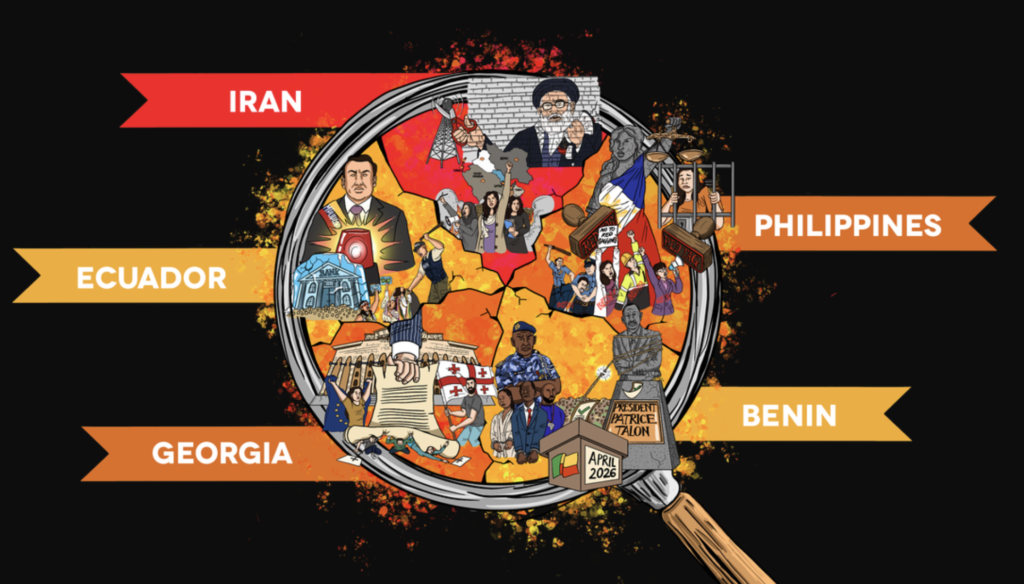
The CIVICUS Monitor, which tracks civic freedoms across 198 countries and territories, announced Wednesday that the Philippines joins Benin, Ecuador, Iran and Georgia on its latest watchlist, countries identified as experiencing a rapid and recent deterioration in the rights to free expression, peaceful assembly, and association.
The Philippines already carries a “Repressed” rating from the monitor, the second worst designation a country can receive. That label signals that people who speak out against those in power face real risks: surveillance, harassment, imprisonment, and in some cases, physical harm.
“There is a deeply troubling pattern of state actions against protests that is restricting the democratic space and stifling fundamental freedoms,” said Josef Benedict, CIVICUS Monitor’s Asia researcher. “It is creating a chilling effect for many in the Philippines who seek to speak out and organize.”
The announcement comes nearly four years into Marcos’s presidency, and lands as civil society groups say the government has steadily escalated its use of the courts and law enforcement to go after dissidents rather than engage with them.
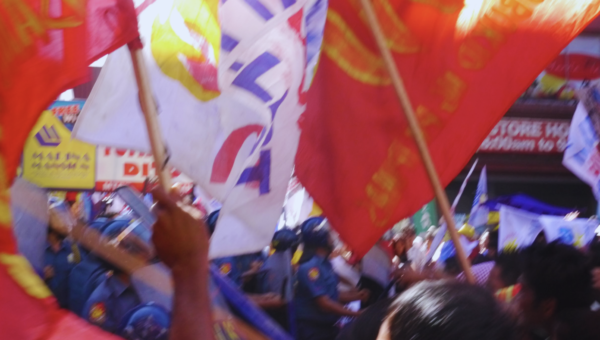
One of the incidents cited by the monitor took place in September 2025, when police broke up anti-corruption demonstrations with what observers described as widespread and excessive force. More than 200 people were detained, including 91 children. Many of those held were denied access to lawyers or family members. Protesters described being beaten and physically abused during the crackdown — treatment that human rights groups say may rise to the level of torture.
Weeks later, in November 2025, the Department of Justice filed criminal charges against 97 of the protesters. Those charges included sedition and incitement to sedition, with some counts brought under the Cybercrime Prevention Act of 2012. Subpoenas were served on prominent activist figures including Renato Reyes Jr. of the alliance BAYAN, as well as student leaders. Civil society groups called it judicial harassment designed to exhaust and intimidate organizers.
Then on Feb. 25, 2026 — the 40th anniversary of the People Power Revolution that toppled Ferdinand Marcos Sr. — police arrested human rights defenders Edel Parducho and Three Odeña during a commemorative march. The symbolism was not lost on observers.
The crackdown has not been limited to street demonstrations. Anti-mining protesters in Nueva Vizcaya and farmers involved in long-running land disputes in Laguna were also arrested this year, according to CIVICUS. In November 2025, human rights defenders working in communities hit by Typhoons Tino and Uwan in Negros Occidental and Cagayan Valley — regions still recovering from back-to-back storms — were arrested or attacked.
Authorities have also leaned heavily on terrorism-financing charges, which human rights groups have long argued are being fabricated to neutralize community organizers. Among those detained in December 2025 were activist Carmilo Tabada, formerly with the farmer’s group FARDEC, and Michael Cabangon, a Cordillera-based labor leader and cultural worker.
Red-tagging — the practice of publicly labeling individuals or groups as communist sympathizers or terrorists — remains widespread. In December 2025, retired Army Gen. Antonio Parlade Jr. publicly vilified environmental lawyer Antonio La Viña on social media, accusing him of communist sympathies after La Viña defended activist lawmakers in court. Separately, in February 2026, seven labor organizers in the Bicol region were publicly named and targeted in what activists described as an attempt to isolate them from their communities.
Perhaps the starkest case involves Frenchie Mae Cumpio, a community journalist from the Eastern Visayas who was convicted on Jan. 22, 2026, on terrorism-financing charges and sentenced to between 12 and 18 years in prison. Cumpio, 27, had been held in pre-trial detention since her arrest in February 2020 — nearly six years before the verdict. Convicted alongside her was Marielle Domequil, a lay worker with the Rural Missionaries of the Philippines who was arrested in the same 2020 raid. A regional trial court denied both women bail on Feb. 13, drawing sharp criticism from press freedom advocates worldwide.
“During a period when public accountability is urgently needed, authorities are choosing to use restrictive laws to criminalize activists and journalists rather than address legitimate public concerns,” Benedict said. “The international community must not remain silent.”
CIVICUS is calling on foreign governments and international bodies to pressure Manila to uphold its obligations under international human rights law, and to drop what it describes as politically motivated charges against activists and members of the press. (Rights Report Philippines)