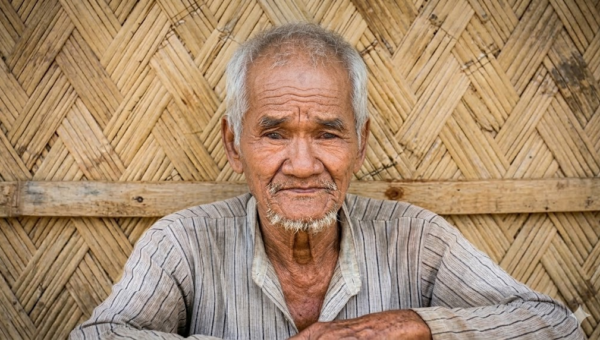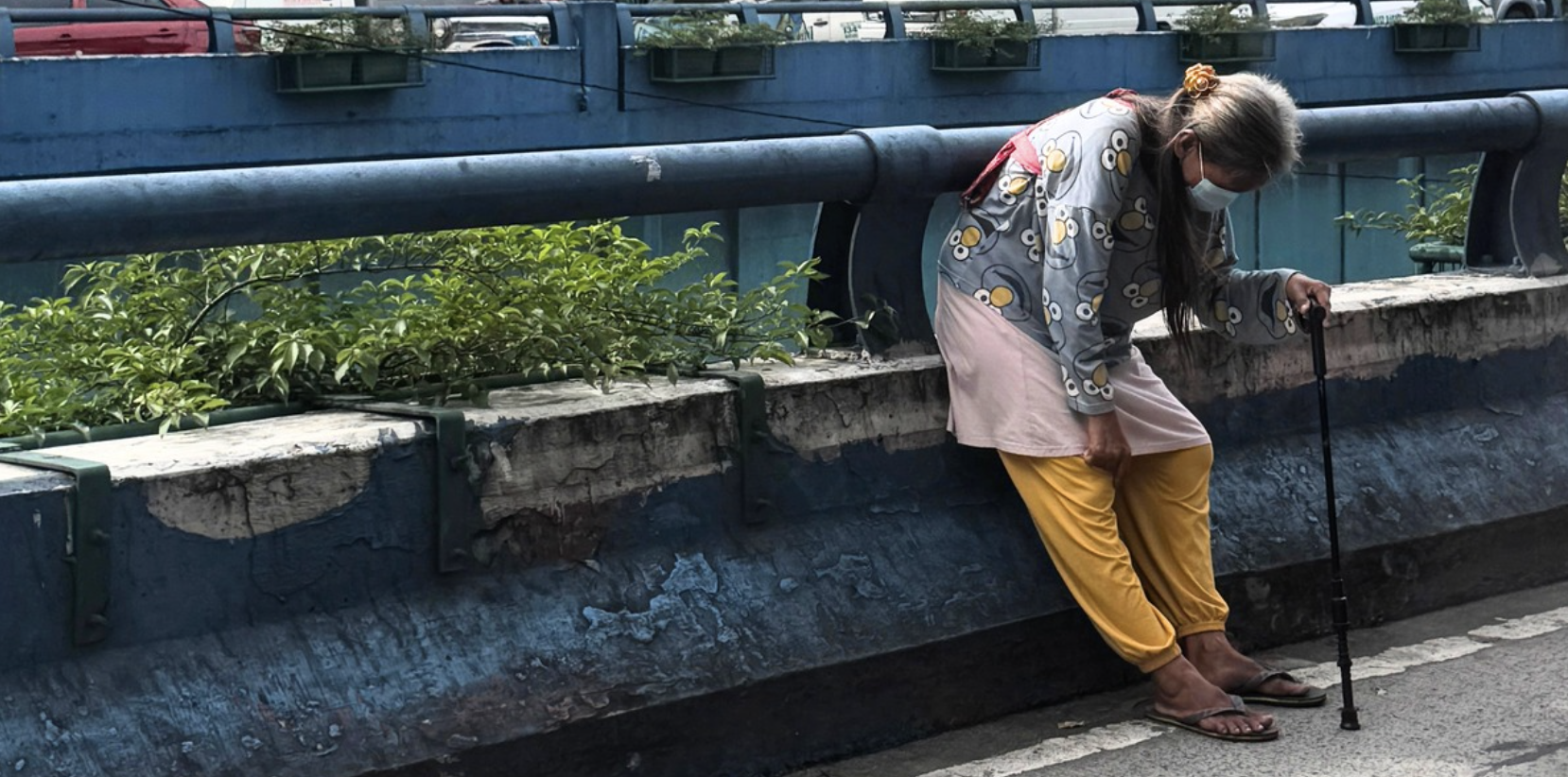

THE numbers the Philippine government uses to measure elderly poverty may be leaving out the worst of it.
That is a central finding of a working paper published in July 2025 by the Asian Development Bank — one of the most detailed economic examinations of older Filipinos produced to date. Drawing on multiple data sources, including the Family Income and Expenditure Survey, the Demographic and Health Survey, and a 2020 ADB Institute household survey, the paper paints a grim portrait of elderly poverty.
It adds hard data to findings that a study by University of the Philippines researchers — the Healthy Aging Program for Pinoy, or HAPPY Senior Citizens study, published in the journal AIMS Public Health — had already flagged: that more than half of elderly Filipinos depend on their families for money, that malnutrition and chronic illness are happening simultaneously within the same elderly population, and that the country is aging faster than its systems can handle.
The ADB paper follows the money. What it finds is unsettling.
The Remittance Trap
When people talk about elderly Filipinos depending on family, they usually picture an adult child living nearby, helping out with bills. The ADB study complicates that picture.
For many older Filipinos who live alone, the biggest source of income is not a pension or savings. It is money sent home by a family member working abroad. Among older women living alone, remittances make up 39.5% of all income — their single largest source of financial support. For older men living alone the share is lower but still significant, and for older couples remittances are a major income stream alongside pension payments.
The problem is that remittances are inherently fragile. They depend on a family member overseas staying employed, staying healthy, and continuing to send money. A job loss, a health crisis, a family falling-out, or a policy change in a host country can cut that income off entirely. Unlike a pension — even a small one — remittances have no legal protection, no guarantee, and no continuity. For hundreds of thousands of older Filipinos, that is the floor beneath their feet.
The Philippines is one of the largest sources of overseas labor in Asia, and it has for decades built an informal reliance on the money those workers send home. For elderly Filipinos, this means the retirement system, in practice, is not the Social Security System or PhilHealth — it is the hope that a son or daughter working in Saudi Arabia or Hong Kong or Toronto keeps sending money home. Until they can’t.
The Older You Get, the Poorer You Become
Government poverty data tend to treat “the elderly” as a single group. The ADB study pulls that apart — and the picture it reveals is a steep, largely invisible slide: the older you are, the worse your odds.
Among Filipinos aged 60 to 64, the extreme poverty rate is 4.4%. That is already worth worrying about in a country that has laws on the books to protect its elderly. But among those 75 and older, extreme poverty climbs to 8.1%, and moderate poverty — living on between $2.15 and $3.65 a day — hits 29.9%. Put those together and more than one in three Filipinos aged 75 and over, nearly 38%, is living on $3.65 a day or less.
The reasons are not hard to see. As people get older, they stop working. Whatever savings they had run out, health costs rise, spouses die. The likelihood of living alone, with no shared income to fall back on, grows sharply. And for the generation now in their late 70s and 80s, most spent their working lives in the informal economy, meaning they never consistently paid into SSS and have little or no pension to draw on.
The ADB paper specifically flags those aged 80 and above — the “oldest old” — as an emerging crisis that Philippine policy has barely begun to address. In 2022, this group made up 7.96% of all elderly Filipinos. By 2050, that share is projected to nearly double to 12.66%. Cancer rates in this age bracket have doubled globally over the past 30 years and are expected to keep rising. Cognitive decline becomes more common. The need for specialized, long-term care grows. The Philippines currently has almost no formal infrastructure to provide it.
Living with Family Can Hide Poverty — Not Fix It
Here is probably the most counterintuitive thing the ADB study found. It challenges a widely held assumption about Filipino culture: that living with family protects elderly people from poverty.
It does help, in some ways. Shared expenses, shared resources, practical day-to-day support — these things matter. But the study finds that older people living in multigenerational households where they are a “minority” member — meaning they live alongside economically active younger relatives — actually face the highest relative poverty rates of any household type, between 38.5% and 40.1% across age groups.
The reason is in how poverty gets measured. Government statistics count poverty at the household level. So when an elderly person lives in a house with working younger relatives, the combined income lifts the entire household above the poverty line — even if the elderly person themselves has no money at all. Their individual poverty becomes invisible.
This is not just a technical problem. It means the government’s official poverty counts are almost certainly undercounting the number of elderly Filipinos who are genuinely struggling. And it means programs designed to help the elderly poor are probably missing many of the people who need them most, because those people look fine on paper.
The ADB authors say this plainly: the standard way of measuring poverty obscures how economically exposed many older Filipinos actually are, precisely because their households appear better-off than they are.
Who Owns What — and Who Doesn’t
Beyond income, the ADB study looks at what older Filipinos actually own — land, housing, vehicles, appliances, access to electricity and clean water — as a measure of long-term financial security. The findings are not encouraging.
Older Filipinos who live alone rank among the most asset-poor households in the country. In 2022, 37% of older men living alone were in the poorest wealth quintile — the bottom fifth of all Philippine households by assets. For older women living alone, 32% were in that same bottom category, and that share was going in the wrong direction: it had risen from 27% in 2017. Older couples fared somewhat better, but still trail households with younger members by a significant margin.
Asset poverty is not an abstraction. Assets can be sold in a pinch. They provide a cushion against medical emergencies. An elderly Filipino with no pension, no savings, and nothing to sell is one serious illness away from having nothing at all. The data suggest there are a lot of people in that position.
46th Out of 48
In 2024, the Mercer CFA Institute Global Pension Index ranked the Philippines 46th out of 48 economies on the quality of its pension system. The country scored poorly on all three measures: adequacy, sustainability, and integrity.
The countries at the top — Denmark, Iceland, the Netherlands — have strong regulatory frameworks, near-universal coverage, and pension amounts that let retirees live decently. The Philippines has almost none of that. Most informal workers are not covered at all. Benefits, for those who do receive them, are small. And the gaps in the system are well-known and well-documented.
The scale of the problem is stark. As of 2022, only 34.9% of all Filipinos were covered by even one social protection benefit of any kind, according to the ADB study. Among those 60 and older, just 40.4% had any kind of contributory pension — meaning nearly 60% of elderly Filipinos had nothing from their own contributions. For those who did have an SSS pension, the average monthly payout was roughly PHP 4,923 before the government’s 2025 reforms, according to the Department of Finance. HelpAge International has found that about a third of SSS retirees receive less than PHP 2,000 a month.
Compared to its Southeast Asian neighbors, the Philippines sits near the bottom on pension coverage and adequacy — lagging behind Malaysia, Thailand, and Vietnam in the share of older people with any meaningful retirement income.
Health Costs Nobody Is Counting
One thing almost entirely missing from public debate about elderly poverty in the Philippines is healthcare costs. The ADB study brings them into focus — and the numbers are bracing.
As recently as 2018, 60% of all health spending in the Philippines came straight out of people’s own pockets. Not from PhilHealth. Not from government programs. People paying for it themselves. Filipinos aged 60 and above accounted for 30.2% of the country’s total current health expenditure in 2023, and that share is growing — health spending for the 50-to-64 age group alone grew by 14.3% in 2022-2023.
At the household level, older women living alone spend PHP 7,425 per capita on healthcare each year — nearly five times the PHP 1,509 spent by households with no elderly members. Older men living alone spend PHP 4,936. These are large numbers for people who, as the rest of this data shows, tend to have less income, fewer assets, and shakier financial footing than most.
The government’s Universal Health Care Act, passed in 2019, was meant to fix this by enrolling all Filipinos in PhilHealth and guaranteeing access to free basic services. But the ADB study’s findings suggest that for elderly Filipinos — especially those in rural areas, those living alone, and those with chronic illnesses that need specialized care — the gap between what the law promises and what actually reaches people remains wide.
The Family Care Model Is Running Out of Time
There is one more assumption baked into Philippine aging policy that the ADB study challenges: that the family will always step up.
For generations, the Filipino family has functioned as the country’s default social safety net. Adult children look after elderly parents. Households stretch to include the old and the young. That sense of obligation is real, and it is culturally deep. And for most of the country’s modern history, it has — however unevenly — held.
But the ADB paper cites data suggesting the cracks are already showing. Across Asia, an estimated 43% of older people with functional limitations already face a care gap — meaning the family support they are supposed to be getting is not, in practice, reaching them. In the Philippines, the math of family care is only going to get harder. The old-age dependency ratio — the number of elderly people relative to working-age Filipinos — is projected to climb toward 16 per 100 by 2050. Fewer workers will be available to support more older relatives, many of them living longer and needing more intensive care.
And this is happening in a country that has almost no formal long-term care infrastructure to pick up the slack. No network of geriatric facilities worth speaking of. No trained caregiving workforce at scale. No community-based care system ready to fill in where family cannot.
The ADB researchers are careful and measured, as academics tend to be. But their conclusion is clear: the current support systems are not enough, the window to fix them is open but closing, and the people who will pay the price for inaction are already the most vulnerable — older Filipinos who spent their working lives, often in the informal economy, paying into a system that was never really built for them.
A free birthday cake, in that context, is not a policy. It is a gesture. And gestures, the data make plain, are not enough. (Rights Report Philippines)
This story draws on ADB Economics Working Paper No. 789(Albert et al., July 2025), the HAPPY Senior Citizens studypublished in AIMS Public Health (May 2025), the Mercer CFA Institute Global Pension Index 2024, and HelpAge International’sanalysis of Philippine pension adequacy.