
An 11-year-old girl’s letter to President Marcos jr. went viral. Behind it is a small shelter in Camarines Sur — and a fight against an official the children say has made their lives impossible.
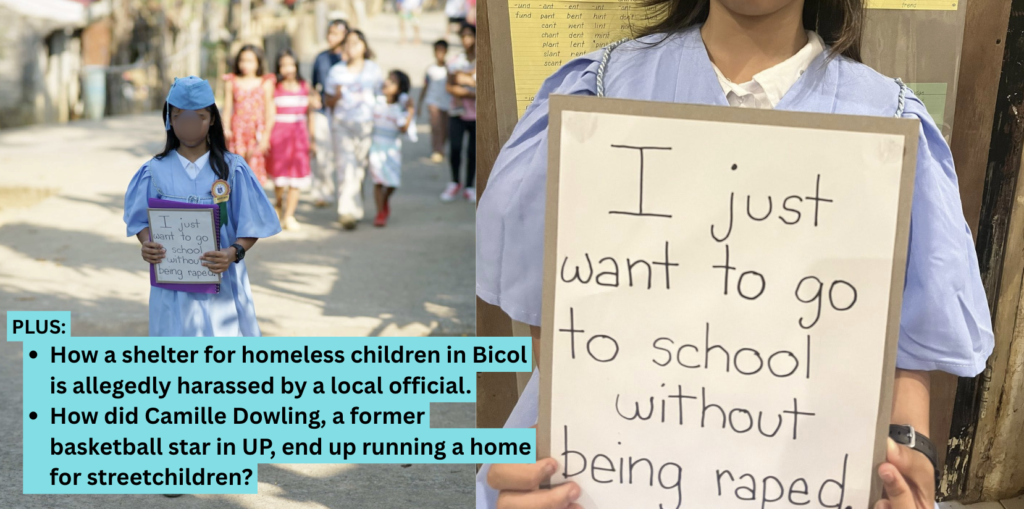
ON THE morning of March 30, Grace was supposed to be celebrating.
The 11-year-old had just graduated with honors from Caloco Elementary School in Tinambac, Camarines Sur. Instead, she walked out of her own graduation ceremony, made her way to the town’s local government unit, and filed a petition calling for the removal of a barangay kagawad (village councilor) she says has terrorized her, her classmates, and her community for years.
Then she wrote a letter to the president.
“Mr. President, how will we read if we are being raped?”
The question — raw, precise, impossible to ignore — spread across social media within hours, drawing more than 5,000 shares and a personal response from President Ferdinand Marcos Jr. In a comment on the original post, Marcos wrote that the letter had reached him and brought him “close to tears” and made him “very angry.” He added: “I am sending policemen to you and your sisters to protect you and to find anyone who has hurt any of you.”
Grace’s letter is the most visible moment in a story that has been building quietly in a remote corner of Bicol for years. It involves a nonprofit shelter for street children, a community under alleged sustained pressure from a local official, and what the shelter’s founder suggests was an orchestrated attempt to silence them — an attempt that, on the same day the letter went viral, appeared to take the form of a government enforcement action.
‘Sisters’ and a Shelter
Grace is one of the children in the care of Redeemer Homeless Mission, a Christian nonprofit shelter in Barangay Caloco, Tinambac, founded and run by Camille Dowling, a Filipino-American who gave up a café business in Quezon City at the height of the COVID-19 pandemic to house the homeless.
What started as a popsicle shop that opened its doors to people being arrested off the streets in 2020 became, by 2022, a six-hectare property in Tinambac — a working shelter that Dowling calls home alongside children who, by her own account, had no one else looking out for them. Most are girls. All of them, she says, were either fully abandoned or severely neglected when they came to her. She has taught them to read, enrolled them in the local public school, and housed them in a shelter still under construction.
She calls them her children. They call each other sisters.
It is one of those sisters — referred to in this story only as Ivy, consistent with child protection standards — whose story sits at the center of Grace’s letter.
According to the letter, Ivy was raped twice by the son of the councilor, once in November 2022 and again in February 2023, while walking home from school. After the first rape left Ivy pregnant, Grace wrote, the councilor himself kidnapped the girl, brought her to Montalban in Rizal province, and had the pregnancy forcibly aborted. A second aide of the same official later raped Ivy again, the letter alleges. These are Grace’s allegations, made in a public letter; they have not been tested in any legal proceeding known to Rights Report Philippines.
“She no longer goes to school,” Grace wrote.
The councilor, his son, and the aide have not been publicly named in connection with these allegations.
Redeemer’s Facebook page, which Dowling has apparently maintained since the shelter’s early days, offers an unvarnished look at what life there actually resembles. (Editor’s Note: Rights Report Philippines is not linking to the page because it contains images of the children.) Across dozens of posts, the children appear at a beach, scrambling over rocks with arms raised; crowded around a pizza on a restaurant table; holding up popsicles on a sunny afternoon; wearing animal costumes; gathered around a birthday cake. A consistent adult presence – many of them of Dowling – appears alongside them across many settings and stretches of time — at church gatherings, school events, roadside outings — suggesting a caregiving relationship that is stable and personal rather than institutional.
The photos are not polished. They look like someone’s phone camera catching children mid-laugh, not charity material staged to solicit donations. That unselfconsciousness is itself telling. So is the food — watermelon, pancakes, homemade cake — and the evident ease with which the children move through their community, visible and known.
The shelter’s physical circumstances are modest. Some images show unfinished construction and what appears to be storm damage, consistent with Dowling’s own descriptions of a facility still being built. But deprivation is not what the photos convey. What they convey, overwhelmingly, is ordinary joy — the kind that is easy to overlook until you consider what these children’s lives looked like before Redeemer found them.
A Pattern of Alleged Abuse
The rape allegations are the gravest in what Grace and Dowling describe, in Facebook posts apparently written by Dowling, as a sustained campaign of harassment by the unnamed councilor and his family against the community in Barangay Caloco.
In her letter, Grace catalogued the broader pattern of alleged abuses: electrical wires cut and stolen, leaving families without power; water pump wires cut, leaving families without water; crops stolen, fishing nets taken, nails scattered on roads to destroy motorcycle tires, grass fires set near homes, and blotters — official incident reports — allegedly lost at the barangay hall to bury complaints.
“I have seen him set grass fires to kill us,” Grace wrote. “Many of the families here stay in survival mode because government people make life very very difficult.”
Crucially, these were not new claims when the letter went viral. Two months earlier, on January 28, Dowling’s Facebook page had already itemized the same allegations publicly on Facebook, point by point, in response to the government’s landmark EDCOM 2 Final Report — a sweeping national assessment of why Filipino children are not learning, released two days earlier on January 26.
“The government’s corruption and abuse of power is completely destroying our children,” a post read that day. “The time that these children spend on trying to fix and handle the crimes government people create is taking away their study time.”
That earlier post, largely overlooked at the time, matters now: it establishes that the community’s grievances predate the viral moment by months, and were not assembled for the purpose of public attention.
An Enforcement Action on the Same Day
On the same day Grace’s letter circulated online — March 30 — the Department of Social Welfare and Development visited Redeemer Homeless Mission and issued the shelter a formal temporary suspension, according to another Facebook post.
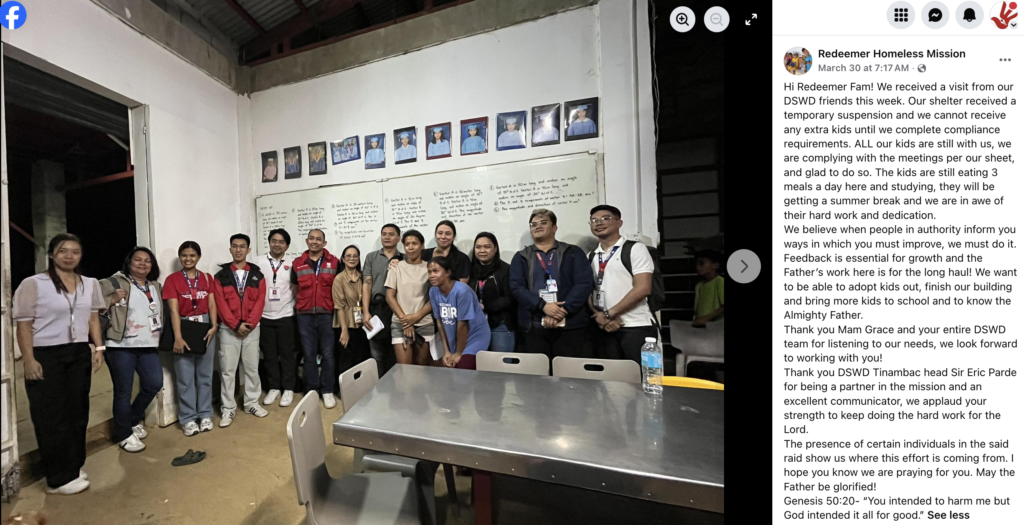
The post disclosed the action that evening, describing it as a raid. The suspension prohibits Redeemer from taking in additional children until it completes a list of compliance requirements. All children currently in the shelter, the post reads, remain there, continue to eat three meals a day, and are studying.
The DSWD’s regulatory concern has a factual basis. Redeemer Homeless Mission does not appear in any publicly available registry of licensed child-caring institutions, suggesting it has been operating without the formal license that Philippine law requires for organizations housing minors. Under Republic Act 10165, the Foster Care Act of 2012, and related DSWD regulations, any organization providing residential care to children must be licensed and subject to government oversight. Dowling does not dispute the need to comply.
“We believe when people in authority inform you of ways in which you must improve, we must do it,” said the post. “Feedback is essential for growth.”
But it also believes the timing was not coincidental. The same post notes that “the presence of certain individuals in the said raid show us where this effort is coming from” — suggesting Dowling or Redeemer believes someone with a grievance against the shelter used the DSWD visit as a pressure tactic, timed to land on the same day the children’s allegations went public. The post closes with Genesis 50:20: “You intended to harm me but God intended it all for good.”
Whether the enforcement action was routine or complaint-initiated is a question the DSWD has not publicly answered. Rights Report Philippines has sent messages to Redeemer but has not received a reply as of posting time.
What Comes Next
The Palace has not confirmed whether Marcos’s order to send police to Barangay Caloco has been carried out. The councilor at the center of the children’s petition has not been publicly identified, charged, or given an opportunity to respond in any report available publicly. Redeemer says it is cooperating fully with DSWD and pressing forward.
What cannot easily be set aside is the picture Grace painted — of children who want nothing more than to go to school, in a community where the person responsible for their safety is, by their account, the one making it impossible.
“We are kids,” she wrote. “We are not involved in your political parties. I just want to go to school without being raped. So, can you please help us?” (Rights Report Philippines)
THIS IS A DEVELOPING STORY.
EDITOR’S NOTE: This story involves a minor who has publicly identified herself in connection with serious allegations of sexual violence. In accordance with Rights Report Philippines’s child protection policy — and consistent with Republic Act 7610, the “Special Protection of Children Against Abuse, Exploitation and Discrimination Act — we are changing her full name and are not publishing her image, notwithstanding her having named and photographed herself in the original post. Allegations of rape, kidnapping, and forced abortion in this story are drawn from a public letter and have not been independently verified. The accused local official has not been publicly named in any legal filing available and could not be reached for comment.
SIDEBAR
From Basketball Star in UP to Humanitarian Work: Who Is Camille Dowling?
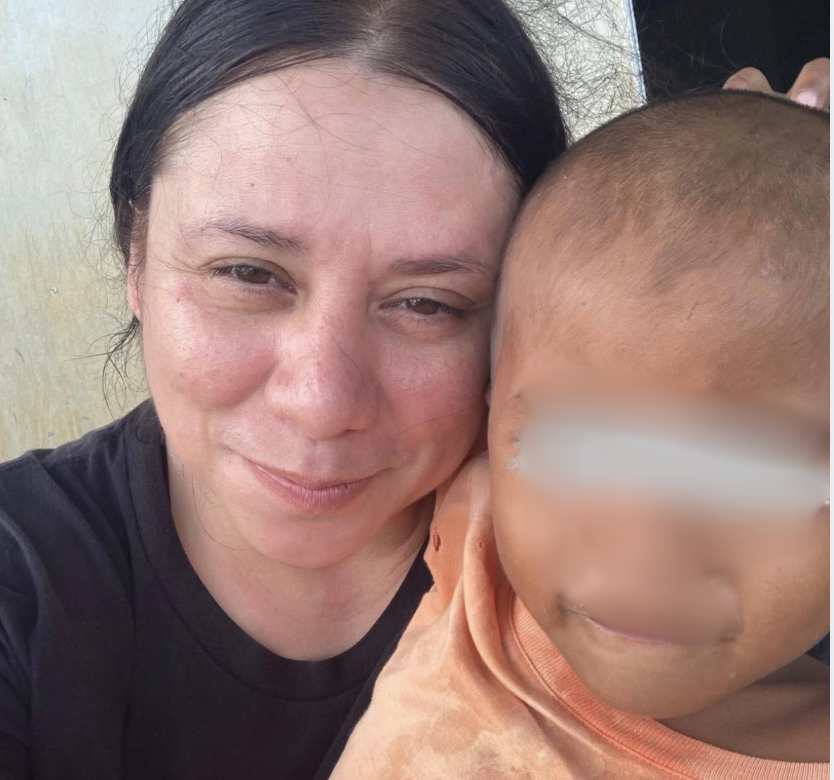
THE woman at the center of Redeemer Homeless Mission is not, by background, who you might expect.
Camille Dowling’s full name is Maria Camille Dowling Ibanes — Dowling is her maiden name, which she uses publicly. She grew up in Kamias, Quezon City, and attended the University of the Philippines, where she studied economics and played for the UP Women’s Basketball team. The team reached the UAAP finals three times during her years there, and she was by most accounts a standout. Her future husband, the professional basketball player Jireh Ibanes, would later recall that “the Dowling sisters were so popular. They were everywhere.” The sister, Jaclyn, played with Camille at UP in the 2000s.
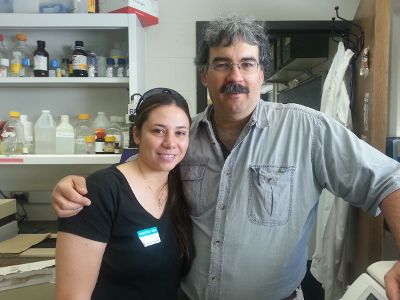
After graduating, she went to the United States for postgraduate work.A 2011 peer-reviewed paper published in a biomedical journal lists her as a researcher at the Laboratory of Nematode Biology at George Washington University’s Medical Center in Washington D.C., working on hookworm biology — a parasitic disease that infects hundreds of millions of people and disproportionately stunts the development of poor children. As of 2014, she was working toward a doctorate in microbiology. It is unclear whether she completed the degree before returning to the Philippines.
She married Jireh Ibanes in July 2013 in a reception held on the UP campus where they had met. Ibanes is a well-known figure in Philippine sports — a former PBA professional basketball player who spent his entire playing career with the Rain or Shine Elasto Painters, winning two championships and the league’s Defensive Player of the Year award in 2012, before retiring in 2017.

Dowling’s writing about Redeemer in its early years used “we” — “we moved,” “we decided,” “we named it” — language that suggests her husband was at least part of the early conversation about the shelter. But Ibanes does not appear by name in any coverage of Redeemer’s current operations, and Dowling has consistently been described as its sole operator and founder. Whether the two remain together, and what role if any he plays in the shelter’s work, is not clear.
What is clear is the shape of what Dowling left behind: a research career, a café business, and a life in Manila, for a half-built shelter on a six-hectare property in a remote barangay in Camarines Sur. Asked about the choice in a 2024 interview, she was direct. “I had all these children that had nobody batting for them,” she said. “I think anyone in the same position would have also been like, oh screw the business.” (Rights Report Philippines)