
Building on previous documentation by human rights groups, the Commission on Human Rights issues a report this week that says the facilities waiting for these children are still squalid and abusive.
TWO things happened in the Philippines this week that, taken together, should alarm anyone who cares about children’s rights.
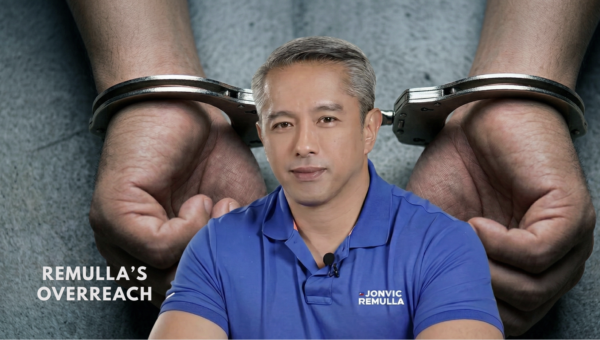
On Monday, Interior Secretary Jonvic Remulla announced that minors 18 and below – actually, minors below 18, because the legal age for adults is18 – would be banned from the streets after 10 p.m. unless they could prove they were coming from or heading to school or work — part of a “Safer Metro Manila Plan” that threatens arrest for those who do not comply.
A day later, the Commission on Human Rights released a nationwide monitoring report on the facilities where apprehended minors could end up. What the CHR found: violence against children at the time of arrest, ill-treatment by facility staff, poor living conditions, no meaningful access to healthcare or education, and centers designed more like jails than safe spaces.
The timing was, at best, awkward. At worst, it is a preview of what the government’s “safer streets” initiative will actually produce — more children funneled into facilities that have been documented for years as anything but safe.
Caged and Abused
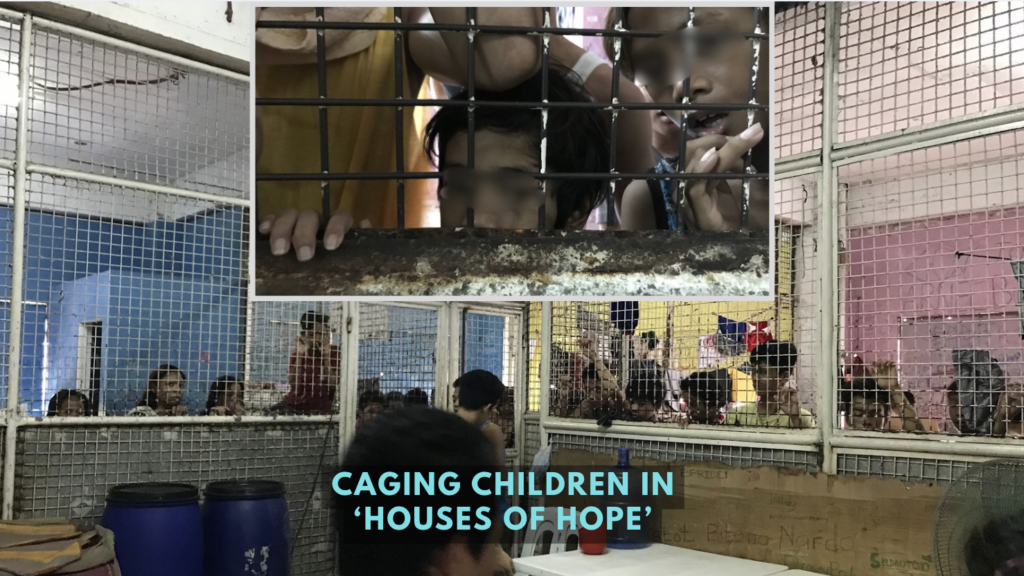
Human Rights Watch documented conditions at one such Metro Manila facility in June 2018, finding water from toilets leaking onto floors where dozens of children slept, rust-covered caged enclosures where children were locked throughout the day, poor ventilation, and clear signs of skin infections — suggesting poor diet and sanitation.
The pictures above were taken in June 2018, inside the Bahay Pag-asa in Caloocan City. This was at the height of the “drug war” when several children were rounded up and sent to that facility to join many others who had been detained there. About two years later, Carlos Conde, who took these pictures, was told that that facility had been shut down.
“You think your children deserve to be caged like this, no matter what they did?” the HRW researcher who conducted that visit, Carlos Conde, wrote on Facebook sometime after that. “What I found was utter sordidness: children sleeping on concrete floors flooded by water leaking from the toilet; no ventilation; lots of skin illnesses; utterly poor sanitation; poor food… These children were caged like dogs in a facility called Bahay Pag-asa.” (Conde is now the editor of Rights Report Philippines.)
The Caloocan City Bahay Pag-asa, established in 2018 and run by the city government, serves as a stark case study in what life inside these facilities looks like. At any given time, the three-story center houses between 40 and 60 children in conflict with the law and children at risk. The Children’s Legal Rights and Development Center (CLRDC), which has worked directly with children inside the facility, documented the toll that confinement — compounded by COVID-era restrictions — took on them.
Family visits were replaced with shouted exchanges and waves through steel-barred windows. A 17-year-old boy told CLRDC workers: “We are sad because we’re not with our loved ones.” One girl marked her 18th birthday — her debut — inside the facility, in tears. For families who managed to send food and clothes, they were allowed only to hand items over to staff at the gate, catching a few moments with their children through the bars before being turned away.
CLRDC warned that without strong support systems in place, the isolation and loneliness these children experience could lead to depression, anxiety, or self-harm. Families struggling financially faced an added burden: the cost of gadgets and internet data for video calls, making even remote contact difficult.
And yet, given the chance to speak about their lives, the children dreamed of becoming fashion designers, welders, seafarers, and law enforcement officers. For many who had experienced violence, their hopes reflected the most basic things — access to education and decent work so they could provide for their families. “When I finally reach my goals in life, I will buy a house and lot for my parents and give them a good livelihood for their needs. Nothing is impossible to a person who dreams,” the girl who spent her birthday inside the facility told CLRDC.
A System Unchanged
That was 2021. In a press release issued this week, the Commission on Human Rights, said that, following a fresh round of nationwide monitoring, it found that the problems persist. Among the issues the CHR found are “violence during a child’s apprehension, ill-treatment by facility personnel, and facilities that are designed more like jails than safe spaces for children.” It also identified ”major concerns affecting the welfare of children in these facilities. These include poor living conditions, delay in the disposition of cases, limited access to healthcare and education, strict or limited visitation rules that affect family contact, and shortages in staff and resources.”
The government’s own Juvenile Justice and Welfare Council said as far back as 2019 that some Bahay Pag-asa centers were worse than prisons — no beds, no programs, no food. “The children are just told to keep quiet the whole day,” the council’s director told a Senate panel, “so some of them do self-harm because they’re just very bored.”
The Bahay Pag-asa was created under the Juvenile Justice and Welfare Act as a humane alternative to jailing young people alongside adult offenders. There are about 60 such facilities nationwide, most run by local governments, many in a state of disrepair, and some not functioning at all.The gap between what the law requires and what actually exists on the ground has never been closed.
The Curfew Problem
Rappler noted that in the 2017 Supreme Court case SPARK vs. Quezon City, similar curfew ordinances from Manila and Navotas were struck down as unconstitutional for overly restricting minors’ fundamental freedoms. The same ruling found that penalizing children for curfew violations directly conflicts with the Juvenile Justice Act, which says no penalty shall be imposed on children for such violations — and that they should instead be brought home or to a barangay official.
Remulla’s announcement threatening arrest of minors caught outside after 10 p.m. maps closely onto the ordinances the Supreme Court already rejected. While the DILG has not said it plans to detain minors in Bahay Pag-asa facilities specifically, arrest tends to lead to custody — and the facilities that exist for that purpose remain, by the government’s own account, deeply inadequate.
A Legal Obligation
The CHR, which has not made its situation report public, frames the failure of Bahay Pag-asa not as a matter of underfunding alone, but as a constitutional and treaty violation. The conditions documented in these facilities run contrary to Article XV of the 1987 Philippine Constitution, which obliges the state to protect children from abuse and neglect, and to the UN Convention on the Rights of the Child — which the Philippines has ratified — requiring that children be treated with dignity and that detention be a last resort.
The CHR is calling for child-sensitive visitation policies, more social workers, better sanitation, regular staff training, and stronger accountability for violators. These are the same demands rights groups have been making since at least 2013.
The DILG has not publicly addressed the state of detention facilities in the context of its new curfew order.
Meanwhile, in facilities like the one in Caloocan, children continue to wait — some of them for birthdays that pass inside, some for a chance to shout their love through a window of steel bars, and some for a justice system that moves slowly enough that by the time it catches up with them, they are no longer children at all. (Rights Report Philippines)