
A report by the Commission on Human Rights accuses the Philippine government of violating laws meant to protect children. It documents a pattern of abuse against children in conflict with the law that begins at arrest, continues inside government facilities such as Bahay Pag-asa, and is sustained by a justice system too broken and too slow to protect them.
A CHILD in Davao City was not just arrested. He was abducted, blindfolded, and tortured by police officers. While they worked on him, he told investigators later, he overheard them discussing whether to kill him and bury the body.
In Laguna Province, a boy recalled the moment a police officer punched him in the stomach during his apprehension. In a facility in Region IV-A (Calabarzon), children who complained of stomach pain, fever, or toothaches were given no medication. Instead, staff forced them to drink large amounts of water, a practice known inside the center as “water therapy.” When children repeatedly asked for actual medicine, they were told to drink more water.
These are not isolated incidents reported by advocacy groups or human rights lawyers. They are findings of the Philippine government’s own Commission on Human Rights, documented through direct interviews with children in detention facilities across the country. The commission formally adopted the report in February and made it public last week.
Most Vulnerable
The Commission on Human Rights has released what is arguably one of the most damning official accounting of how the Philippine government treats its most vulnerable young people, not from the outside looking in but from inside the cells, dormitories, and hallways of the facilities that are supposed to rehabilitate them.
The situation report, formally titled A Situation Report on the Implementation of Law on Juvenile Justice and Welfare System: Monitoring of Bahay Pag-Asa Facilities, documents a pattern of abuse that begins the moment a child is arrested and does not stop at the facility gate. It covers violence by police and barangay officials during apprehension, mistreatment by facility staff inside centers, and the structural failures — the missing doctors, the absent social workers, the barred windows, the 10-minute family visits — that together constitute what the CHR calls a systemic failure of the state’s duty to its children.
The picture that emerges is of a juvenile justice system that, 19 years after the passage of the law meant to anchor it in children’s rights, remains punitive in practice and broken in delivery.
READ: Remulla’s ‘Safer Cities’ Crackdown: Arrested Children Could End Up in Hell-Holes Like Bahay Pagasa
The picture that emerges is of a juvenile justice system that, 19 years after the passage of the law meant to anchor it in children’s rights, remains punitive in practice and broken in delivery.
The situation report was prepared by the CHR’s Child Rights Center under its Human Rights Policy Centers Office, based on monitoring activities conducted from August 2024 to October 2025. The Child Rights Center and the CHR’s regional offices conducted facility visits, focus group discussions, and individual interviews with children in conflict with the law in the National Capital Region and Regions I, III, IV-A, IV-B, VI, X, XII, and the Cordillera Administrative Region.
The report was formally adopted on February 19, 2026, in a resolution signed by Chairperson Richard P. Palpal-Latoc and all four sitting commissioners: Beda A. Epres, Faydah M. Dumarpa, retired Justice Monina A. Zenarosa, and retired Judge Maria Amifaith S. Fider-Reyes.
The CHR publicly announced the report’s existence on April 7, 2026, two days after the Department of the Interior and Local Government announced its “Safer Metro Manila Plan,” which includes a 10 p.m. curfew for minors that rights advocates warn could funnel more children into these same facilities.
The report, a copy of which Rights Report Philippines has obtained, has not been posted on the CHR’s public reports archive but it announced its contents in a press release this week.
What the CHR Found
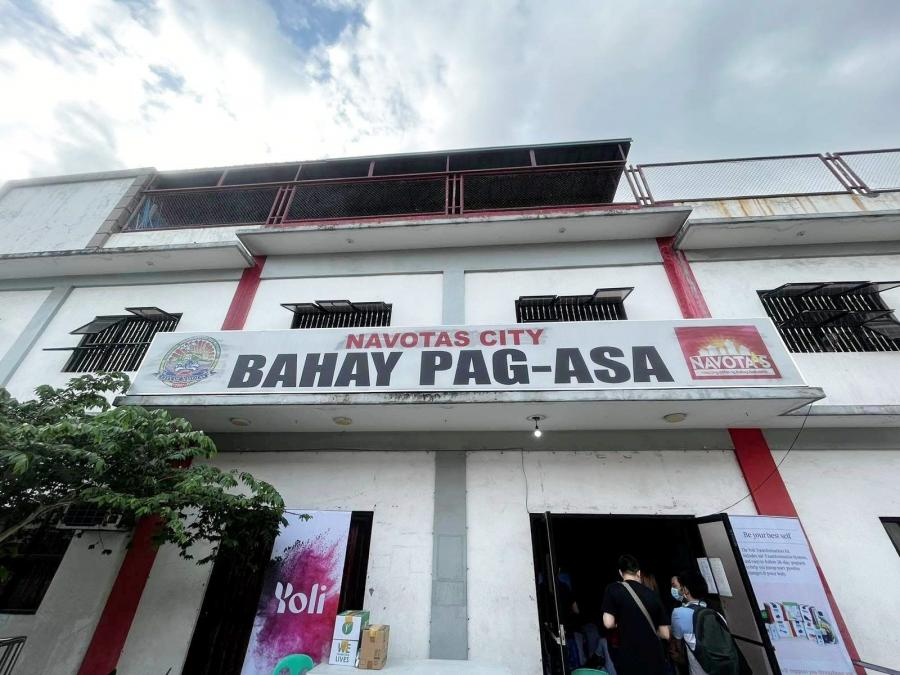
The first and perhaps most disturbing finding of the report concerns what happens to children before they ever reach a Bahay Pag-asa – in the moments of their arrest, when they are most alone and most vulnerable. Bahay Pag-asa, which means “house of hope,” is the key government facility for children in conflict with the law that is meant to rehabilitate them
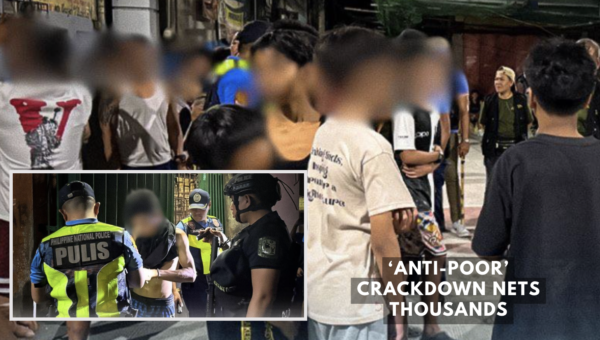
Across multiple regions, children told CHR investigators about physical abuse at the hands of police and barangay officials. The accounts are specific and consistent: a child in Laguna punched in the stomach by his arresting officer; a child in Region II slapped by the officer who detained him; a child in Cavite pressured to admit to a crime he may not have committed; and in Davao City, a child who described being abducted, blindfolded, and subjected to torture while police discussed killing him. Children also described abuses by barangay personnel, local officials meant to be the first protective layer in their communities.
The CHR concluded that the breadth and consistency of these accounts — spread across regions with no apparent connection to one another — suggests not isolated misconduct but something more troubling: a prevailing culture of violence that has normalized the dehumanizing treatment of children in the justice system.
The testimonies in the report suggest not isolated misconduct but something more troubling: a prevailing culture of violence that has normalized the dehumanizing treatment of children in the justice system.
The commission noted that under the UN Standard Minimum Rules for the Administration of Juvenile Justice, known as the Beijing Rules, and under RA 9344 itself, any use of force against a child during apprehension is prohibited. The fact that it is happening anyway, the CHR said, reflects severe capacity gaps in how law enforcement handles children, and the near-complete absence of accountability when they do not.
Inside the Facilities
The abuse does not end at the facility door.
Children in at least one Bahay Pag-asa in Metro Manila described being physically abused by facility personnel — the very people designated as their house parents and caretakers. When children tried to report these incidents to other adults inside the facility, their complaints were dismissed, with staff citing a lack of evidence. The absence of closed-circuit television cameras in the facility made it nearly impossible to substantiate any claims. During their consultations with CHR researchers, the children said what they needed most was an independent authority — someone from outside the facility — who would actually listen to them.
In three other Metro Manila facilities, children were required to eat with their bare hands because utensils had been confiscated by staff, who said they could be used as weapons. The CHR found this practice incompatible with the children’s right to dignity and humane treatment, regardless of the justification offered.
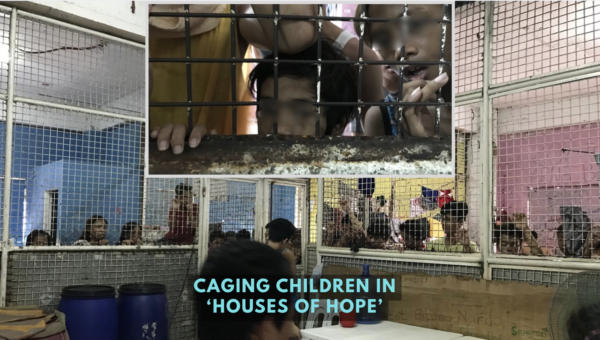
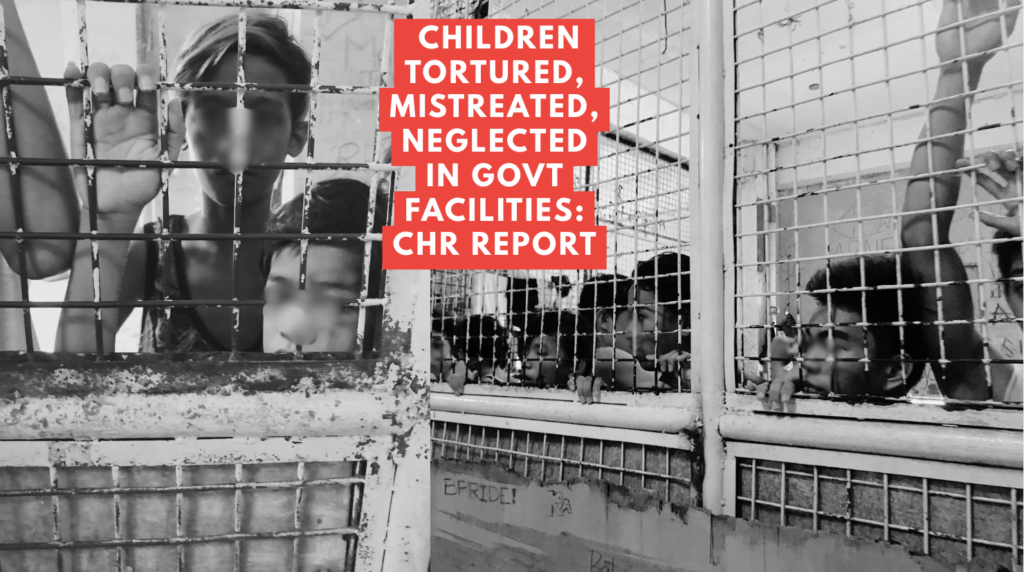
The structural design of several facilities — extensive metal grills in the NCR, Region IV-B, and elsewhere — means children live in spaces that look, physically, like jails. The CHR was direct about the consequence: such design reinforces the wrongful branding of children in conflict with the law as criminals, rather than as children whose capacity for judgment and decision-making is still developing. This stigmatization, the report said, actively undermines their chances of rehabilitation.
This stigmatization, the report said, actively undermines their chances of rehabilitation.
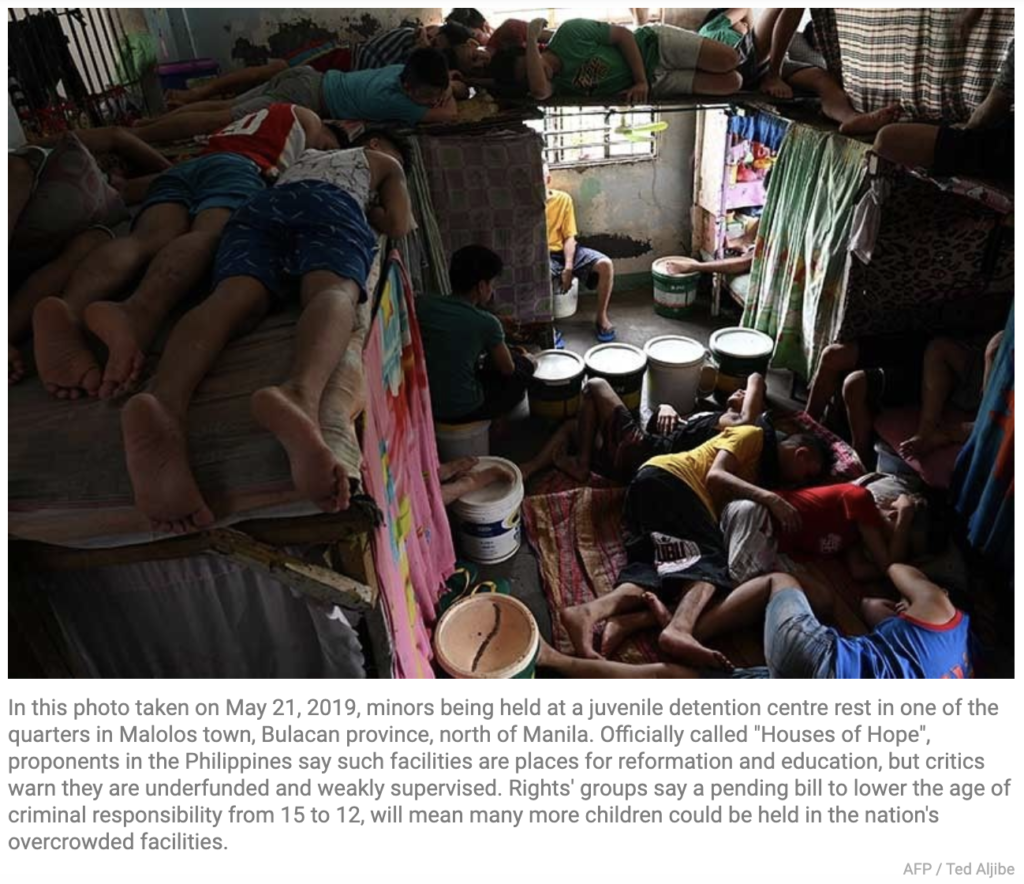
In Region I, children and staff were sleeping in hallways because there were not enough rooms. In Region VI, two bedrooms served seven children. In Region IV-B, seven boys and one girl shared a single sleeping space, with a houseparent placed between them — a facility situated next to a poultry farm, its odors compounding already poor sanitary conditions. In the NCR, the Child Rights Center documented strong foul smells and multiple children suffering from skin rashes, indicating unsanitary living conditions. Sick children were placed in solitary rooms that were themselves unsanitary, potentially worsening rather than treating their conditions.
The pictures above were taken in June 2018, inside the Bahay Pag-asa in Caloocan City. This was at the height of the “drug war” when several children were rounded up and sent to that facility to join many others who had been detained there. About two years later, Carlos Conde, who took these pictures, was told that that facility had been shut down.
Trapped by the System
The CHR also documented what happens when children are detained and then simply left there, waiting for a legal system that barely seems to notice them.
In Zambales, Parañaque, and Laguna, children described years of postponed hearings with no resolution in sight. One child, who had entered a Bahay Pag-asa at age 17, was 22 years old at the time of the CHR’s visit, his trial having only resumed a year after pandemic restrictions were lifted. He had spent five years in a facility meant for short-term care. Another child told investigators that no one consistently followed up on his case at all.
The backlogs have structural causes. In some facilities, a single registered social worker is responsible for 11 children — tasked simultaneously with managing the facility’s daily operations and representing each child in court. The CHR found that social workers, stretched impossibly thin, cannot realistically fulfill both roles. The result is children who are forgotten by the system, serving what amounts to an indeterminate sentence for offenses whose legal resolution no one is actively pursuing.
No Doctors, No Medicine
The healthcare picture is similarly grim. In Romblon, Marinduque, and Occidental Mindoro, no plantilla positions exist for psychologists or nurses. In Region X, no medical officer is available at Bahay Pag-asa facilities. In Malabon, one visiting doctor attends the facility once a month.
The “water therapy” practice documented in Region IV-A is perhaps the most visceral illustration of what inadequate healthcare looks like in practice. Children who reported stomach pain, toothaches, and fevers were given no medicine. Instead, they were required to drink large quantities of water. When they asked for actual treatment, the practice continued. The CHR found this falls far short of children’s right to the highest attainable standard of health, guaranteed under the UN Convention on the Rights of the Child.
Family Visits
Under international juvenile justice standards, family contact is not a privilege. It is a right. The CHR found it being treated as neither.
In Caloocan City, children may receive visitors on four days a week but each visit is limited to 10 minutes per child. In Zambales, visits are permitted only on Fridays. In Laguna, weekdays only, for one hour at most. In Pasay City, some children reported that visitation rights were suspended entirely as a disciplinary measure — a “no dalaw” (no visit) policy imposed when a child is deemed to be exhibiting “bad behavior.” In Baguio City, phone calls were similarly cut off as punishment.
The CHR cited Rule 66 of the Havana Rules — the UN Rules for the Protection of Juveniles Deprived of their Liberty — which explicitly prohibits the restriction of family contact as a disciplinary measure. The commission called on all facilities to immediately end such practices.
Legal Obligations
The failures documented in the CHR report are not simply administrative shortcomings. They are violations of a specific and binding set of legal obligations.
The Philippines enacted the Juvenile Justice and Welfare Act in 2006, establishing one of the region’s more progressive frameworks for handling children in conflict with the law. The law created Bahay Pag-asa as a rehabilitative alternative to adult detention, mandated child-friendly standards for facilities, prohibited violence at every stage of the justice process, and required the provision of education, healthcare, and family contact for all children in custody.
The failures documented in the CHR report are not simply administrative shortcomings. They are violations of a specific and binding set of legal obligations.
Beyond domestic law, the Philippines is a state party to the UN Convention on the Rights of the Child, ratifying it in 1990. Article 37 of the UNCRC prohibits torture, cruel treatment, and arbitrary detention of children, and requires that detention be used only as a last resort for the shortest appropriate time. Article 40 guarantees every child in the justice system the right to be treated with dignity and to have rehabilitation as the primary goal of any intervention.
The Philippines is also bound by the Beijing Rules and the Havana Rules, which set international standards for juvenile justice administration and the treatment of children deprived of their liberty — standards the CHR found being violated at facility after facility.
Article XV, Section 3 of the 1987 Philippine Constitution requires the state to defend the right of children to assistance, proper care and nutrition, and “special protection from all forms of neglect, abuse, cruelty, exploitation, and other conditions prejudicial to their development.” The CHR’s report concludes that the state is failing on every count.
A Wider Pattern
The CHR’s findings are consistent with a body of documentation by other organizations that predates this report by years — none of which is cited in the situation report itself, but all of which points in the same direction.
As far back as 2013, the World Organization Against Torture and CLRDC submitted a joint report to the UN Committee Against Torture documenting beatings, kicking, and the use of metal bars against children in NCR holding centers, including the Yakap-Bata facility in Caloocan. In 2016, Rappler’s in-depth investigation found children eating with their hands, sharing a single toothbrush, and drinking water from a broken bathroom faucet. A 14-year-old described the center to Rappler as a place that “destroys you.”
In 2019, Human Rights Watch documented conditions at a Manila Bahay Pag-asa facility that included children sleeping on floors flooded by toilet water, rust-covered caged enclosures, and widespread skin infections. The researcher who conducted that visit, Carlos Conde — now editor of Rights Report Philippines — subsequently wrote: “These children were caged like dogs in a facility called Bahay Pag-asa.”
In 2019, the JJWC itself acknowledged before a Senate panel that some Bahay Pag-asa centers were “worse than prisons.” Its director told lawmakers: “The children are just told to keep quiet the whole day so some of them do self-harm because they are very bored.”
The CHR’s 2026 report, based on monitoring conducted in 2024 and 2025, shows that not much has changed.
What the CHR Is Asking For
The report closes with seven sets of recommendations addressed to the government, framed not as suggestions but as obligations.
On violence during arrest, the CHR calls for mandatory, continuous rights-based training for all police and barangay personnel who handle children, with clear accountability and monitoring mechanisms to detect and penalize abuse. Only Women and Children Protection Desk personnel, trained barangay staff, and social workers should be present during a child’s apprehension.
On facility conditions, local government units must be prohibited from constructing or maintaining Bahay Pag-asa facilities that resemble prisons. All facilities must strictly comply with child-friendly standards under RA 9344 and its implementing rules. The JJWC and CHR must conduct unannounced monitoring visits at least three times a year. Noncompliance must carry sanctions, including suspension or revocation of a facility’s certification.
On slow adjudication, the report calls for judicial-level policies that prioritize and fast-track child cases, require all parties to appear at scheduled hearings, and limit postponements. Children should spend the minimum possible time in Bahay Pag-asa facilities, and detention must remain strictly a measure of last resort.
On healthcare, LGUs must ensure timely access to comprehensive medical, dental, mental health, and psychosocial services. Practices like “water therapy” must be prohibited. Children must be consulted on their own health and well-being.
On education, all Alternative Learning System programs in Bahay Pag-asa facilities must be accredited and registered with the Department of Education, and must include senior high school. Children must not leave Bahay Pag-asa without credentials they can use.
On family contact, the JJWC must adopt standardized visitation guidelines across all facilities. Visits must be scheduled on weekends and weekdays, last ideally two to four hours, and never be suspended as a disciplinary measure. Family contact, the report says, is essential to a child’s rehabilitation and reintegration — not a reward for good behavior.
On staffing and operations, the Department of Social Welfare and Development, which runs the Bahay Pag-asa program, must enforce its prescribed 1:10 social worker-to-child ratio. Facilities must have adequate professional staff, including psychologists and nurses. Every Bahay Pag-asa must have a service vehicle. None of this is optional: it is, the report says, what the law requires.
The CHR’s final word is unambiguous: “Children must be nurtured and protected within their communities — because detention facilities and jails are no place for a child.” (Rights Report Philippines)