
Nearly 25,000 people were apprehended in two days. The police say it’s about discipline. Critics say the numbers reveal exactly what’s wrong with the operation.
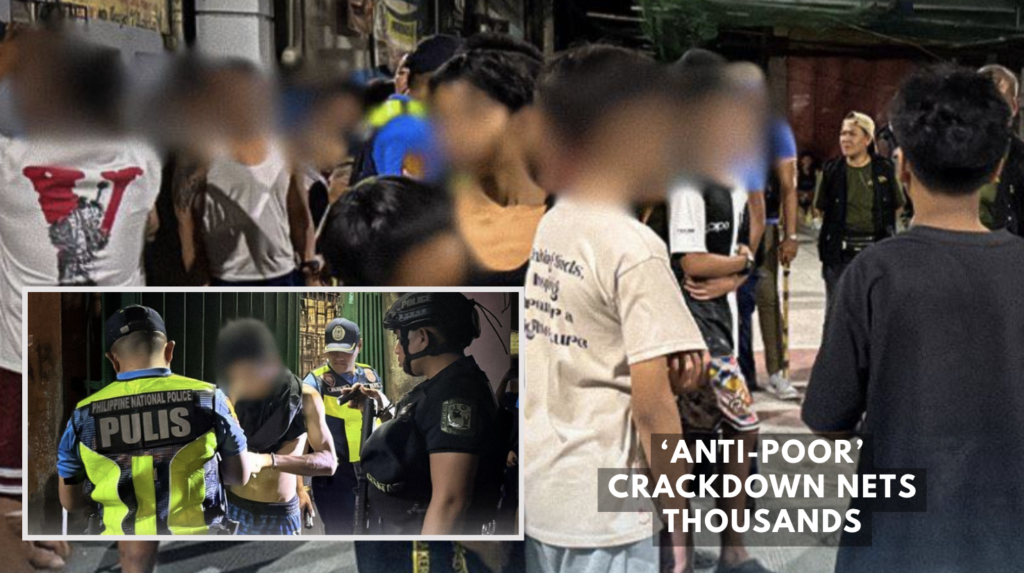
IN just two days — April 6 and 7 — authorities apprehended 24,881 people under the Safer Cities initiative, sweeping across Metro Manila for violations that included drinking and smoking in public, going shirtless outdoors, violating curfew, and using karaoke past allowed hours, the Philippine National Police announced on Wednesday.
The sheer scale of the operation only deepened the concerns that lawyers and child rights groups had already raised against it. The National Union of Peoples’ Lawyers (NUPL) and the Salinlahi Alliance for Children’s Concerns had called the crackdown unlawful, discriminatory, and a textbook example of how government power tends to fall hardest on poor Filipinos. Looking at the PNP’s own breakdown, they say the numbers prove their point.
Of the nearly 25,000 people processed, 18,293 were warned and released after documentation — never formally charged or fined. Another 6,369 were fined. Only 219 were formally charged. For the NUPL, that breakdown raises an uncomfortable question: if more than 18,000 people were apprehended and simply let go, what was the legal basis for stopping and processing them in the first place?
READ: Remulla’s Curfew Crackdown on Minors Runs Into a Wall of Law
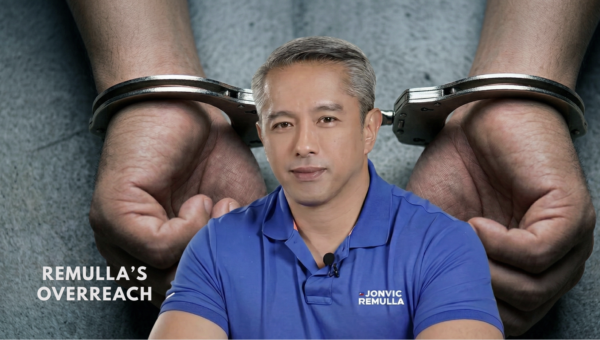
The operation was part of the “Safer Metro Manila Plan” announced by Interior Secretary Jonvic Remulla on April 6, an initiative Rights Report Philippines analyzed in detail the following day. The PNP said the National Capital Region Police Office led the operations, with the Southern Police District accounting for 12,211 of those apprehended, followed by the Quezon City Police District with 4,165, the Northern Police District with 3,316, the Eastern Police District with 2,775, and Manila with 2,414.
The most common violations were drinking and smoking in public, which accounted for 8,075 cases, followed by going shirtless with 2,672, minors caught out past curfew with 2,245, and karaoke violations with 584.
The Police Position
PNP Chief Gen. Jose Melencio Nartatez Jr. framed the operation in blunt terms. “Hindi po ito simpleng panghuli,” he said — this is not simply about making arrests. “Paalala po ito sa bawat isa na ang disiplina sa sarili ay mahalaga sa kaayusan ng ating komunidad.” It is a reminder, he said, that self-discipline is fundamental to community order. He pledged the operations would continue.
The Department of the Interior and Local Government had also moved quickly to establish the legal footing for the crackdown in the face of immediate criticism. In a Facebook post, the department cited Section 16 of the Local Government Code of 1991 — the General Welfare Clause — which authorizes every local government unit to exercise powers necessary to promote general welfare within its jurisdiction, covering peace and order, health and safety, and social justice.
In a second post, the DILG invoked Article 155, paragraph 2 of the Revised Penal Code, under which causing public disturbance while intoxicated carries criminal liability. “Hindi ito simpleng ‘bisyo lang,'” the DILG post read. This is not just a personal vice. Local ordinances on public drinking, karaoke, and curfew, it added, layer on top of that.
The Legal Challenge
The NUPL was unconvinced. “Secretary Jonvic Remulla cannot create crimes by press conference,” its statement read. The group’s position is that invoking a general welfare clause is not the same as identifying a specific ordinance with a specific penalty and a specific legal basis for custodial detention. For every person processed under the operation, the NUPL said authorities must be able to point to the exact ordinance invoked, the penalty it carries, and a justification for any arrest.
That argument is sharpened by a 2023 Supreme Court ruling the NUPL says the operation appears to have disregarded. In Ridon v. People of the Philippines, the court ruled explicitly that if an ordinance carries only a fine rather than imprisonment, it cannot be used to justify a warrantless arrest. The NUPL noted that the PNP’s own figures appear to confirm that most of the violations it pursued were fine-level offenses — not criminal ones. “We raise a basic legal question,” the group’s statement said. “If these alleged violations are punishable only by fines, why were people arrested or taken into custody at all?”
The DILG’s Revised Penal Code citation does add something the General Welfare Clause alone does not — a penal provision with actual criminal teeth. But critics argue that Article 155, paragraph 2 requires actual public disturbance, not merely the presence of someone drinking or shirtless in public. Being in a cramped neighborhood at night without a shirt is not, on its own, evidence of causing disorder.
Who Gets Targeted
NUPL president Ephraim Cortez framed the real issue plainly. He noted that people in dense urban poor communities often cannot afford air conditioning — or even electric fans — and that staying outside and removing a shirt to cope with the summer heat is simply how people survive. “It is crystal clear,” he wrote, “that this is a crackdown on those living in urban poor communities.”
He drew a parallel to what he described as the Duterte administration’s “hulihin ang tambay” crackdown — a reference to the mass public order sweeps that drew widespread legal criticism during Duterte’s term.
On minors, Cortez pointed to SPARK v. Quezon City, in which the Supreme Court upheld Quezon City’s curfew ordinance specifically because it was narrowly drawn to protect minors’ rights. That same standard, he said, prohibits the selective enforcement Remulla has described. Applying a curfew only to those Remulla has called “geng geng boys” — young men in poor neighborhoods — while leaving equally unsupervised minors in cars or ride-hailing services untouched would violate the equal protection clause. “All violators,” Cortez wrote, “whether belonging to the ‘geng geng’ crowd, the shirtless lads in the community, or the chauffeured crowd, should be equally treated.”
The PNP’s own numbers make this question concrete: 2,245 minors were apprehended for curfew violations in just two days. What happened to each of them matters legally.
Children Are Not Offenders
Trixie Manalo, spokesperson of child-rights group Salinlahi, called Remulla’s use of the term “rugby boys” dehumanizing. The term, she said, comes from a context of extreme poverty and hunger, and invoking it without acknowledging that context is a form of contempt for poor communities. What the government should be asking, she said in a statement, is why these young people are on the streets at all, and what their home situations and family economic conditions look like. “The focus should be a developmental approach,” she said.
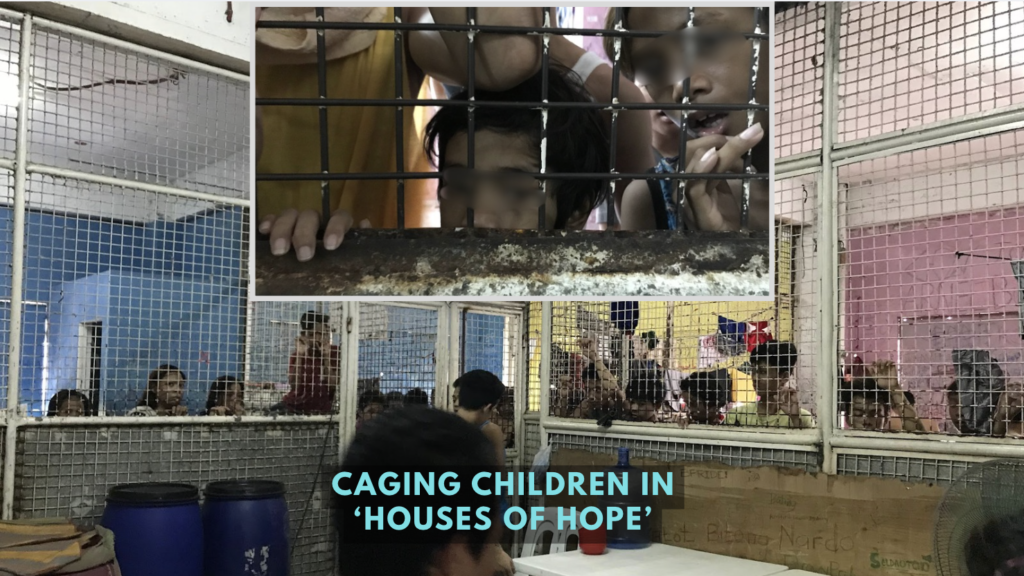
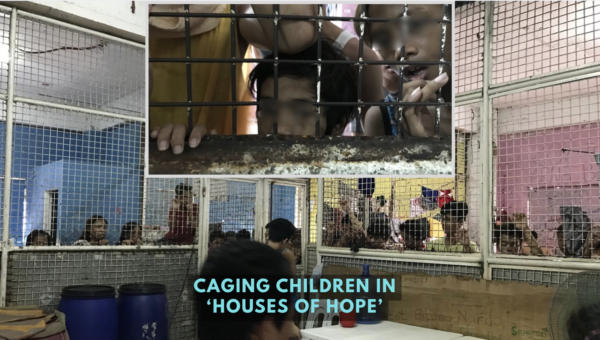
READ: Remulla’s ‘Safer Cities’ Crackdown: Arrested Children Could End Up in Hell-Holes Like Bahay Pagasa
Salinlahi also pointed to the PNP’s own track record as a reason to be worried about enforcement. On Sept. 21, 2025,, Manila Police were documented to have arbitrarily arrested, illegally detained, and tortured minors, Manalo said, despite the clear language of the Juvenile Justice and Welfare Act. Under that law, children picked up for status offenses including curfew violations are not to be detained. They are to be brought home, or to a barangay official. The state is required to treat it as a welfare matter and pursue community-based intervention — not punishment.
Salinlahi warned that as the Safer Cities initiative expands beyond Metro Manila, it could restrict not only freedom of movement but also freedom of association and speech for those with legitimate reasons to be outside at night.
The NUPL demanded the immediate release of everyone detained without a lawful basis, and a full public accounting of every arrest made under the operation. If no valid legal authority existed for those arrests, it said, those who ordered and carried them out must be held to account. (Rights Report Philippines)