
The move by the Office of the Solicitor General, praised by press freedom advocates, puts pressure on the OSG to act with similar boldness in a far broader swath of cases involving journalists and activists ensnared in what human rights groups have long described as a pattern of politically motivated cases based on trumped-up charges.
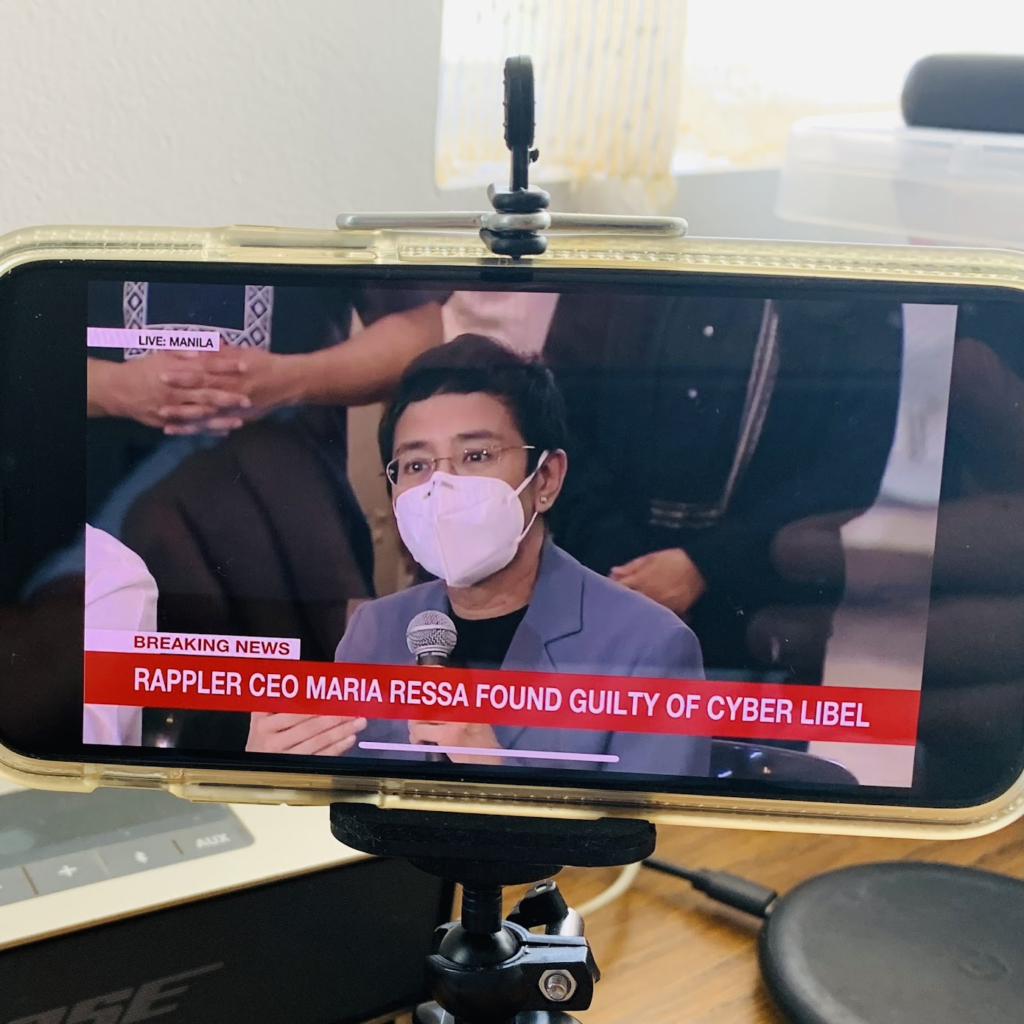
THE Philippine government has recommended the acquittal of Nobel Peace Prize laureate Maria Ressa and former Rappler researcher Reynaldo Santos Jr. in their long-running cyberlibel case, in a significant legal reversal that could redefine how online defamation charges are prosecuted in the country.
The Office of the Solicitor General (OSG) filed a manifestation and motion with the Supreme Court on Monday, March 9, invoking its role as the “people’s tribune” to argue that the criminal charges against Ressa and Santos are time-barred and can no longer stand.
The move, praised by press freedom advocates, also puts pressure on the OSG to act with similar boldness in a far broader swath of cases involving journalists and activists ensnared in what human rights groups have long described as a pattern of politically motivated cases based on trumped-up charges.
The OSG anchored its Ressa-Santos recommendation on the Supreme Court’s ruling in Berteni Cataluña Causing v. People, which established that cyberlibel offenses prescribe in one year — consistent with Articles 90 and 91 of the Revised Penal Code — reckoned from the date of discovery by the offended party, the authorities, or their agents. Applying that doctrine, the OSG argued that the filing of charges against Ressa and Santos in early 2019 — for an article re-published in 2014 and discovered by the complainant in 2016 — far exceeded the prescriptive period.
The Causing ruling departed from an earlier understanding under Wilbert Tolentino v. People, which had been read to allow a 15-year prescriptive period for cyberlibel. Though the OSG had previously sought reconsideration in the Causing case, it now accepts that ruling as supplying a workable and constitutionally grounded standard.
The case has been one of the most closely watched press freedom proceedings in the Philippines in decades. Ressa and Santos were convicted by a Manila Regional Trial Court on June 15, 2020, over an article published by Rappler that linked Filipino-Chinese businessman Wilfredo Keng to alleged criminal activities and then-Supreme Court Chief Justice Renato Corona. The Court of Appeals upheld the conviction in 2022, and later increased the potential prison sentence, prompting Ressa to elevate the case to the Supreme Court.
Ressa and Santos faced close to seven years in prison if their convictions were upheld. The Committee to Protect Journalists,International Center for Journalists, and Reporters Without Borders filed a joint amicus curiae brief with the Supreme Court arguing that the conviction breached the Philippines’ international obligations and betrayed a press freedom legacy the Court had reaffirmed for more than a century.
The OSG’s filing was careful to note that its recommendation does not amount to an endorsement of the article’s content, nor a finding that cyberlibel is protected speech. It underscored that criminal sanctions for online defamation remain important in a digital environment where reputational harm can spread with speed and scale.
But it also acknowledged that the Causing ruling better harmonizes the text of the Revised Penal Code with the Cybercrime Prevention Act, and strikes a more appropriate balance between protecting reputation and upholding constitutional guarantees of speech, expression, and press freedom.
The OSG emphasized that its mandate as “people’s tribune” extends beyond seeking convictions, that it includes assisting courts in arriving at just and legally correct outcomes, even when the law requires acquittal. Press freedom advocates and civil society organizations will now watch closely to see whether that principle is applied with equal consistency to the dozens of journalists and activists still entangled in cases that the courts have already shown, time and again, to be problematic.
Baseless Cases
Although the Ressa case is substantially different from many others, rights and press freedom advocates believe that it was filed as a form of harassment against Ressa and her colleagues at Rappler for their reportage on the Duterte administration’s “war on drugs.” The state-backed prosecutorial zeal, they argue, is not unlike what prompted the government to file questionable cases against other journalists and activists.
Human Rights Watch warned in early 2025 that Philippine authorities were filing baseless terrorism-financing charges against civil society groups and activists, apparently to satisfy the global intergovernmental Financial Action Task Force (FATF), which had placed the country on its grey list. Even after the Philippines was removed from the grey list in February 2025, new terrorism financing charges continued to be filed against activists.
The pattern is well-documented and the courtroom record tells its own story. Of 93 journalist-killing cases that have reached Philippine courts since 1986, 39 were dismissed, 36 ended in acquittals, and nine were archived — with only 50 convictions secured, 31 of them connected to the Ampatuan Massacre.
In red-tagging and terrorism-financing cases involving activists, the record is similarly riddled with failures of evidence. In July 2025, a prosecutor dropped terrorism financing charges against activist Myrna Zapanta for lack of credible evidence. Over 30 activists and human rights defenders faced terrorism-related charges after the military accused them of involvement in a 2023 armed encounter; charges against at least four were dismissed in September. Environmental activist Rowena Dasig and Miguela Piniero, arrested while researching a gas plant project in Quezon, were acquitted of baseless illegal firearms charges by a regional trial court.
Yet prosecutorial zeal has continued to outpace the evidence. In April 2025, six prominent Cagayan Valley activists — including journalists, farmers’ rights leaders, and a youth organizer — were charged with financing terrorism, in what human rights groups said were charges meant to derail the electoral campaign of Makabayan candidates ahead of the May 2025 midterms.
The case of community journalist Frenchie Mae Cumpio stands as the starkest indictment of the system. Cumpio spent almost six years in pre-trial detention before a court convicted her of financing terrorism and simultaneously acquitted her of the firearms and explosives charges — the very charges the government had once touted as the heart of its case. UN Special Rapporteur Irene Khan stated that the charges against Cumpio appeared to have been filed “in retaliation for her work as a journalist.” (Rights Report Philippines)