
If laughter at children’s deaths becomes normalized, then civil society must become louder in affirming their sacredness.
By Anna Abelinde
MY daughter was named after one of the most famous women revolutionaries in our history, Gabriela Silang. She was born on International Women’s Day, through an emergency cesarean section where she quietly clawed her way out of old stitches of muscle and memory.
I was with her when I started building this article and it began forming in my mind. I posted fragments of it on LinkedIn so I wouldn’t lose them.
The day was her field trip day, and the day after the ICC confirmation of charges hearing. While my daughter slept on the bus, her head resting against the window, I was reading a report about children killed in the drug war. It had almost 20,000 laughing emojis. Later, I was told the reactions grew to nearly a hundred thousand. I could not move past that.
Children are absolute. No ideology, no political allegiance, no narrative of national cleansing can make hurting or killing them acceptable. You can stand at opposite ends of any political spectrum and still agree that children must be protected.
People will fund their causes, defend their innocence, mobilize for their safety, because children embody something inherently good, something beyond negotiation. So what have we become, that we can laugh at their slaughter?
Killing is killing. It does not require context to recognise it as wrong. What is worse is that these things happen to children who are already at risk, who may have been exploited because of their socio-economic vulnerability. In 2023 alone, 2.7 million reports of online sexual exploitation of children were registered in the Philippines. Nearly 700,000 children remain in child labor. Many have been trafficked into sexual exploitation or hard labor. A significant number comes from families trapped in poverty.
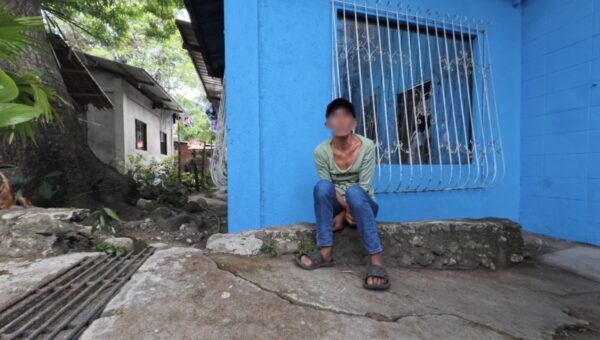
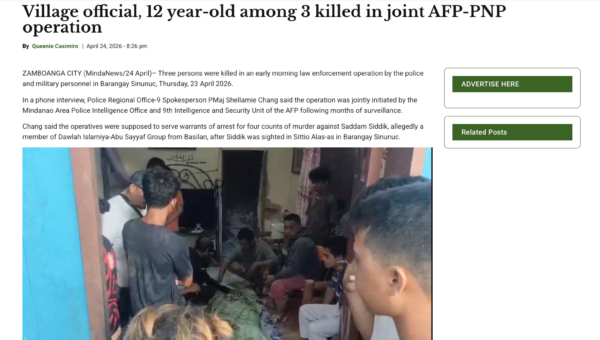
Now layer onto that the drug war: children watching parents killed before their eyes, homes raided, their trauma normalized. Some children later suffered the same violence. And what response did we get from the public? Thousands of laughing emojis.
What does it mean for a nation to reach a point where cruelty becomes entertainment?
This is not merely political polarization but moral erosion. It is the seepage of misogyny and authoritarianism into the collective psyche, where harm is framed as strength, empathy as weakness and the spectacle of violence is celebrated rather than mourned.
It is in this context that I turn to the Babaylan.
The Babaylan as Antidote
This year’s National Women’s Month sub-theme calls us to “Lead like Babaylans, Filipinas!” The Babaylan – healer, mediator, historian, political actor in precolonial Philippines – embodied moral authority grounded in community trust. She held space for grief. She mediated conflict. She safeguarded collective memory. She did not lead through domination but through relational accountability.
This identity was not erased by accident. Colonial rule displaced women’s spiritual and political authority with patriarchal structures of church and state. Over time, leadership became centralized, masculinized, and bureaucratized. Authority became detached from community.
We did something similar to Gabriela Silang. We reduced her to the grieving wife of Diego, a bolo-toting revolutionary motivated by grief. While that is not untrue, it is incomplete. It conveniently leaves out the tactician who forged alliances, consolidated factions, and strategically resisted colonial power. We do have a pattern of minimizing women’s political intelligence. Hundreds of years later, the news of Cory Aquino allegedly hiding under her bed amidst the coups d’état in her administration became savory news – more savory than the fact that she triumphed over all of them.
To “lead like Babaylans” is reclaiming the Filipino leadership that once centered care, mediation, memory, and moral clarity. And in this moment of moral confusion, we need that model again.
Civil Society as Modern Babaylan
Across the country, civil society organizations are holding spaces: for survivors of violence, for climate-vulnerable communities, for exploited children, for marginalized women. Where mothers physically block abusive fathers from further harm, feminist leaders symbolically and structurally block systems that perpetuate violence.
Holding space is not passive work, because it means creating environments where grief can be processed, where communities can analyze their realities, where collective decisions are made. It means sharing power, a notion so alien in patriarchal systems that it is often dismissed as inefficiency or weakness.
Yet civil society actors are being stretched across all fronts. Grassroots organizations are overwhelmed by service delivery and are responding to crisis after crisis. They carry deep insight, but little protected space to synthesize, articulate, and translate that knowledge into national advocacy. They do not lack wisdom but they lack room to breathe and think.
The Role of INGOs: Holding and Amplifying Space
For those of us in the international nongovernment organizations (INGO), the United Nations, and other large national organizations, decolonization is a big discourse. But more than those that have already been discussed, I propose that decolonization requires the deliberate creation of spaces where local experience becomes national conscience. If power remains centralized, if grassroots voices are extracted for data but not elevated as agenda-setters, then we reproduce the same hierarchies under a different structure. If the Babaylan once held the moral center of the barangay, INGOs today can help hold the connective tissue between barangay realities and national discourse.
Our role is not to speak over grassroots organizations. It is to protect and fund spaces for collective reflection and political education, support local organizations in synthesizing lessons from lived experiences, help translate community realities into policy language and national narratives, amplify grassroots voices in media and decision-making platforms, and perhaps, most importantly, model value-based leadership, even when it is politically uncomfortable.
Holding space at a national scale means recognizing that implementation alone will not transform systems. We cannot address child exploitation while tolerating public indifference to child death. We cannot advance climate justice while silencing indigenous land defenders. We cannot improve health outcomes while dismissing the moral frameworks that shape public policy.
Our work is fundamentally about dignity. And dignity must be defended both in programming and in public narrative. If laughter at children’s deaths becomes normalized, then civil society must become louder in affirming their sacredness.
To lead like Babaylans is to rebuild the moral centre in our organizations, in our policies, in our public discourse. It is to resist the idea that cruelty is strength. It is to insist that care is power.
My daughter carries the name of a revolutionary. I hope she grows up in a country where revolution no longer means taking up arms, but reclaiming our humanity. And if civil society can hold and connect the spaces where grief turns into analysis and analysis\ turns into advocacy, then perhaps we can begin that work.
Anna Abelinde is the country director of Terre des Hommes Netherlands (TdH NL) in the Philippines, an international NGO that works for child protection.