What deregulation does, structurally and predictably, is erode the conditions necessary for those rights to be fulfilled — not through a single dramatic act, but through a slow, compounding cascade.
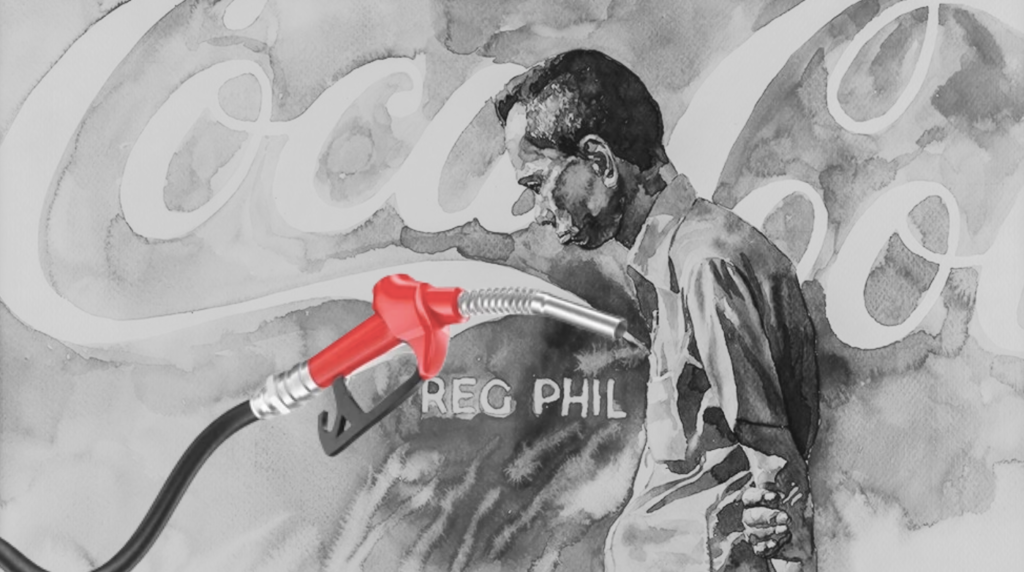
EVERY time you fill up a tank, pay a jeepney fare, or buy a kilo of rice that had to be trucked to market, you are paying a price shaped less by global markets than by a political decision made in 1998 — one that handed the country’s oil industry to private corporations and told them to regulate themselves.
The result, a quarter century later, is a fuel pricing system that hits ordinary Filipinos harder than almost anyone else in Southeast Asia, transfers enormous wealth upward, and faces almost no serious challenge from the state that created it.
The Philippines ratified the International Covenant on Economic, Social and Cultural Rights (ICESCR) in 1974, binding itself to progressively realize a set of economic and social rights for its people. What deregulation does, structurally and predictably, is erode the conditions necessary for those rights to be fulfilled — not through a single dramatic act, but through a slow, compounding cascade.
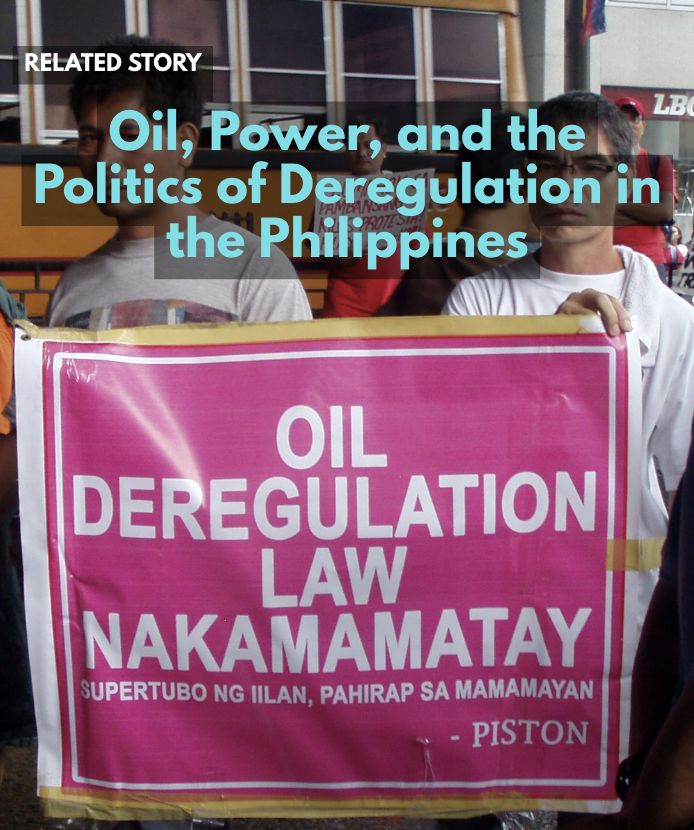
Here’s how companies and the Philippine government violate human rights each time they increase the prices of oil.
Right to an Adequate Standard of Living (Article 11)
This is the most directly implicated right. Article 11 obliges states to ensure access to adequate food, clothing, and housing. Oil deregulation violates the spirit of this obligation through what economists call cost pass-through: every fuel price increase raises the cost of transporting food, manufacturing goods, and running the cold chains that keep markets supplied.
A specific instance: when diesel prices spiked in mid-2022 following the Russia-Ukraine war — reaching over Php75 per liter at some pumps — vegetable prices in Metro Manila markets jumped sharply within weeks, because trucking costs from highland farms in Benguet and Nueva Vizcaya made hauling produce less economical. Small vendors absorbed some losses; consumers absorbed the rest. For a household already spending 50 to 60 percent of income on food, this is not an abstraction. It is skipped meals and reduced nutritional diversity, a direct degradation of the right to adequate food.
Right to Work and Just Conditions of Work (Articles 6 and 7)
Tricycle and jeepney operators, hundreds of thousands of them, are classified as self-employed, meaning they absorb fuel cost increases directly as business losses with no employer to negotiate with. When diesel rises by Php5 per liter in a month, a jeepney driver running 12 hours a day may lose Php300 to Php500 of effective daily income without any corresponding fare adjustment from the Land Transportation Franchising and Regulatory Board (LTFRB), which moves slowly and inconsistently on fare petitions.
This means the deregulated oil market functions, in practice, as a mechanism for downward wage compression on some of the most economically vulnerable workers in the country. It doesn’t appear on any balance sheet as a wage cut, but the lived effect is identical. IBON has documented that real income among transport workers declined during the 2022 fuel spike even as oil company profits rose, a textbook case of what Article 7 calls “fair wages and equal remuneration.”
Right to Social Security (Article 9)
Because most transport workers, fisherfolk, and small farmers are in the informal economy, they have no access to fuel subsidies through formal employment or institutional buffers. The government’s Pantawid Pasada fuel subsidy program has existed in various forms, but it has been chronically underfunded, poorly administered, and unable to keep pace with the frequency and scale of price increases.
The failure here is not incidental. It is structural: deregulation removed the state from the pricing equation, and the social protection apparatus was never built to compensate for that removal. Fisherfolk in Visayas and Mindanao, whose motorized boats run on diesel, are particularly exposed, because they have no fare adjustment mechanism at all. When fuel rises, their cost of a fishing trip rises; their catch price does not automatically follow. Many simply stay ashore, forfeiting income entirely. That gap — between a state obligation to protect livelihoods and a policy that predictably destroys them — is where the human rights violation lives.
Right to Health (Article 12)
This one is less obvious but real. Kerosene, used for lighting in off-grid households and by some for cooking, has been subject to the same deregulated pricing logic. When kerosene becomes unaffordable, households substitute cheaper, more dangerous fuels — charcoal burned in poorly ventilated spaces, wood fires indoors — with documented consequences for respiratory health, particularly among children and the elderly.
LPG, the cooking fuel of urban and peri-urban poor households, follows similar dynamics. The LPG Marketers Association of the Philippines operates in a deregulated environment where price changes are announced with little notice. A household that budgets Php900 for a tank of LPG one month may face Php1,100 the next. The coping strategy — cooking less, eating more raw or processed food, borrowing — has documented downstream effects on nutrition and health outcomes that public health researchers at UP Manila and elsewhere have begun to trace.
Right to Education (Article 13)
The link here runs through the household budget. Education expenses — school supplies, transportation to school, food for children during the school day — compete directly with fuel-driven cost increases in a fixed family income. When transport costs rise because jeepney fares increase informally, families in peri-urban areas face a real choice between keeping children in school and keeping the household fed.
This is not hypothetical. Save the Children Philippines and UNICEF have both documented how economic shocks, of which fuel price increases are a recurring form, accelerate school dropout rates, particularly among girls and children in rural areas, because families pull children out to reduce transport costs or redirect their labor to household income generation.
The Trickling Structure of Violation
What makes this human rights aspect of oil price hikes important is that the violations don’t arrive as discrete events. They trickle: a price increase triggers a transport fare hike, which raises food prices, which compresses household income, which forces a health or education trade-off, which deepens intergenerational poverty. Each step is deniable in isolation. No single actor can be pointed to as the violator. But the state — having designed and maintained the deregulation architecture — bears what the UN Committee on Economic, Social and Cultural Rights calls a duty to protect: the obligation to prevent third parties (in this case, oil corporations) from impairing the enjoyment of rights.
The Philippine government’s consistent failure to restore regulatory tools, reform TRAIN’s fuel excise regime, or build adequate social protection for fuel-exposed workers is not just bad policy. Under the ICESCR framework, it is a failure of legal obligation — one that can and should be named as such. (Rights Report Philippines)