A landmark summit in 2024 asked the government to treat illegal drugs not as a crime problem but as a public health problem. The body count since then suggests it isn’t listening.
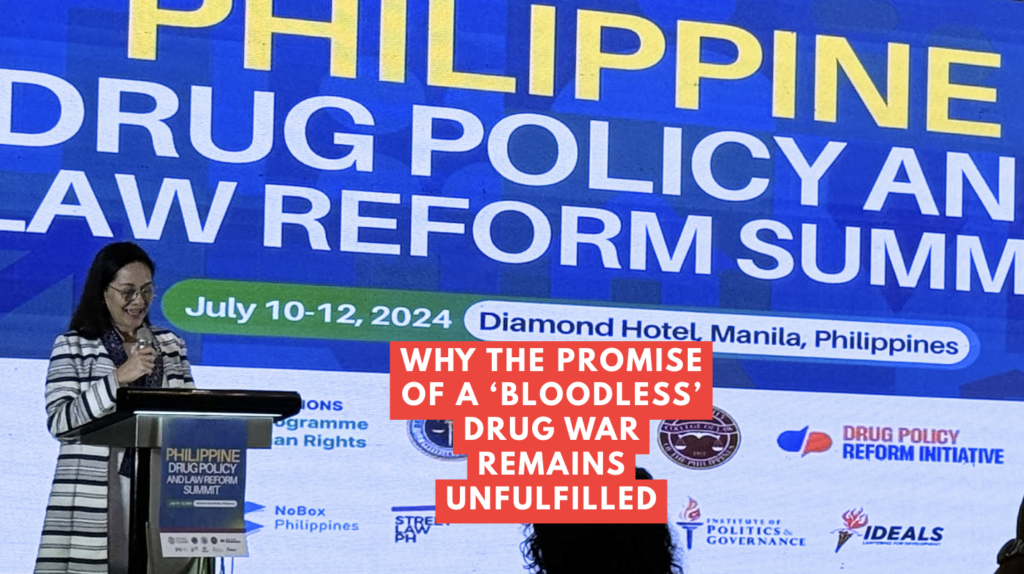
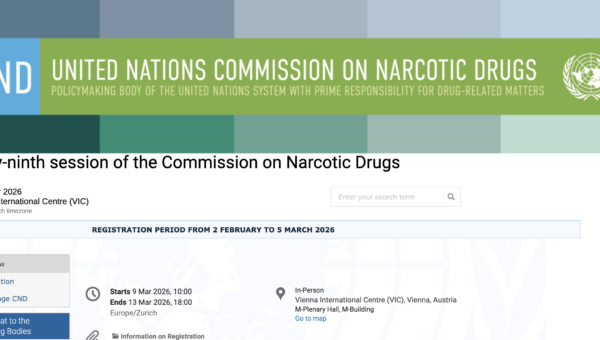
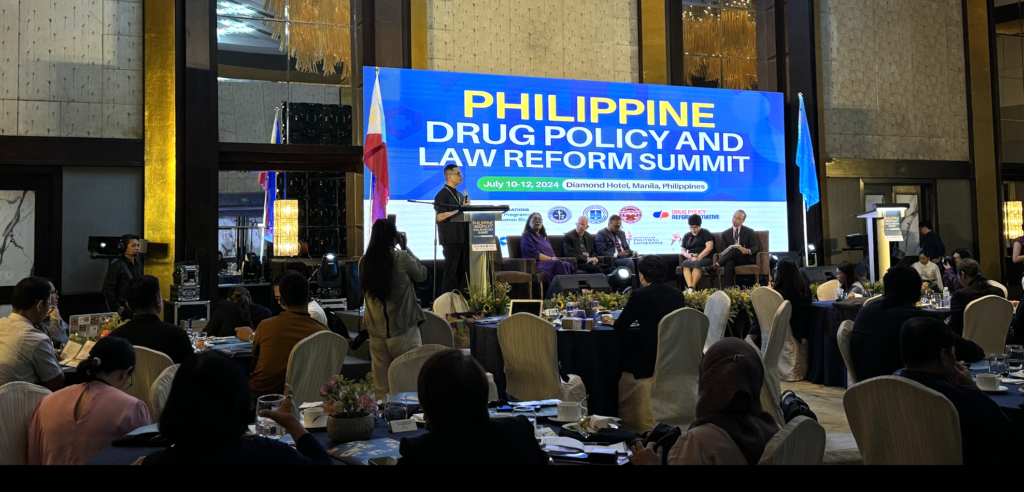
IN JULY 2024, inside the Diamond Hotel in Manila, Philippine government officials sat down with representatives from the United Nations, civil society, human rights defenders, health workers, and people directly affected by the drug war to talk about something the country had never formally discussed before: that the whole approach to the campaign against illegal drugs might be wrong.
The Philippine Drug Policy and Law Reform Summit — three days of testimony, position papers, and expert deliberation organized by the Department of Justice, the UN Office of Drugs and Crime, the Dangerous Drugs Board, and the UN Joint Programme on Human Rights — produced clear recommendations: overhaul the law, shift from punishment to public health, and put harm reduction at the center of the country’s response to illegal drugs.
Two weeks later, President Ferdinand Marcos Jr. delivered his State of the Nation Address but did not mention the summit once. He said, instead, that “extermination was never one of” his eight anti-drug principles. That was it. The most substantive discussion of drug policy reform in Philippine history was met with an absence and a shrug.
Now come the numbers, and they are not small. The Dahas Project of the University of the Philippines Diliman, which tracks every reported drug-related killing in the country by combing through local and national news every week, recorded more than 500 deaths since the summit up to March 2026.
20+ Deaths a Month
In all of 2025, 269 deaths were recorded, and another 57 in the first three months of this year. That is 326 deaths in the past 15 months, or more than 20 per month. Viewed by month, however, the number of killings has actually gone down.
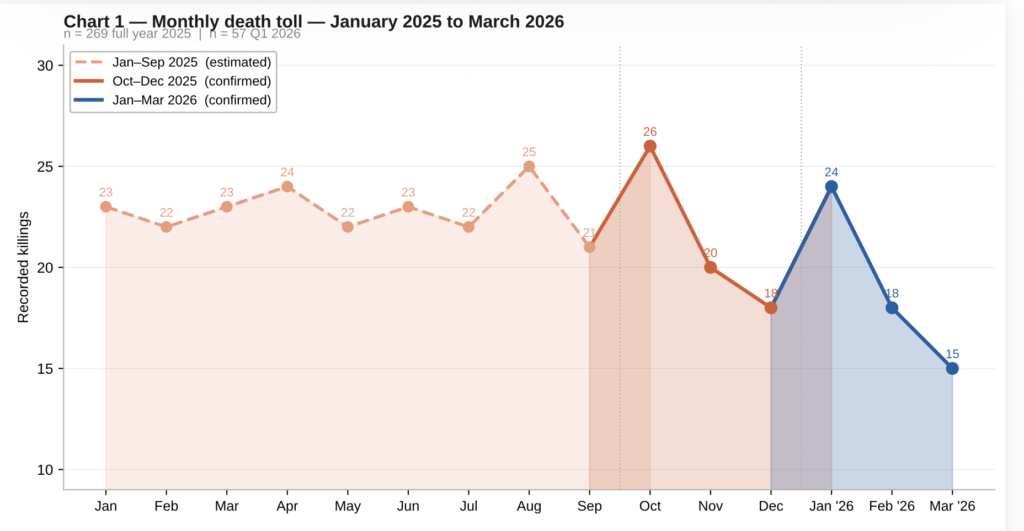
Since Marcos took office in July 2022 through the end of last year, 1,144 Filipinos have been reported killed in connection with the drug war — roughly one every day and a quarter, for nearly four years of an administration that calls the whole thing “bloodless.”
But look closer at the 2025 numbers and a detail emerges that goes beyond the toll on people with known drug ties. In 2025, for the first time since Dahas began tracking in 2021, the biggest growth category among victims was people with no connection to drugs at all.
Thirty-one people — 11.5 percent of all those killed, the highest share ever recorded — had no prior drug record, no watchlist entry, nothing. They include 10 police informants killed by drug suspects, seven police and PDEA officers killed in buy-bust operations or ambushed on highways, and 14 others — bystanders, the wrongly identified, people killed to silence them — who had no place in this war at all.
One was a 15-year-old girl in Maguindanao del Norte, cut down in a raid meant for her father. Another was a Cotabato City woman found dead hours after her partner’s drug arrest, almost certainly killed to keep her quiet. Impunity, in other words, now reaches beyond the drug trade itself. It has become ambient. This is the context in which the government’s continued insistence on its “bloodless” rhetoric lands.
Redesigned Drug Policy
The summit’s outcome report was unequivocal: drug policy and the law needed to be redesigned with a human rights and public health-based approach, with harm reduction as its focus, and with criminalization of drug use reconsidered. The DOJ’s own undersecretary stood at that summit and said the country needed to “hear the voices of the voiceless” and craft solutions “not limited to law enforcement.”
The Dangerous Drugs Board presented a new “health, social, and developmental pillar” for the Enhanced Philippine Drug Strategy. The UN Resident Coordinator called it a paradigm shift.
And then the President who supposedly commissioned all of this — who had, through his government, invited the UN, funded the dialogues, and endorsed the process — simply didn’t come. Not to the three-day summit. Not even to acknowledge it afterward.
Although I had no direct participation in the summit, I was there (representing my former organization, Human Rights Watch). When I was asked about it later, I said: “We, civil society, had the opportunity, and the experts from the UNODC have articulated the things that they think the government should do. So it’s now on the hands of the government to follow through.” The Marcos administration hasn’t.
Documented and Tested
The tragedy is that the alternative is not theoretical. It is documented, tested, and working elsewhere.
Harm reduction prioritizes the health and dignity of people who use drugs without necessarily requiring abstinence as a first step. It is a public health approach that focuses on mitigating the harmful consequences of drug use, centered on the needs of people who use drugs and free of stigma, said the US Centers for Disease Control.
As a December 2024 editorial of The Lancet Global Health put it: “If the purpose of drug policy is to reduce health and social harms, we have severely botched our response. We must drastically amend our approach.” Punitive policies, the journal noted, have not reduced global drug use — which has actually hit record highs — and their costs fall almost entirely on the poor and marginalized.
Although the Philippines context differs from other countries in the region – mainly because shabu, the most popular illegal drug in the Philippines, is largely not injectable – harm reduction as a national policy has been proven effective elsewhere.
According to Harm Reduction International’s 2024 Global State of Harm Reduction report, Cambodia, Indonesia, Malaysia, Myanmar, Thailand, and Vietnam all implement at least one needle syringe exchange program or methadone maintenance therapy. Malaysia is expanding voluntary harm reduction services through outpatient hospital programs. Thailand has moved toward decriminalization of marijuana and treatment-first policies. Indonesia, which launched its own version of a drug war in 2017, has since pivoted to piloting safer smoking kits and community outreach programs.
These countries have embraced harm reduction – or some semblance of it – as policy. The Philippines, by contrast, still operates under the regime of Republic Act 9165 — the Comprehensive Dangerous Drugs Act of 2002, the same enabling law that provided the legal architecture for Duterte’s murderous drug war, which remains fully in force.
In fact, this same law has been invoked to scuttle harm reduction programs in the Philippines in the past. I reported about the experience of injecting drug users in Cebu City and how the needle exchange program there, designed mainly to stop the spread of HIV, was abandoned because of RA 9165 and opposition from conservative politicians like Senator Tito Sotto.
While there have been small pilots such as those in Cebu City, there is no national, state-funded needle and syringe program or decriminalization of drug use. To put this in perspective, under RA 9165, the mere possession of a syringe without a doctor’s prescription remains a crime.
Moreover, the Philippines’ punitive approach to illegal drugs has turned the country’s detention facilities into hell-holes because of congestion and poor management. According to experts, more than 70% of the jail population in facilities run by the Bureau of Jail Management and Penology are there for drug offenses. And they stay there for years while waiting for their cases to be resolved.
Watershed Moment?
The UN Special Rapporteur on the Right to Health, in a report released in July 2024, emphasized that harm reduction is not an optional policy tool but a vital component of the right to health itself. That report was published five days before the summit began.
The summit recommendations signal a watershed moment for Philippine governance. Potentially, they mark a formal departure from the purely punitive logic of the past. At its core, the roadmap calls for a comprehensive legislative overhaul of RA 9165. This reform aims to shift the legal burden away from drug users by exploring the decriminalization of possession for personal use and revising the current system of harsh, mandatory sentencing.
By treating users as patients in need of medical intervention rather than criminals deserving of incarceration, the state aims to de-clog a judicial system that has been overwhelmed by the “war on drugs.”
This legislative shift is designed to trickle down into the very structure of local enforcement and social care. A primary outcome of the summit is the proposed reorientation of Barangay Anti-Drug Abuse Councils (BADACs). Instead of acting as surveillance units that maintain “drug watch lists,” which have historically served as precursors to violence, these councils are to be transformed into frontline health-referral hubs.
This decentralization is further supported by a move away from isolated, military-style “mega rehab” centers in favor of Community-Based Drug Rehabilitation. These localized programs prioritize voluntary participation and social reintegration, ensuring that recovery happens within the context of a person’s community and livelihood.
Perhaps most significantly, the summit sought to institutionalize “harm reduction” as a legitimate pillar of the country’s anti-illegal drugs strategy. “As a problem rooted in socioeconomic circumstances, controlling drug use requires a more comprehensive approach. This means putting people first by ending stigma and discrimination, while strengthening prevention efforts,” said Gustavo Gonzalez, the UN resident coordinator at the time.
Participants talked about this new approach anchored by a national commitment to de-stigmatization, aiming to reshape public perception and replace the rhetoric of “neutralization” with a language of dignity, human rights, and restorative justice.
In short, the government has the roadmap – it commissioned the roadmap. The summit produced the recommendations and the evidence is global and unambiguous. What is missing is the political will to treat the drug problem as what it actually is — a public health challenge rooted in poverty, stigma, and social exclusion — rather than a security threat to be neutralized.
But nearly two years since the summit, none of these proposals and recommendations have been enforced or legislated nationally. Meanwhile, the killings never stopped. The continued rate of more than 20 deaths a month is the ultimate evidence that the most critical recommendation — the cessation of the use of lethal force — has fallen on deaf ears.
Below Global Average
The irony – and the tragedy – here is that, contrary to what Duterte had repeatedly said during his brutal campaign to justify the horrific violence he unleashed, drug use in the Philippines is not that big of a problem compared to other countries. The Dangerous Drugs Board’s National Household Survey, for example, found a national drug use prevalence of 2.05 percent, which is well below the global average of 5.6 percent recorded by the UNODC. This is not a country with a runaway drug problem. It is a country with a runaway enforcement problem.
Public health physician Dr. RJ Naguit, speaking at an expert forum last year, said it plainly: “The government’s own data show that the Philippines’ rate of drug use has been below the global average since 2019, yet our response has been disproportionately violent.”
This is not a country with a runaway drug problem. It is a country with a runaway enforcement problem.
What RA 9165 and the structures built around it have produced is not a healthier society. They have produced tens of thousands of recorded deaths under the previous administration and thousands more in the current one. They also produced a rising tide of vigilante-style killings that the police can no longer explain away as buy-bust “nanlaban” encounters, and a generation of poor Filipinos for whom the state’s first response to any brush with drugs is a bullet.
House Bill 11004, the proposed Public Health Approach to Drug Use Act of 2024, would begin to change this — banning arbitrary interference with privacy, torture, and the misrepresentation of information, and institutionalizing a public health lens in addressing drug use. But the bill has not moved.
Extermination and Policy
The Marcos administration did not promise nothing. It promised, repeatedly and publicly, a different kind of drug policy — one built on rehabilitation, community, health, and human rights.
The summit in July 2024 was supposed to be the mechanism through which that promise became a plan. Instead, Inez Feria of NoBox Philippines, one of the civil society voices at the summit, found herself telling reporters afterward that “simply stating that extermination is not part of the strategy is setting the bar so low.”
A fundamental shift in policy is clearly warranted — if the Marcos government means what it says about upholding the human rights of Filipinos.
She was right. Ending extermination is not harm reduction. It is not a public health approach. It is not even close to what the summit asked for. And the data from Dahas — nearly 500 deaths in the months after that summit, including dozens with no connection to drugs at all, a 15-year-old girl, and a police officer buried in a septic tank — show that not even that low bar has been cleared.
A fundamental shift in policy is clearly warranted — if the Marcos government means what it says about upholding the human rights of Filipinos.
From Policing to Public Health
Moving away from a decade of violence means treating drug dependence as a medical condition rather than a criminal offense — one shift that would immediately ease the strain on the PNP and the country’s badly congested prisons. This shift begins by treating drug dependence as a manageable medical condition rather than a criminal offense, a move that would immediately alleviate the strain on the Philippine National Police and the country’s severely congested prison system.
Community-based programs, built around counseling and livelihood support rather than military-style mega-rehab centers, offer people a more realistic path to recovery — and let them stay close to their families while they take it.
The question is no longer whether harm reduction works. The evidence settled that long ago. The question is whether the Marcos government is willing to do what it already said it would.
Evidence-based interventions targeting the specific patterns of violence in provinces like Cebu must be central to any real reform. That means a legislative overhaul of RA 9165 to decriminalize possession for personal use, while simultaneously reorienting BADACs. No longer serving as surveillance units for “drug lists,” these local councils would become essential hubs for health referrals and social support.
None of it works without accountability. Domestic truth commissions and international investigations — the ICC is already under way — are necessary before Filipinos can trust any state-led health program.
Campaigns that treat people who use drugs as neighbors in need of care rather than targets for elimination can finally address what actually drives drug use: poverty and the absence of opportunity. The data is undeniable: you cannot kill your way out of a public health crisis; you can only heal your way out through harm reduction and human rights.
The question is no longer whether harm reduction works. The evidence settled that long ago. The question is whether the Marcos government is willing to do what it already said it would. (Rights Report Philippines)