
CHR investigators, who recently conducted a walk-through at the site of the clash, say coordination with state security forces has been a real challenge. Marchel P. Espina reports.
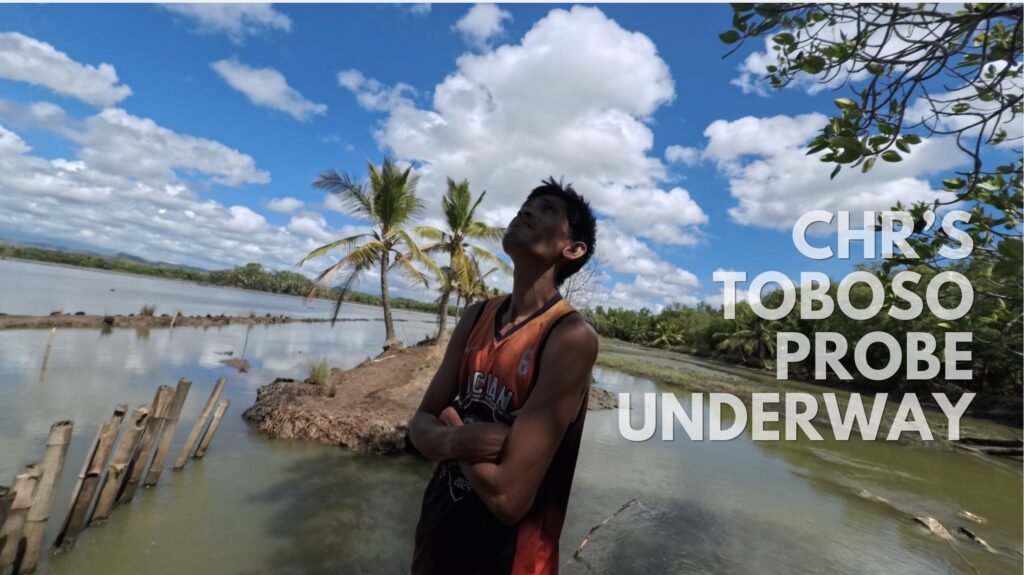
TOBOSO, NEGROS OCCIDENTAL — The Commission on Human Rights (CHR) has subpoenaed documents and reports from the military pertaining to the clash between the Philippine Army and New People’s Army (NPA) guerrillas that led to the deaths of 19 people, including nine civilians, on April 19 in this town.
The commission, led by special investigator Michelle Tuliao, has also sent a team of six personnel from Manila central office, to conduct an investigation into the deadly incident, which also killed two children, a 15-year-old girl and a 17-year-old boy.
Tuliao, who spoke with Rights Report Philippines on May 8 here, said that the subpoena was served on May 7 to Brigadier General Ted Dumosmog, 303rd Infantry “Brown Eagle” Brigade commander, and Colonel Dennis Wenceslao, director of the Negros Occidental Police Provincial Office.
They were given 10 days from receipt of the order to comply, or they could be held in contempt.
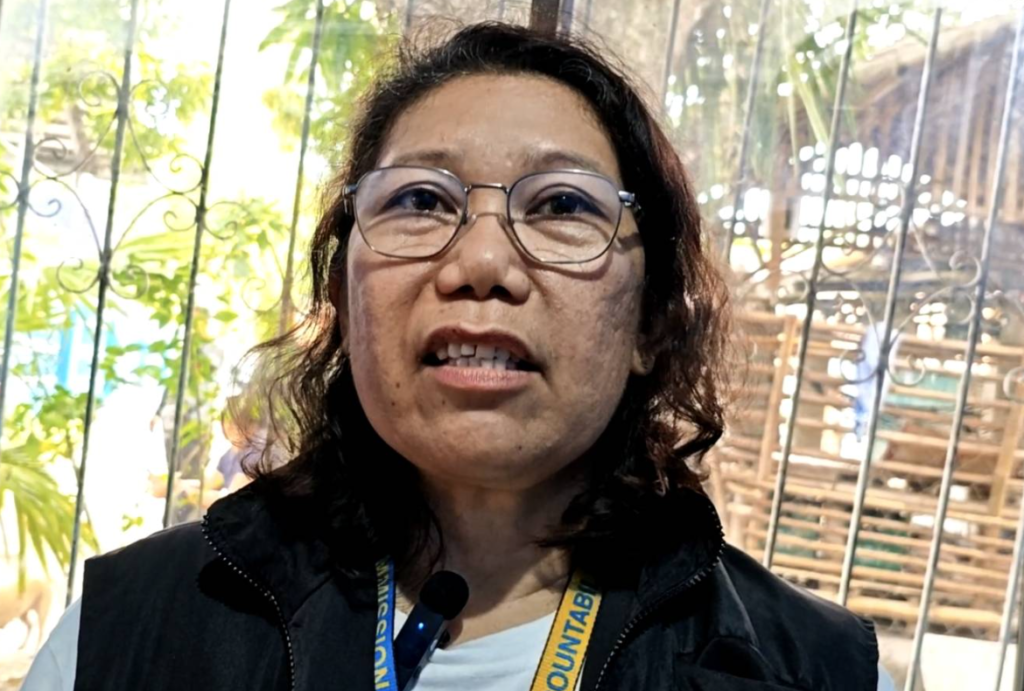
Tuliao said thesubpoena duces tecum, or an order to produce the pertinent documents, was signed by CHR chairman Commissioner Richard Palpal-latoc.
Tuliao said the CHR Negros Island Region office had earlier sent a coordination letter request after conducting the initial investigation, but the Army and the police have yet to respond. She said they were told that the report was still being updated and finalized.
Coordination with security forces was a real challenge, Tuliao said. “They have their own mandate, we also have our own mandate,” she said.
The local CHR office had earlier noted the refusal of the police and military to provide the commission with investigation documents related to the previous human rights cases and extrajudicial killings on Negros Island.
In past cases in Negros Occidental, the Philippine National :Police and the army have denied the CHR’s regional office access to records essential to its investigations, including spot reports, battle reports, and investigation reports that are legally considered public documents.
The problem is that the CHR has a broad mandate but limited authority to enforce it. The commission cannot prosecute anyone, and courts have been clear it doesn’t function as a quasi-judicial body — meaning it can investigate and make recommendations, but it cannot compel a soldier or police officer to produce a document or answer questions.
Challenges
Tuliao, whose team arrived in the province on May 3, said their investigation into the incident is still ongoing as they seek to determine whether it was a legitimate encounter or a massacre. “We’re here to validate the inconsistencies,” she said.
She said they are not yet finished with the investigation and are still in the data gathering stage. She said one of the challenges they faced was the refusal of some families to talk, as they want to forget what happened, though she pointed out that there are some families who are open to talking with the commission.
“We’re reaching out to all the families, including the NPA, but some refused,” she added.
Another challenge they faced during the investigation was the difficulty in communication due to poor mobile signal as well as the trek to the remote village, with its rugged terrain.
READ: #Toboso19: Concerns Over Botched Evidence Handling; Army Pushes Back on Forensic Expert’s Findings
Walk-Through
Tuliao said they requested the military and the police to assist them in “really walking through” where the incident started and the site of the last encounter.
Based on the accounts of Sitio Plarending residents to Rights Report Philippines, they had already heard faint gunshots from neighboring Sitio Sinugmawan as early as 4 a.m., with augmentation military forces immediately positioning themselves in Plarending, where they encountered the fleeing rebels at around 11 a.m.
Sinugmawan is more than two kilometers away from Plarending, or more than an hour’s walk.
By the afternoon, 19 people were dead, with only 10 identified by the NPA as combatants, while the nine others, it said, were noncombatants.
During the walkthrough, the CHR investigator said they were showed “where the bullets are, and where they stayed.”
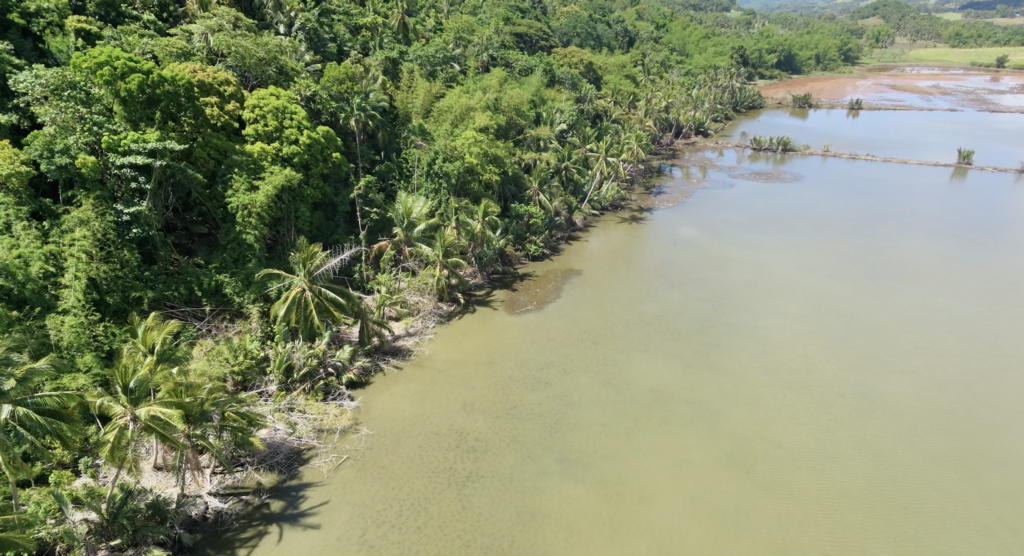
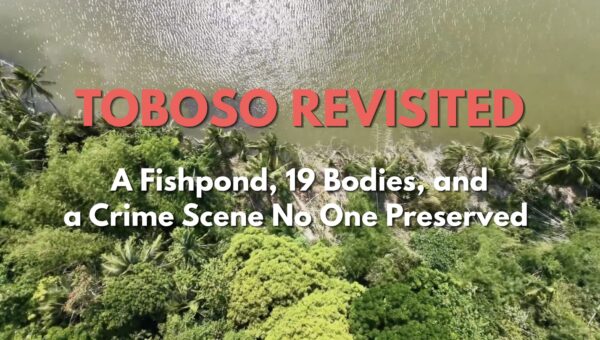
They were also showed the fishpond, where some of the bodies were recovered.
“It was an experience… We experienced the terrain. It’s very difficult and it was very hot. When we passed by, it was an open area, it was hot. The walk is not the enemy but the heat of the sun. Walang si-silongan, diretso ka lang talaga (there’s no shelter, it’s really just an open space),” she said.
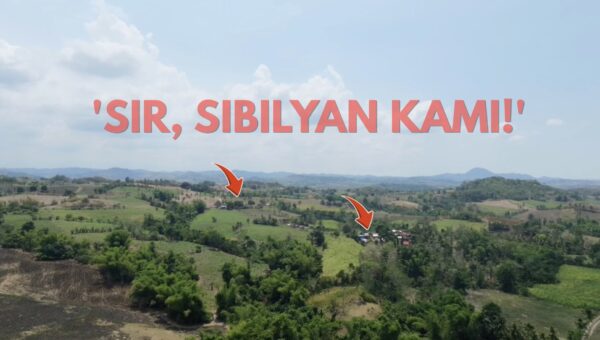
Plarending is a remote upland sitio characterized by rugged terrain, scattered houses, and elevated forested areas. The area is accessible mainly through a narrow dirt trail and is more than a 30-minute walk from the main road.
READ: In #Toboso19 Aftermath, the Struggle for Healing
According to a resident, the pursuing soldiers – with the help of augmentation forces that had already positioned themselves early that morning – were able to trap the NPA group at the fishpond, where they had nowhere to run.
This was also backed by Barangay Salamanca chairman Romeo Sultan, who said there are three exit points from Sitio Sinugmawan, where the initial firefight started: Barangay San Jose in Toboso, Sitio Plarending, and Barangay Udtongan in neighboring Escalante City.
The rebels would have been trapped if they escaped through San Jose because it leads directly to the national highway, he said. Instead, they passed through Plarending, where more military forces were already waiting for them.
One side of the fishpond is lined with elevated forested terrain, providing a tactical vantage point because it overlooked the kill zone. The fishpond was visible from that position.
Residents told Rights Report Philippines that they saw drones in the area, a claim the military had denied. (Rights Report Philippines)