NEWS ANALYSIS: The Marcos administration has framed its response to Toboso as though the burden of proof rests with the families of the dead, as though the military’s declaration of “success” is the default conclusion until someone proves otherwise. International law says the opposite.
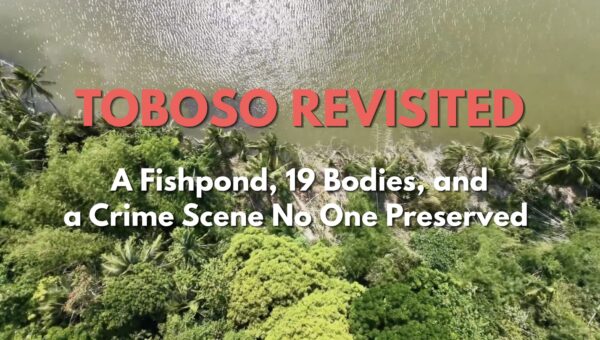
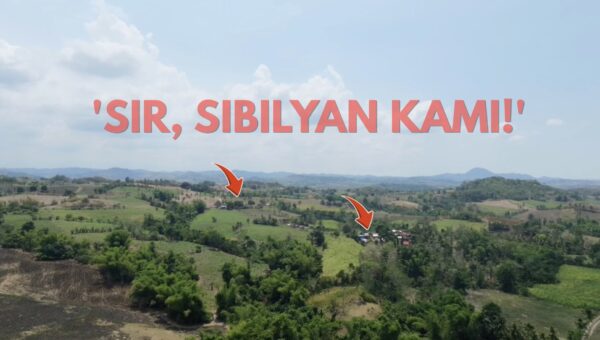
MANILA — Eleven days after soldiers from the Philippine Army’s 79th Infantry Battalion killed 19 people in Barangay Salamanca, Toboso, Negros Occidental, the government has yet to convene a credible, independent investigation into what happened — and the bodies of a University of the Philippines student, a community journalist, and two American human rights advocates are among those whose deaths remain officially unexplained.
What the government has done instead is move quickly to shape the story.
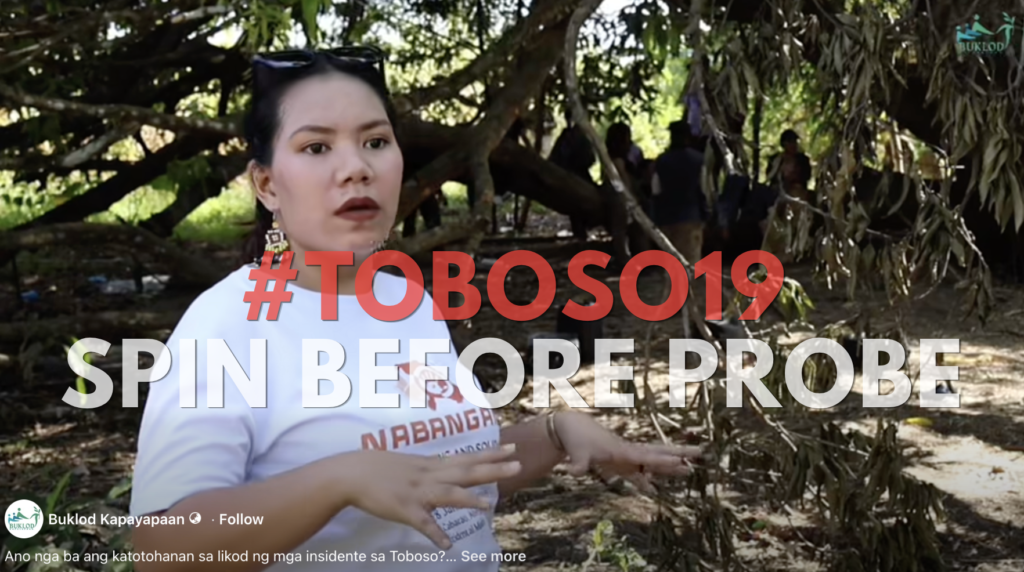
Within four days of the April 19 killings, a group called the Buklod Kapayapaan Federation Inc. deployed a “fact-finding mission” to Toboso. By April 27 — just eight days after the killings — the group held a press conference announcing its conclusion: those killed were NPA combatants, not civilians. The military had said the same thing since Day One. The palace, the armed forces’ chain of command, and the vice president had all said the same thing. Buklod Kapayapaan simply gave it a civilian stamp.
The problem is that Buklod Kapayapaan is not an independent civil society group in any meaningful sense.
A Group That Moves in Step With Government
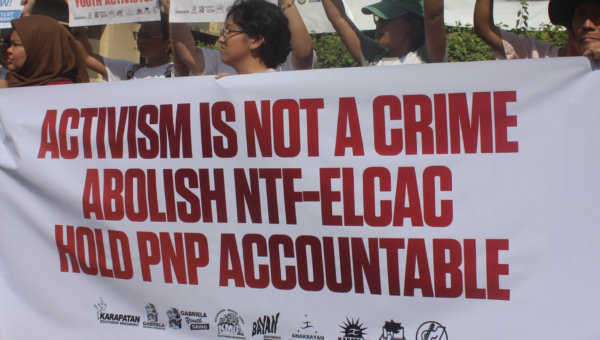
Buklod Kapayapaan Federation Inc. is composed of former rebels, former members of the Communist Party of the Philippines and its armed wing, the New People’s Army who have surrendered and “reintegrated” under government programs. Its ties to the National Task Force to End Local Communist Armed Conflict (NTF-ELCAC), the government’s main red-tagging agency regularly deployed to accuse activists, critics, and journalists of being communists, are extensive and well-documented.
In a November 2025 press conference hosted by the NTF-ELCAC itself, Buklod Kapayapaan member Arian Jane Ramos appeared alongside the task force’s officials to build a case against the Makabayan bloc, a group of progressive lawmakers the NTF-ELCAC has long red-tagged, accusing it of fronting for the communists. The NTF-ELCAC’s own website carried the event.
This is not an isolated appearance. Earlier this year, in February 2026, when international human rights observers attempted to conduct independent investigations into military operations in Abra de Ilog, Occidental Mindoro, they were blocked. Damien Connor, a member of the International Coalition for Human Rights in the Philippines, said at the time that only NTF-ELCAC-affiliated groups were allowed to investigate — and Buklod Kapayapaan was among the groups that presented findings aligned with the military’s account. Independent humanitarian organizations were not.
The pattern repeated itself in Toboso almost immediately.
The former rebels who form Buklod Kapayapaan’s membership are also likely beneficiaries of the NTF-ELCAC’s E-CLIP program, a government reintegration initiative that has disbursed close to P500 million in cash assistance to surrendered rebels since 2018 — the same population from which the federation draws its membership. The task force controls the program’s eligibility, assistance, and oversight.
In short, the people conducting Toboso’s fastest “independent” investigation are people whose reintegration and financial support flows through the same government body that oversees counterinsurgency operations. No mainstream Philippine news organization has called this arrangement a conflict of interest yet. It is one.
Declarations, Not Investigations
The official responses after Toboso were not investigations. They were declarations.
Armed Forces of the Philippines chief Gen. Romeo Brawner Jr. called the operation a “success.” Army commanding general Lt. Gen. Antonio Nafarrete commended the 79th Infantry Battalion. Philippine Army spokesperson Col. Louie Dema-ala dismissed claims that civilians were killed, saying the public should not “oversimplify complex security incidents or prematurely assign blame without verified facts” — a statement rich with irony given that the army had already assigned blame, declared victory, and handed the dead over to their families before any independent review had taken place.
Vice President Sara Duterte offered what may be the most tone-deaf response of all. She praised the operation while urging parents to “monitor their children’s activities” to prevent recruitment into “violent extremist groups.” Two of the dead were college students. One, Alyssa Alano, was a student leader from the University of the Philippines. The other, Maureen Keil Santuyo, has been described in activist group statements as a farmers’ rights advocate. Duterte offered no condolences for them or their families by name. The NTF-ELCAC, for its part, used the killings as a recruitment narrative, framing the deaths of two Filipino-Americans as evidence that the NPA was now recruiting foreigners and minors — a pivot that directed attention away from the question of how civilians ended up dead in a military operation.
Genuine Alarm
One government body has responded with genuine alarm: the Commission on Human Rights. The CHR said it launched an independent investigation on April 26, noting what it called “inconsistencies in the identities of those dead” and warning that alleged violations of international humanitarian law require a “prompt and impartial inquiry.” The CHR also raised concern over the displacement of more than 800 residents from adjacent villages.
But the CHR is an independent constitutional body — not the executive branch, not the Department of National Defense, and not the AFP. Its investigation will proceed without any of the executive authority needed to compel testimony, access classified military records, or hold anyone accountable unless criminal complaints follow.
The Makabayan bloc in the House of Representatives filed a resolution asking the House Committee on Human Rights to conduct its own inquiry. That process has not yet begun, and whether it will is subject to the political calculus of a chamber that has largely aligned itself with the administration.
Human rights group Karapatan has described the killings as a “massacre” and demanded a “truly independent investigation.” U.S.-based Filipino activist groups — including Malaya Movement USA and Gabriela USA — have called on the international community to monitor the case, noting it as part of what they describe as a continuing pattern of international humanitarian law violations in the Philippine countryside.
The Communist Party of the Philippines, itself one of the armed parties to the conflict, acknowledged that 10 of the 19 dead were its fighters, but said the remaining nine were noncombatants — a partial concession that directly contradicts the military’s insistence that all 19 were armed rebels.
What Government May Not Understand (or Hopes You Don’t)
There is a legal principle at the heart of all of this that the Marcos administration has either overlooked or is banking on the public not knowing. Under the International Covenant on Civil and Political Rights, to which the Philippines has been bound since October 1986, blocking or substituting a credible independent investigation is not just a procedural failure. It is a human rights violation in its own right.
The UN Human Rights Committee, the body that interprets and monitors ICCPR compliance, has stated this plainly in its General Comment No. 31: the failure to investigate allegations of violations “could in and of itself give rise to a separate breach of the Covenant.” Failure to bring perpetrators to justice carries the same consequence. These are not aspirational guidelines. They are binding legal obligations that the Philippines accepted when it ratified the treaty — and they apply regardless of whether a government believes its military acted correctly.
That distinction matters enormously here. The Marcos administration has framed its response to Toboso as though the burden of proof rests with the families of the dead — as though the military’s declaration of “success” is the default conclusion until someone proves otherwise. International law says the opposite. The International Commission of Jurists has specifically directed the Philippine government that when its established procedures are “found to be inadequate because of lack of expertise or impartiality,” the state is required to convene an independent commission of inquiry. Adequacy and impartiality are not self-assessed. A government cannot investigate itself and call it independent.
A Pattern the UN Has Already Named
This is not the first time the Philippines has been told this. The UN Human Rights Committee has already directed Manila to “establish an adequately resourced independent accountability mechanism” for killings involving security forces — a directive issued after scrutinizing the Duterte administration’s drug war, which left thousands dead with near-total impunity. The Marcos administration inherited both the obligation and the track record, and has so far done nothing to change the structural conditions that produced it.
What makes the Toboso response arguably worse is the active substitution of an affiliated group for a neutral one. The Minnesota Protocol — the UN’s authoritative standard on investigating suspicious deaths — requires that inquiries be free from undue influence arising from chains of command, and equally free from “the interests of political parties or powerful social groups.” Buklod Kapayapaan, whose members appear alongside NTF-ELCAC officials at government press conferences and whose membership draws from a population whose reintegration benefits flow through the government’s own counterinsurgency apparatus, fails that standard by any reasonable reading. Presenting their findings as a civilian accounting of the facts is not an alternative to an independent investigation. Under international law, it is an obstacle to one.
The UN Special Rapporteur on Extrajudicial Killings has put it without ambiguity: “Every potentially unlawful death requires a prompt, independent and impartial investigation.” Investigators, the Rapporteur added, must be free from interference and must keep victims’ families informed throughout the process. The families of the Toboso 19 have not been treated with dignity. They have been given a press conference.
The Compounding Effect
Under international law, impunity does not merely fail to address past violations — it actively generates new ones. The UN Human Rights Committee has explicitly warned that governments never held accountable for killing tend to kill again — that impunity, in its own words, “may well be an important contributing element in the recurrence of the violations.” In plain terms: the pattern does not stop until the accountability does. The Philippines does not need a lecture on what that cycle looks like. It has been living it for decades.
What is happening in Toboso is not an isolated failure of process. It is the most recent entry in a ledger that international bodies have been keeping for years – one in which the government kills, the military commends itself, an aligned group validates the military’s account, and an independent investigation either never materializes or arrives too late to matter. The International Commission of Jurists has noted that victims of state violence hold the right to justice, truth, and reparation under multiple intersecting bodies of international law — rights that cannot be satisfied by a fact-finding mission that concluded its work before the forensic evidence was even fully gathered.
The families asking what happened in Barangay Salamanca are not asking for a favor. They are asserting rights that the Philippine government, by its own treaty commitments, is legally obligated to fulfill.
A Question to Government
There is a straightforward question at the center of the Toboso killings that the government has not tried to answer: How did a group with known links to the government’s own anti-insurgency apparatus gain access to Toboso within days of the killings and conduct interviews with victims’ families — without even notifying the local government — while an independent panel with actual investigative powers has not been convened at all?
The Philippine Army has maintained its operations were guided by prior intelligence and conducted in accordance with its rules of engagement. If that is true, an independent investigation would prove it. The government’s resistance to exactly that kind of scrutiny — and its willingness to let a task-force-aligned group run what has been presented to the public as the civilian version of the facts — suggests something other than confidence.
The 19 people killed in Barangay Salamanca on April 19 included a journalist, student activists, community organizers, and two American citizens. Their families are still waiting to learn how their deaths were lawful. The government, so far, has responded with commendations, press releases, and a peace rally organized by a group that attends NTF-ELCAC press conferences. (Rights Report Philippines)