
Nineteen people are dead and hundreds displaced after a military operation in Negros Occidental. The military called it a decisive victory against the communists. Human rights groups are demanding answers.
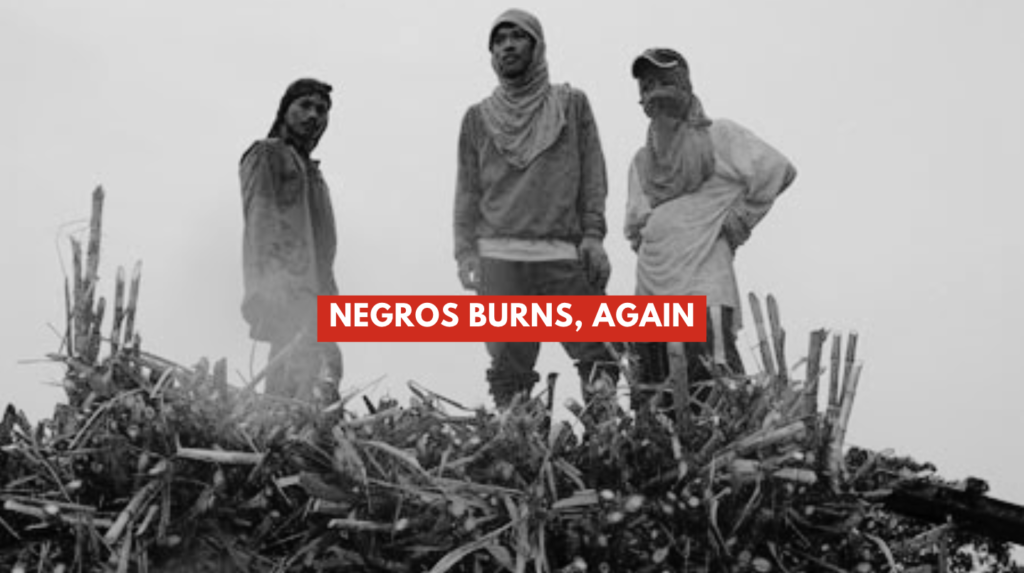
BEFORE dawn on April 19, soldiers from the Philippine Army’s 79th Infantry Battalion descended on a remote community in Barangay Salamanca in northern Negros Occidental, acting on a tip about a rebel encampment. By the time the gunfire stopped — nearly 12 hours later — 19 people were dead, more than 650 residents had fled their homes, and a journalist, a university student leader, and at least one farmer lay among the casualties.
The military called it a decisive victory. Human rights groups are demanding answers.
Drawing on media reports and statements from various activist groups, Rights Report Philippines pieced together this story, which suggests that there are credible grounds for a formal investigation into violations of human rights and international humanitarian law. For one, the location discrepancy documented by advocacy groups — placing RJ Ledesma in a different community from the initial firefight, killed during a separate pursuit operation — is a specific, verifiable factual claim.
For another, the identities of at least three of the 19 dead are inconsistent with the military’s blanket characterization of all casualties as combatants of the New People’s Army. And the documented pattern — from the Escalante massacre through Oplan Sauron through the extrajudicial killings of lawyers and activists in Negros over the years — establishes that the security forces in Negros have a well-documented history of operating outside the law, with near-total impunity.
All these facts point to the need for an independent, impartial accounting, something Negros has almost never received.
Wanted Rebel Leader
The Armed Forces of the Philippines said the clash in Salamanca was its largest single-day operation against the communist New People’s Army since the 1990s. Brig. Gen. Ted Dumosmog, commander of the 303rd Infantry Brigade, confirmed that among those killed was Roger Fabillar, a wanted rebel leader with a Php2 million bounty partly funded by private businessmen, who used several aliases and was linked to the alleged summary killings of at least 36 people the military had tagged as informants. Five of the 19 killed were key officials of the NPA’s Northern Negros Front, Dumosmog said, adding that “their core leadership has been wiped out.”
But even as military commanders described the operation as a clean engagement against armed insurgents, a starkly different account was taking shape on the ground.
Altermidya, a network of independent media outfits, said in a statement that R.J. Nichole Ledesma, 30, its regional coordinator in Negros and the editor of the alternative media outfit Paghimutad-Negros, was not at the initial clash site when he died. According to the group, Ledesma was attacked in a separate peasant community, sitio Plaringding, during an ensuing military pursuit operation, roughly three kilometers from where the fighting had begun. According to the network, Ledesma had been in the area doing “community work” and “immersion reporting” on the effects of renewable energy projects — including solar farm expansion and windmill installations — on vulnerable farming communities.
A student leader from the University of the Philippines Diliman, Alyssa Alano, the student council’s education and research councilor, was also among those killed, the U.P. Diliman University Student Council said. The council stated that Alano had been living and conducting research with farmers in Negros to understand their conditions amid land seizures and ongoing militarization. Roel Sobillo, a relative of another victim, claimed that his family member was simply a farmworker employed by relatives in the area.
The Philippine Army had not responded to those accounts as of Wednesday.
A Journalist’s Death
Ledesma had spent his career covering what tends to go unreported in Negros — the struggles of farming communities displaced by large landowners, energy companies, and armed conflict. He had served as editor-in-chief of the student publication at the University of St. La Salle in Bacolod, then led Paghimutad-Negros from 2020, and later joined Altermidya. His recent work documented communities facing displacement from large-scale renewable energy projects, reclamation projects in Bacolod, the expansion of a palm oil plantation in Candoni, and the conditions of seasonal sugarcane workers.
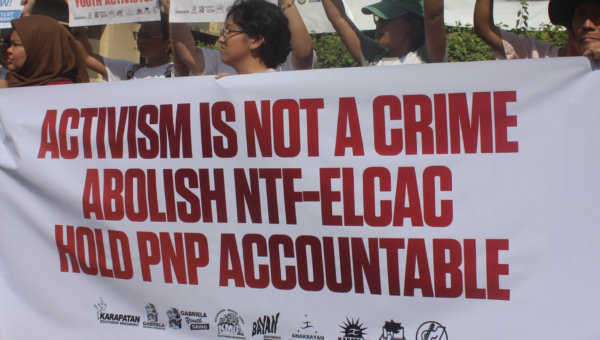
That work had drawn scrutiny from the security establishment. In October 2022, the Philippine Army’s 303rd Brigade publicly labeled one of Paghimutad’s human rights reports as “propaganda” and linked the outlet to the National Democratic Front, the communist movement’s political wing. The post circulated through police and military platforms. It is an example of red-tagging — the labeling of journalists, activists, and community workers as communist sympathizers — which rights groups say has repeatedly preceded killings in the Philippines.
‘Possible Widespread Violations’
The International Coalition for Human Rights in the Philippines has called for an immediate and impartial investigation, arguing that the scale of the operation and the identities of some of the dead point to potential violations of International Humanitarian Law, the so-called “laws of war” rooted in the Geneva Conventions that governs armed conflict and requires parties to protect civilians. The coalition said the AFP’s tendency to classify all combat casualties as enemy combatants, regardless of circumstances, was a pattern it had documented for years.
Maj. Gen. Michael Samson, commanding general of the Army’s 3rd Infantry Division, said of the deaths: “We do not rejoice whenever lives are lost. But we cannot prevent such a tragedy, as it is the consequence of taking up arms and fighting against the government.”
That framing drew sharp pushback from the U.P. Diliman University Student Council, which described Alano as an innocent civilian who had gone to Negros to learn, not to fight. The U.P. Office of the Student Regent condemned what it called continued militarization of Negros Island and urged security forces to restrain operations that result in mass displacement.
At least 653 people from 168 households in Salamanca and San Jose were evacuated during the fighting, sheltering in local schools, according to reports. Mayor Richard Jaojoco said residents were awaiting Army clearance before they could return home.
Negros and Its Long War
To understand why these killings carry such weight — and why calls for accountability are unlikely to fade quickly — it helps to understand what Negros has been, and what it remains.
Rebellion erupted on the island in the early 1970s in reaction to martial law and the intimidation of workers by landlords’ agents. The roots of that rebellion run deeper still. The poverty and conflict in Negros have their origins in the Spanish colonial era hacienda system, which used vast sugar plantations to enforce social control. It created a class structure — large absentee landowners, landless seasonal laborers called sacadas — that remains visible today. Negros Occidental has experienced a high level of conflict since 2017, recording the greatest number of armed clashes per province in the Philippines in recent years, according to the International Crisis Group.
The Communist Party of the Philippines was established in 1968 by Jose Maria Sison, who drew on Marxist-Leninist-Maoist ideology to organize a peasant-based guerrilla movement. Its armed wing, the New People’s Army, has fought through dictatorship, democracy, and repeated rounds of peace negotiations — all of which have collapsed. The conflict has claimed more than 40,000 lives on both sides since 1969, by conservative estimates, according to Philippine Army figures. At its peak in the 1980s, under the original Marcos dictatorship, the NPA operated across most of the country’s provinces. The Negros provinces have been the hotbeds of the conflict.
President Ferdinand Marcos Jr., the dictator’s son, declared in late 2023 that his government had wiped out all active NPA guerrilla fronts.Peace talks were briefly revived that year, but negotiations have since stalled. The Armed Conflict Location and Event Data Project documented continued NPA activity well after the government’s declaration of victory. The Toboso operation suggests that in Negros, at least, the conflict is not finished — it has simply become harder to see.
‘Bloody Thursday’
No single event defines the cycle of violence in Negros more than what happened in Escalante City on September 20, 1985, a date that people there still call “Bloody Thursday” (although it took place on a Friday). Twenty were killed when paramilitaries and law enforcers fired on thousands of protesters, mostly farmers, fisherfolk, teachers, students, and seasonal sugarcane workers during a Welga ng Bayan to mark the 13th anniversary of the declaration of martial law..
It became known as the Escalante Massacre. Five months later, the Marcos regime collapsed in the People Power Revolution. But the killings stopped no cycle of violence. Bernardino Patigas, a survivor of the Escalante Massacre who later served as a city councilor, was shot dead by a motorcycle-riding gunman in Escalante City on April 22, 2019, 34 years after the massacre he had survived.
The Sagay Massacre
On the night of October 20, 2018, a group of armed men descended on Hacienda Nene in Sagay City, in the same stretch of northern Negros Occidental where last week’s military operation took place. Nine members of the National Federation of Sugar Workers, including four women and two children, were resting in a makeshift tent on land they had collectively occupied when approximately 10 gunmen opened fire on them. At least four farmers survived.
The killing brought to the fore the long-running struggle of Filipino peasants for land. Human Rights Watch condemned the killings. The Philippine National Police initially blamed communist rebels; lawmakers from the opposition disputed that, pointing instead toward landowner-linked paramilitary forces.
From 2017 to 2018, 26 farmers and organizers involved in land occupation campaigns were killed across the region. Government data show that 1,727 medium and large landowners control more than half of all sugarcane plantations on Negros Island. A trial in the Sagay case has moved slowly, and accountability remains incomplete.
Oplan Sauron
In direct response to a 2018 security decree placing Negros under intensified military deployment, the military and the police launched a series of counter-insurgency operations in Negros under the code name Oplan Sauron.
On March 30, 2019, the second wave of Oplan Sauron claimed the lives of 14 people across three towns in Negros Oriental in a single day. From December 2018 through that April, 20 peasant activists and residents had been killed under Oplan Sauron, according to a House of Representatives resolution filed by opposition lawmakers seeking a probe. The four bishops of Negros Island — including Bishop Alminaza — denounced the killings. The Commission on Human Rights called for a halt to the operations and urged government to investigate. The police commander who led Oplan Sauron in Negros during that period, Debold Sinas, was later promoted to national police chief.
From October 31 to November 5, 2019, the police and military conducted raids using nine search warrants on the offices and homes of human rights defenders, leading to the mass arrest of 62 activists across Negros and Manila.
In the Crosshairs
The red-tagging that preceded so many of these killings has not spared even the people trying to defend the victims in court.
On November 6, 2018, just weeks after the Sagay Massacre, lawyer Benjamin Ramos Jr. – the secretary general of the National Union of People’s Lawyers in Negros Occidental, who had been representing the families of the Sagay victims — was shot dead by motorcycle-riding gunmen outside a store in Kabankalan City. Karapatan noted that Ramos had been included earlier that year in what the group called a “poster hit list,” distributed by police in Moises Padilla town, publicly identifying him as a communist. No one has been convicted of his murder.
In July 2019, another lawyer, Anthony Trinidad, a human rights lawyer in Guihulngan, Negros Oriental, was shot by unknown assailants while on his way home from a court hearing, his wife wounded in the same attack. Trinidad’s name had also appeared on a poster circulated in Negros labeling him a communist. He was the 39th lawyer killed under the Duterte administration.
Perhaps no case illustrates the deadly consequences of red-tagging more starkly than that of Zara Alvarez.
Alvarez was a human rights defender and a research and advocacy officer for the Negros Island Health Integrated Program, well known for her work supporting farmers and agricultural workers. In 2018, she was included in an official terror list among 600 individuals by the Duterte administration, detained by police for nearly two years, and was awaiting a hearing in which she was to serve as a witness on red-tagging of rights workers. On the evening of August 17, 2020, Zara Alvarez was shot dead by unknown assailants in Bacolod City. She was 39 years old, and the thirteenth human rights defender killed in the Philippines in the previous four years. No one has been convicted of Alvarez’s killing either.
‘Deeply Broken’
In 2018, then-President Rodrigo Duterte signed Memorandum Order No. 32, deploying additional army and police units to Negros Occidental, Negros Oriental, Samar, and the Bicol region under a declared “state of lawless violence.” Human rights organizations have criticized the directive for enabling harassment, red-tagging, and violence in rural communities.
The Student Christian Movement of the Philippines and other groups say the current Marcos administration has maintained that framework. Of the 135 extrajudicial killings documented by advocacy groups across the Philippines, 52 — the highest count from any single region — are from Negros.
San Carlos Bishop Gerardo Alminaza, in a pastoral letter released on April 20, called the Toboso incident deeply troubling and said it “reveals something deeper about our shared reality.” Violence, he wrote, does not arise in a vacuum. “It takes root where wounds have long been left unattended — where poverty persists, where injustice is endured, where trust between people and institutions has been broken, and where hope in peaceful change has slowly faded.”
Negros Occidental Gov. Eugenio Jose Lacson said the deaths saddened him. “It’s painful to see Filipinos fighting fellow Filipinos,” he told local media, calling on members of the NPA to lay down their arms.
Whether a formal investigation into the April 19 killings takes place is far from certain. The Philippine government has historically resisted independent inquiries into military operations, and accountability for killings in Negros — from Escalante in 1985 to Sagay in 2018 to the lawyers, doctors, and farmers shot in the years between — has been the exception, not the rule.
The identities of most of the 19 have not been officially established. The families of the Toboso dead are still waiting for answers. (Rights Report Philippines)