After 19 were killed in Negros Occidental, everyone calls for an investigation. History shows why that may not be enough.
WHEN nine sugarcane farmers were gunned down while eating dinner in a makeshift tent in Sagay City in October 2018, the government’s response arrived in rapid sequence: condemnations from the palace, a promise of investigation, and a presidential visit canceled due to bad weather. Within two years, the Department of Justice had charged two of the massacre’s survivors with murder. The actual perpetrators have never been convicted.
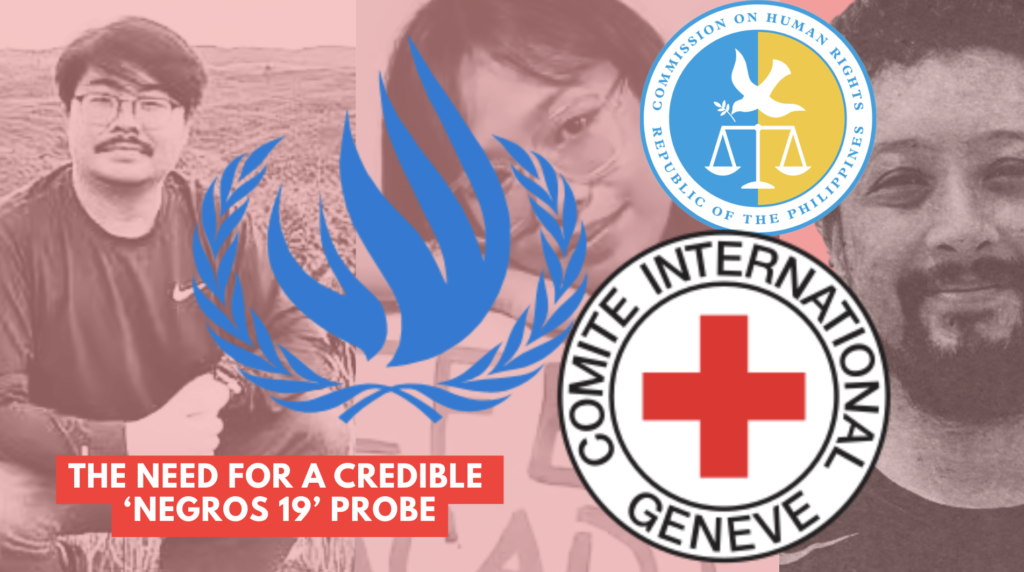
That history is very much on people’s minds in Negros Occidental this week, after soldiers from the Army’s 79th Infantry Battalion killed 19 people in a 12-hour operation in the remote village of Barangay Salamanca, Toboso, on the morning of April 19. The identities that have emerged — a community journalist,a UP Diliman student council member, a farmer — have raised doubts among rights groups as to whether all those killed were actually combatants. The military says they were.
READ: Negros Burns, Again: Death of 19 in Army Raid Raises Hard, Familiar Questions
Then, on April 24, the case acquired an international dimension that changed its diplomatic weight entirely. The National Task Force to End Local Communist Armed Conflict (NTF-ELCAC) confirmed that a reported American citizen of Filipino descent — described as a 40-year-old individual from California — was among those killed. Anakbayan-USA has confirmed this, naming the Filipino-American fatality. The NTF-ELCAC offered condolences. The U.S. Embassy in Manila had not responded as of publication.
What happens next — who investigates, on whose terms, with what power to compel the truth — will determine whether this case follows a now-familiar pattern: much noise, little accountability, and no convictions. The question is not academic – Negros has been here before.
READ: Why the Laws of War Matter in Places Like Negros — and Why They Are Routinely Ignored
The CHR: Hands Tied
The Commission on Human Rights has a constitutional mandate to investigate cases exactly like this one. Its Negros Island Region office is already at work, having been informed of the incident and reportedly opened an inquiry. What the CHR’s national office in Manila has not done, as of the morning of April 25, is issue a single public statement — a silence from the institution that sits at the apex of the Philippines’ human rights accountability architecture that has not gone unnoticed.
The regional office’s predicament in past Negros cases illustrates what that silence might cost. In a letter to CHR chairperson Richard Palpal-latoc, rights alliance Karapatan documented a pattern that had made previous probes in the province all but unworkable: CHR-Negros head Vincent Parra had disclosed that the AFP and PNP were not transparent with their reports about deaths from alleged encounters, and that even spot reports, battle reports, and investigation reports — considered public documents — were being denied to investigators.
The CHR’s record in similar cases shows it can investigate, but what follows rarely does. The commission’s own comprehensive April 2022 report found a consistent narrative by law enforcers alleging victims resisted arrest and identified use of excessive force. Those findings were noted but prosecutions did not follow. The CHR can investigate but it cannot prosecute; it can only make recommendations. And when its investigators are denied the very documents that could establish what happened, the investigation begins on its knees.
The ICRC: Engaged But…
The International Committee of the Red Cross (ICRC) is widely expected to engage with the Armed Forces of the Philippines over the Toboso operation. It has an active mandate in the Philippines, an existing memorandum of understanding with the military on compliance with international humanitarian law, and the institutional access to go where most investigators cannot.
But the key word in any description of that engagement is confidential. By institutional design, the ICRC’s role in monitoring respect for the laws of war is essentially forward-looking — aimed at stopping current violations rather than producing findings for public accountability or legal proceedings, as its own legal experts have argued explicitly. What the ICRC does behind closed doors may influence the AFP’s conduct going forward. Families of the dead, and the public, will almost certainly never hear what it found. That is not a failure of the ICRC — it is its founding logic and the price of its access. It should not be mistaken for accountability.
The UN: Limits
The United Nations has not ignored the Philippines. The question is what all that attention has produced.
In 2007, then-Special Rapporteur on extrajudicial killings Philip Alston completed a 10-day mission to the Philippines and reported that the Philippine Armed Forces were in a state of near-total denial about the number of politically motivated killings on their watch. He named names and made recommendations but the killings continued.
In July 2019, the UN Human Rights Council adopted resolution 41/2 requesting a comprehensive OHCHR report on the Philippines; the Duterte administration responded by ordering the suspension of all negotiations for financial assistance from the 18 countries that endorsed it. That 2020 OHCHR report under High Commissioner Michelle Bachelet found that a focus on security threats “real and inflated” had led to serious human rights violations reinforced by harmful rhetoric from high-level officials, and recommended an independent international investigation.
What followed was not an independent international investigation, but a three-year UN Joint Programme on human rights built on technical cooperation with the Philippine government. Supported by various governments from richer nations, the program concluded in July 2024. Even as it acknowledged some steps toward accountability, the OHCHR noted that numerous victims and their families still await justice.
The current UN Special Rapporteur on extrajudicial, summary or arbitrary executions is Morris Tidball-Binz, a Chilean forensic medicine specialist. His office can issue formal communications to the Philippine government, conduct a fact-finding visit, and issue a public report — and it should. Whether the Marcos administration would welcome that scrutiny is a different question.
There is also a more immediate UN presence in Manila that has been conspicuously quiet since April 19. Signe Poulsen, who serves as senior human rights adviser to the UN country team in the Philippines, sits at the intersection of all these mechanisms. It was Poulsen who led the UN Joint Programme’s efforts to train Filipino law enforcement and justice officials on the Minnesota Protocol — the international gold standard for investigating potentially unlawful deaths. Tidball-Binz was part of that effort and visited the Philippines in 2023. That training was built precisely for moments like this one.
While Pousen’s office cannot formally investigate, she has the standing to convey the UN’s concerns to the Philippine government, push for access, and coordinate with the OHCHR’s regional office in Bangkok and with Tidball-Binz in Geneva. As of April 25, no public statement had come from her office. That silence is a missed opportunity, and one that grows costlier the longer it holds.
Malacanang: Another Task Force?
There is a model for what an independent civilian investigation could look like in the Philippines, even if it has been used sparingly and imperfectly. In 2006, under sustained international pressure following a wave of political killings targeting activists and journalists, then President Gloria Macapagal Arroyo convened an independent commission led by retired Supreme Court Associate Justice Jose Melo. The Melo Commission found that the killings appeared to be orchestrated and documented the AFP’s role in the climate of impunity. Alston later said the commission’s report confirmed much of what he had documented, but the AFP’s response remained inadequate.
No comparable body has been announced, and the early signals from the Palace are not encouraging. Defense Secretary Gilberto Teodoro Jr., when asked by reporters about the death of UP student Alyssa Alano, said anyone found at an encounter site alongside armed groups could face prosecution for aiding and abetting, regardless of whether they were a combatant — a posture that does not suggest an administration prepared to second-guess its own military.
If such a task force were ever convened, its credibility would hinge almost entirely on independence from the AFP and the Philippine National Police. The most prominent name in forensic pathology in the Philippines is an obvious place to start. Dr. Raquel Fortun, one of only two certified forensic pathologists in the country, has conducted independent examinations of remains from the Duterte drug war and found that deaths declared in official reports as natural causes were in fact gunshot homicides. She has publicly documented how the DOJ has in the past twisted her findings in other cases, and has been visited by police following her autopsies. Whether her name appears on any task force’s roster for the Toboso case would be a reliable signal of whether the administration is serious about finding the truth or managing the story.
DOJ’s AO35: Not Automatic
Administrative Order 35, a standing inter-agency mechanism under the Department of Justice, was designed to investigate extrajudicial killings and IHL violations. It has historically been used far more often to pursue NPA cases than to scrutinize state forces, though its mandate covers both. The OHCHR has worked alongside the AO35 Secretariat through the UN Joint Programme to build investigative capacity and run regional case conferences. Whether that cooperation now produces something meaningful for Toboso depends on the same political will that is in question everywhere else.
The US Embassy: Not a Word
The death of a reported American citizen in a military operation abroad is not something the U.S. Embassy in Manila can simply wait out. Under international consular law, the United States government has an obligation to verify the identity and circumstances of death of one of its nationals — and beyond that legal baseline, a political interest in knowing what happened in Toboso that no previous Negros case has required of Washington. During the Melo Commission era, the embassy was not a passive observer: U.S. Embassy officials met with commission members, reached out vigorously to Philippine contacts in the military, law enforcement, and civil society, and explored ways the U.S. government could be additionally helpful. That level of engagement is not only appropriate now — it is overdue.
The NTF-ELCAC’s framing of the California victim — offering condolences while simultaneously floating an Anakbayan-USA affiliation that functionally red-tags the dead — is a pattern rights groups have documented in previous Negros killings. The task force itself stressed that full identification and circumstances remain subject to proper verification, which makes independent consular investigation more urgent, not less.
The embassy should not accept a state narrative as a substitute for an independent account of what happened to an American citizen. The State Department’s own 2024 country report on Human Rights Practices in the Philippines found that accountability for extrajudicial killings remained limited, with only four convictions recorded for killings during the Duterte administration’s drug war. Adding the death of an American to that record of impunity without a serious response from Washington would be a choice — and a conspicuous one.

The Diplomatic Community: Leverage?
The EU Delegation and likeminded embassies have, across several administrations, developed a pattern of expressing concern and doing little else. As recently as October 2025, the EU and the Philippines reaffirmed their joint condemnation of alleged extrajudicial killings and committed to protecting human rights defenders against violence, harassment, and red-tagging under the EU-Philippines Partnership and Cooperation Agreement (PCA). That commitment now needs to be tested against a specific case.
When nine activists were killed in Calabarzon in March 2021, the EU delegation issued a public statement recalling the Philippines’ own commitments on accountability made before the Human Rights Council. A similar statement for Toboso is the minimum; a formal demand for an independent investigation, coordinated with other western governments, would be something closer to what the moment requires. Norway, a sustained financial supporter of human rights work in the Philippines through the OHCHR and also of the peace process , is particularly well-placed to lead that coordination. The next EU-Philippines sub-committee meeting under the PCA is due in Manila in 2026. Toboso should be on that agenda by name, and the record of accountability — or its absence — should determine what happens next.
The GRP-NDFP JMC
There is, in fact, a joint mechanism between the Philippine government and the National Democratic Front, the political arm of the Communist Party of the Philippines. It’s called the Joint Monitoring Committee, created under the 1998 Comprehensive Agreement on Respect for Human Rights and International Humanitarian Law (CARHRIHL), the only substantive agreement the two sides have ever fully signed since the peace process began. Under CARHRIHL, the JMC is composed of three members each from the government and NDFP panels, with human rights observers from both sides, and the co-chairs receive complaints of human rights and IHL violations and can initiate requests for investigation by the party concerned.
In practice, the JMC has been broken for most of its existence. During the Arroyo years, the Joint Secretariat received 544 complaints against government forces and 58 against the NPA in its first 22 months — but the JMC never met to address them, denying justice to victims on all sides. A widely cited analysis by IHL expert Soliman Santos Jr. argued that a better mechanism would include the constitutionally independent CHR alongside independent civil society peace, human rights, and IHL advocates — implying the existing structure is too adversarial to produce credible findings.
As for whether the JMC could be revived specifically for Toboso: as of mid-2025 the NDFP reaffirmed its commitment to resuming formal peace talks, but the Marcos government was sending mixed signals, according to the communists. Meanwhile, Karapatan has cited the Marcos government’s failure to comply with CARHRIHL commitments as a serious obstacle to trust-building through joint mechanisms.
Reviving the JMC for a single investigation, without a broader peace framework in place, would be an extraordinary step — and there is currently no sign either side is inclined to take it.
The Pattern Negros Knows Too Well
The 2018 Sagay massacre produced a wave of investigations — by the NBI, the DOJ, the CHR, the House of Representatives. A month after the killings, Executive Secretary Salvador Medialdea, acting on Duterte’s directive, signed Memorandum Order 32, declaring a state of lawless violence in Negros, Samar, and Bicol and deploying additional troops. Rights groups said the order, which has not been rescinded, deepened violence rather than curbing it. The DOJ charged two of the massacre’s survivors with murder while the child abuse charges against Sagay police officers were dropped. No one has been convicted for the nine deaths.
In March 2019, 14 people were killed in simultaneous police raids across Negros Oriental. In 2022, peace consultant Ericson Acosta and companion Joseph Jimenez were killed in Kabankalan City, their bodies later bearing stab wounds. The military claimed they died in an encounter; human rights groups alleged they had been captured and executed. Investigations were announced in each case.
The pattern is not subtle – cases are opened, documents are withheld, survivors are charged, and years pass. The latest gunfight in Toboso was not a first, but it was the bloodiest armed encounter between the two forces on the island since the 1990s, according to local human rights advocates, who argue that what this all boils down to is impunity.
What Real Accountability Would Actually Require
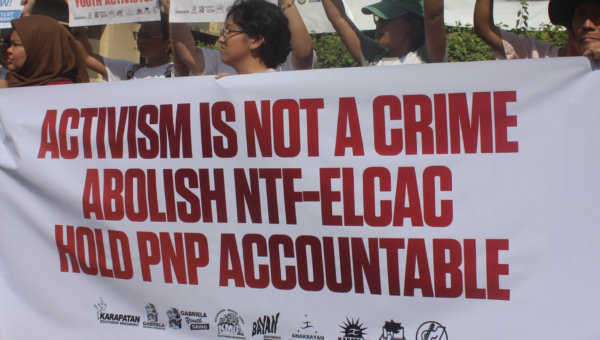
CIVICUS, Karapatan and other groups have called for an immediate and independent investigation, with Palabay arguing that the possibility the military committed a massacre — including in the context of an armed confrontation — should be investigated. The UP System’s human rights committee has argued that the AFP’s narrative that all fatalities were NPA combatants must be challenged by fact-finding, especially since this narrative has historically been used to justify the killing of civilians in the province.
Making that challenge stick requires a level of institutional coordination that no single body described here can deliver alone.
The CHR’s regional office should investigate, but it needs the national office to speak publicly and the military to stop treating public documents as classified.
The ICRC will engage quietly with the AFP, and that is fine as far as it goes, but it goes nowhere near accountability.
The UN Special Rapporteur should be formally invited — or at minimum formally petitioned by civil society, without waiting for Manila to move first. Poulsen’s office in Manila is the connective tissue between those international mechanisms and the people on the ground in Toboso, and her public silence so far is a missed opportunity.
The U.S. Embassy now has an American to account for, which gives it standing it did not previously have in prior Negros cases. The EU and likeminded missions have leverage they have consistently declined to use, and the next round of PCA sub-committee meetings in Manila is an opportunity to change that.
The families of the 19 people killed in Toboso have begun claiming their dead. Some were identified by the police as NPA commanders. Others were identified by their own loved ones as a student, a farmer, a journalist. One, if identity is confirmed, will be claimed by a family in California.
Whether anyone will ever answer for how those particular people ended up dead in the hills of Toboso is, as of this posting, an open question — one that Negros has been asking, in one form or another, since 1985. (Rights Report Philippines)