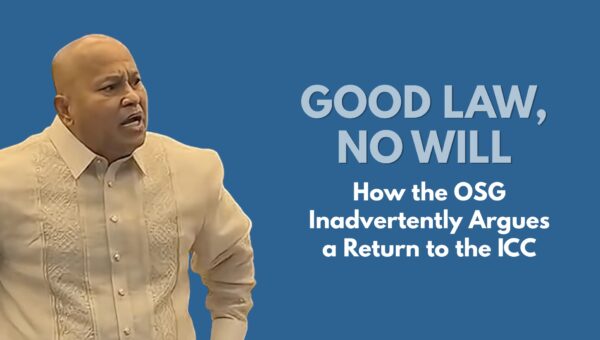

With Senator Bato dela Rosa barricaded inside the Senate, an analysis by a retired judge and international law expert reads less like academic commentary and more like a manual for a crisis already underway.
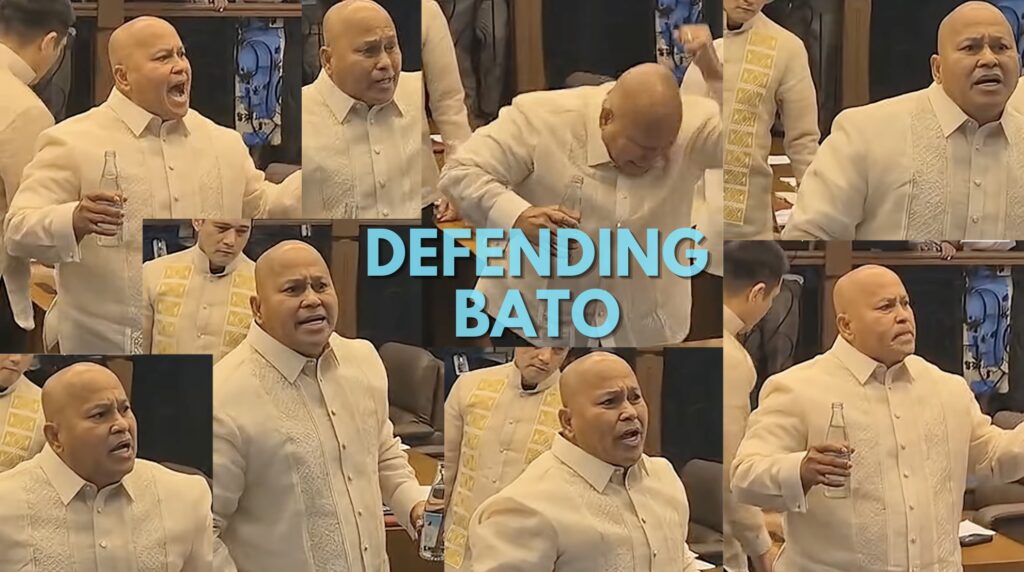
WHEN Ronald Dela Rosa sprinted into the Philippine Senate building on Monday, fleeing law enforcers seeking to detain him in connection with an ICC warrant the court would confirm later that evening, the legal question his flight raised had already been answered
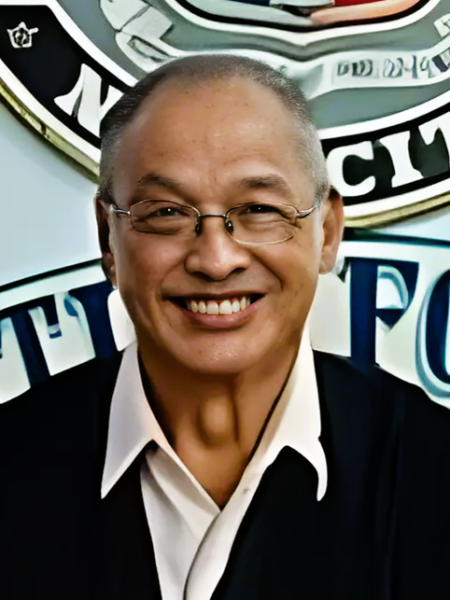
In an analysis piece he wrote back in February but sent to Rights Report Philippines this week, retired Naga CIty judge Soliman Santos Jr. laid out, point by point, what Philippine law and the ICC’s founding treaty require when arrest warrants arrive for the eight men – among them Dela Rosa – named alongside Rodrigo Duterte in the world court’s drug war murder case. Three months later, with Dela Rosa barricaded inside the Senate, Santos’ analysis reads less like academic commentary and more like a manual for a crisis already underway.
READ: EDITORIAL: History Is Patient. So Is The Hague.
The Eight and What They Face
On February 13, the ICC released a lesser-redacted version of the prosecution’s charging document, identifying eight individuals as co-perpetrators alongside the former president in what the court calls the “crime against humanity of murder.” Among them were Dela Rosa, Senator Bong Go, and former police chiefs Vicente Danao and Oscar Albayalde. All are accused of sharing in what the ICC calls a common plan to eliminate suspected drug users and dealers through violence.
Duterte himself was arrested in Manila on March 11, 2025, and surrendered to The Hague the following day. In April 2026, the ICC confirmed all charges against him and sent the case to trial. The eight co-perpetrators are, by most indications, next.
Writing in February, Santos, an expert on human rights and international humanitarian law, set out to answer the question that would inevitably follow: What exactly must the Philippine government do — and what may it choose not to?
The Phrase that Binds
The starting point in Santos’s analysis is not the ICC’s own rules. It is a Philippine Supreme Court ruling.
In 2021, the Supreme Court took up a challenge to Duterte’s unilateral decision to pull the Philippines out of the ICC in 2018. The court ultimately dismissed the petitions — but in doing so, it quoted at length from Article 127(2) of the Rome Statute, which bars withdrawing countries from shedding obligations they incurred while still members. The court’s own summary of that provision was unambiguous: “Whatever process was already initiated before the International Criminal Court obliges the state party to cooperate.”
Santos anchored his entire analysis on those ten words. “The phrase ‘whatever process,'” he wrote, “is broad enough to cover the informal preliminary examination that the Office of the Prosecutor started on February 8, 2018.” That examination — the first formal ICC scrutiny of the Philippine drug war — began more than a year before the withdrawal took effect on March 17, 2019. Under Santos’s reading, the cooperation obligation attached before the Philippines ever left.
He was also careful about a misreading that has circulated in legal and political circles. The Supreme Court had written that “until the withdrawal took effect on March 17, 2019, the Philippines was committed to meet its obligations.” Some read that as a cutoff — once the Philippines was out, it was out. Santos rejected that interpretation directly. “No,” he wrote. “The withdrawing State, the Philippines, still has residual obligations thereunder.” This duty to cooperate, he added, “is among what are referred to as ‘residual obligations’ of the withdrawing State like the Philippines even after its withdrawal from the Rome Statute.”
He also drew a sharp line around what the Supreme Court can and cannot do in this situation. When the high court dismissed the withdrawal challenge as moot, it cited the ICC’s “acknowledgement of withdrawal… removing any potential relief from this Court’s sphere.” Santos saw significance in that word. “The SC recognizes its limited ‘sphere’ when it comes to controlling actions of the ICC,” he wrote. “The SC has no jurisdiction over the ICC, only over the relevant Philippine authorities. The ICC is not bound by SC Decisions.”
READ: A Lawmaker Sprinting in the Halls, an ICC Warrant at the Door, a Senate Reduced to a Joke
What the Arrest Must Look Like
Santos then turned to Article 59 of the Rome Statute, the provision governing what happens after someone is arrested under an ICC warrant.
He began with a point that goes to the heart of the Philippines’ current situation. The first paragraph of Article 59 addresses “a State Party.” But the rest of the article uses a different term. “While paragraph 1 refers to ‘a State Party,'” Santos wrote, “the rest of Article 59 refers to ‘the custodial State,’ which need not be a State Party — like the Philippine status at the time of the Duterte arrest and surrender.” In plain terms: the procedural obligations do not disappear because the Philippines left the ICC. They apply to whoever has the person in custody.
Under those provisions, once someone is arrested on an ICC warrant, they must be brought “promptly before the competent judicial authority” in the country making the arrest. That authority must then confirm three things: that the warrant actually applies to the person detained, that the arrest followed proper procedure, and that the person’s rights were respected.
For the Philippines, Santos was specific about who that authority would be. “The Philippine ‘competent judicial authority’ can be a Regional Trial Court, which has original and exclusive jurisdiction over crimes against humanity under RA 9851,” he wrote, “or it can — and would likely be — the Supreme Court, in this kind of prominent case of first impression.”
He also flagged an ambiguity in the treaty’s language that defense lawyers may eventually test. Paragraph 2 of Article 59 refers to a “competent judicial authority.” Later paragraphs refer simply to “the competent authority” — dropping the word “judicial.” “Since the latter is not qualified as judicial,” Santos noted, “it theoretically may instead be executive or administrative.” He did not resolve the question, but he raised it clearly.
Article 59 also gives an arrested person the right to apply for what the treaty calls “interim release pending surrender” — a form of bail. But there is a strict limit on what that hearing can address: the court cannot question whether the ICC warrant was validly issued in the first place. It may only consider whether exceptional circumstances justify release, and whether the country could still ensure delivery to The Hague if it lets the person go. Once surrender is ordered, the treaty requires the person be delivered to the court “as soon as possible.”
READ: Loren Helped Bring the Philippines to the ICC. Now She’s on Duterte’s Side. What Changed?
Surrender: Permitted, Not Required
Here is where the legal picture becomes political.
Republic Act 9851 — the Philippines’ own 2009 law on crimes against humanity — gives the government explicit authority to hand suspects over to an international court. But Santos highlighted a word in that law that carries enormous weight: “may.”
He cited the Supreme Court’s own precedent in Bayan Muna v. Romulo, which addressed that provision directly: “The statutory proviso uses the word ‘may.’ It is settled doctrine in statutory construction that the word ‘may’ denotes discretion, and cannot be construed as having mandatory effect.”
That single word, Santos argued, means no president can be legally compelled to surrender the co-perpetrators — even if the ICC wants them and the treaty otherwise expects cooperation. “The relevant Philippine authorities, ultimately the President as ‘the chief architect of Philippine foreign policy’ and who has sworn to ‘execute its laws,'” Santos wrote, “must make a political or judgment call on whether or not to surrender the Duterte drug war co-perpetrators to the ICC.”
He also noted a gap in the law itself. RA 9851 Section 17 talks about surrender — but says nothing about arrest. “Note that this provision speaks only of ‘surrender’ not of ‘arrest,'” Santos wrote. “But of course surrender is premised on having physical custody of the ‘suspected or accused persons in the Philippines’ who must have been arrested or detained here.” You cannot surrender anyone you do not first hold.
Crucially, he argued no new regulations are needed to fill that gap. “No need,” he wrote, “for any implementing rules and regulations of RA 9851 on surrender of arrested persons pursuant to an ICC warrant.” Existing Philippine law — the Constitution’s Bill of Rights, the Revised Penal Code, criminal procedure rules — already governs how arrests must be conducted and how arrested persons must be treated.
The Gap No Warrant Will Fill
Santos ended his analysis with a harder question, directed not at The Hague but at Manila.
In December 2024, the House Quad Committee, after months of public hearings on the drug war’s death toll, recommended filing crimes-against-humanity charges under RA 9851 against Duterte, Dela Rosa, Go, and several other officials. “One wonders then whatever happened to the House of Representatives’ famous Quadcom Progress Report of 18 December 2024,” Santos wrote, with barely concealed frustration.
He pointed to something the ICC’s documents made plain: three of the individuals the Quad Committee recommended charging — former police chiefs and colonels — did not appear among the court’s eight named co-perpetrators. The ICC’s reach, in other words, is not unlimited. It cannot pursue every person who may bear responsibility for the tens of thousands of deaths counted by human rights groups during the drug war.
“The Philippine national criminal jurisdiction will have to shape up and step up,” Santos wrote, “because the ICC clearly and simply cannot cover ‘all persons who appear to be responsible for the offense involved’ — and therefore also their respective victims.”
He grounded this not in advocacy but in the text of Philippine law itself. RA 9851, he noted, states plainly in Section 2(e) that the most serious international crimes “must not go unpunished and their effective prosecution must be ensured by taking measures at the national level.” The ICC, under its own founding treaty, is designed to be secondary — a backstop for when national systems fail, not a replacement for them. (Rights Report Philippines)