
The five-judge panel upheld a January decision from Pre-Trial Chamber I, which had found no good reason to change the terms of Duterte’s confinement. The Appeals Chamber also rejected a similar challenge back in November 2025.
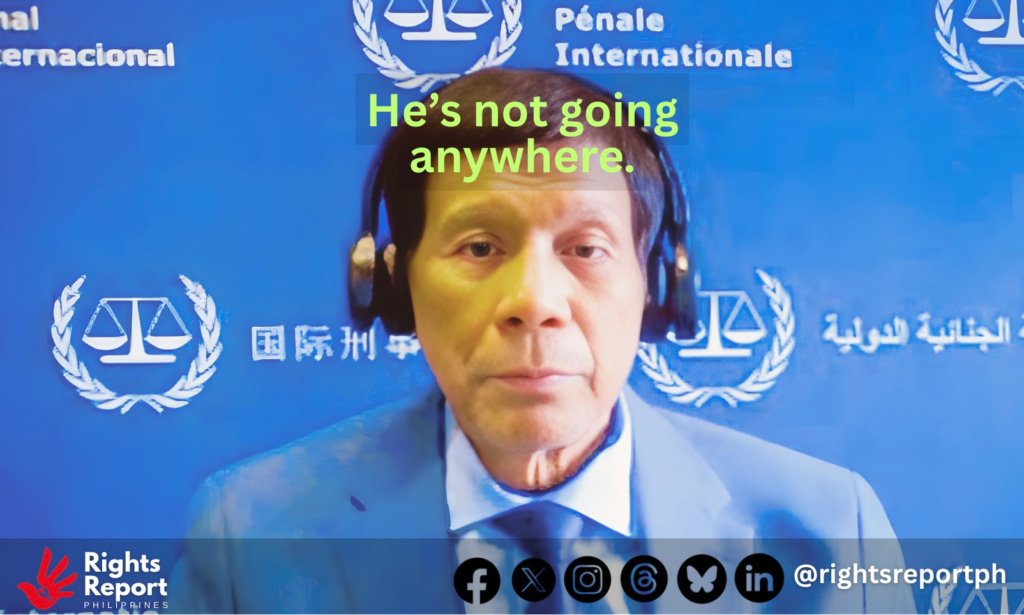
THE International Criminal Court’s Appeals Chamber has frustrated yet another attempt by Rodrigo Duterte’s legal team to get the former Philippine president out of detention, ruling unanimously on Friday that he stays in prison.
The five-judge panel upheld a January decision from Pre-Trial Chamber I, which had found no good reason to change the terms of Duterte’s confinement. The Appeals Chamber also rejected a similar challenge back in November 2025.
This time, Duterte’s defense had a specific target in mind: his health. Lawyers argued that the lower chamber had made a serious mistake by brushing aside a medical report they’d submitted in January, one prepared by outside practitioners who argued that Duterte’s cognitive condition would effectively make him incapable of fleeing, intimidating witnesses, or committing further crimes — the three key risks the court uses to justify keeping someone locked up before trial.
The Appeals Chamber wasn’t buying it.
For one thing, the judges noted that the defense’s own medical experts hadn’t actually examined Duterte themselves — they’d simply reviewed reports already prepared by the court’s own panel of independent doctors, who had physically assessed the 80-year-old suspect in December 2025. Since the court-appointed experts came to different conclusions, the Pre-Trial Chamber leaned on their findings over the defense’s outside opinion. The Appeals Chamber went a step further, saying that figuring out how health affects detention risk is ultimately a legal call for the judges to make, not a medical one.
The court also wasn’t impressed by how the defense had framed the argument. Duterte’s team had described the medical report as a “changed circumstance” that should trigger a fresh look at his detention. The Appeals Chamber disagreed, finding that the alleged cognitive issues didn’t rise to the level of something genuinely new — and therefore didn’t meet the bar for modifying the original detention decision.
Perhaps most pointedly, the judges observed that the defense’s arguments largely just recycled points that had already been addressed and rejected in earlier rulings, calling the practice “not an appropriate use of judicial time and resources.”
Duterte, who turns 81 later this month, has been held at the ICC’s detention center in The Hague since March 2025, when Philippine authorities handed him over to the court following the unsealing of an arrest warrant. He faces charges of crimes against humanity — specifically murder and attempted murder — tied to his government’s brutal war on drugs, which prosecutors say left thousands dead between 2011 and 2019, both during his time as Davao City mayor and as the country’s president.
A four-day confirmation of charges hearing wrapped up on February 27, during which prosecutors laid out their case for why there’s enough evidence to send Duterte to trial. The Pre-Trial Chamber now has up to 60 days to decide whether the charges should be confirmed and the case moved to a full trial — or whether proceedings should stop. (Rights Report Philippines www.rightsreportph.org)