
The short answer: Because impunity thrives in the dark. The long one is every story we have yet to tell.
Because someone has to keep score.
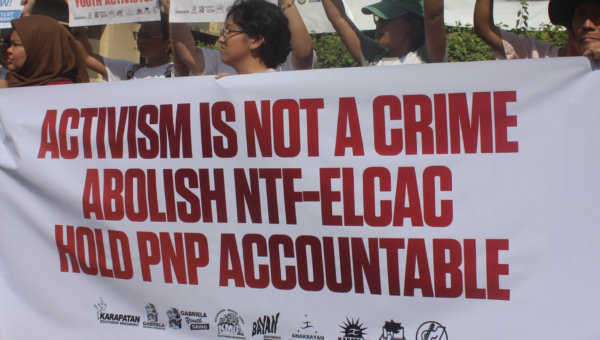
In the Philippines, human rights abuses are not aberrations. They are policy dressed in impunity — extrajudicial killings logged in police blotters as “nanlaban,” activists red-tagged into targets, journalists silenced by lawsuits, detention, or worse. The violations are systematic. The accountability is not.
This is not for lack of facts. The facts are often there: in court documents, in autopsy reports, in testimonies given at great personal risk by people who have already lost too much. What is often missing is the sustained, rigorous attention that transforms facts into the record, and the record into pressure for accountability. That attention is what human rights journalism exists to provide.
The mainstream media, overextended and under-resourced, covers human rights episodically: a massacre today, a verdict next month, silence in between. Economic pressures hollow out newsrooms. Editors weigh public interest against advertiser sensitivities. Correspondents cycle through beats. The story of a farmer killed in a military operation in Bukidnon competes for column inches with celebrity feuds and weather forecasts, and too often loses. The result is coverage that is reactive rather than sustained, dramatic rather than analytical, and ultimately insufficient to the scale of what is happening.
Meanwhile, the journalists and media workers who do pursue these stories face conditions that would deter the faint of heart. The Philippines consistently ranks among the most dangerous countries in the world for journalists. Red-tagging and terror-tagging — the practice of publicly branding reporters, activists, and lawyers as communist sympathizers or terrorists — have become mechanisms of intimidation with lethal consequences. Legal harassment through cyberlibel and libel suits drains resources and time. Ownership pressures distort editorial independence. To do human rights journalism in this country is to work against a current that is both hostile and strong.
And yet: the work must be done. Not because journalism is inherently heroic — it isn’t, or shouldn’t have to be — but because without it, power operates without witnesses. Human rights and international humanitarian law, for all their architecture of conventions and covenants, depend on documentation. Accountability mechanisms — domestic courts, UN bodies, international human rights institutions, and blocs like the European Union that have certain human rights mandates — require a factual record. That record does not build itself. It is built by journalists who show up, ask questions, and refuse to let the story die when the news cycle moves on.
Rights Report Philippines exists because this work cannot wait for ideal conditions. It is a nonprofit journalism project precisely because the market has demonstrated, repeatedly, that it will not fully fund the kind of sustained, independent human rights coverage the Philippines needs. It exists to fill gaps: to follow cases from commission to courtroom, to document patterns that individual incidents obscure, to give space to the stories that fall outside the radius of mainstream attention.
If you are a reader: You are not a passive consumer here. Every time you share a story, cite a report, or simply bear witness to what is documented on these pages, you extend the reach of accountability. Stay. Read carefully. Push back when we get something wrong. Demand better when the coverage falls short. An informed, engaged readership is not a courtesy to journalism — it is a condition of its integrity.
If you are a journalist or researcher: Rights Report Philippines is not a competitor. It is, we hope, a collaborator and a resource. We want to work with reporters in the regions, share documentation, and help build a broader ecosystem of rigorous human rights coverage in the Philippines. If you are doing this work — whether inside a large newsroom, a community radio station, or entirely on your own — we want to hear from you.
If you are considering supporting this project: Know that your support does not fund a masthead or a brand. It funds the time it takes to read a 200-page case file. It funds the travel to a sitio that no one else is covering. It funds the independence that makes honest journalism possible. Human rights reporting in the Philippines is not a niche interest. It is a public necessity, and right now, it is chronically underfunded. We are asking you to help change that.
The question “why human rights journalism?” has a short answer and a long one. The short answer: Because impunity thrives in the dark. The long one is every story we have yet to tell. (Rights Report Philippines)