
THERE is a particular kind of silence that settles over you when history is being made in real time — not the silence of absence, but of weight. Of accumulated years pressing down on a single moment.
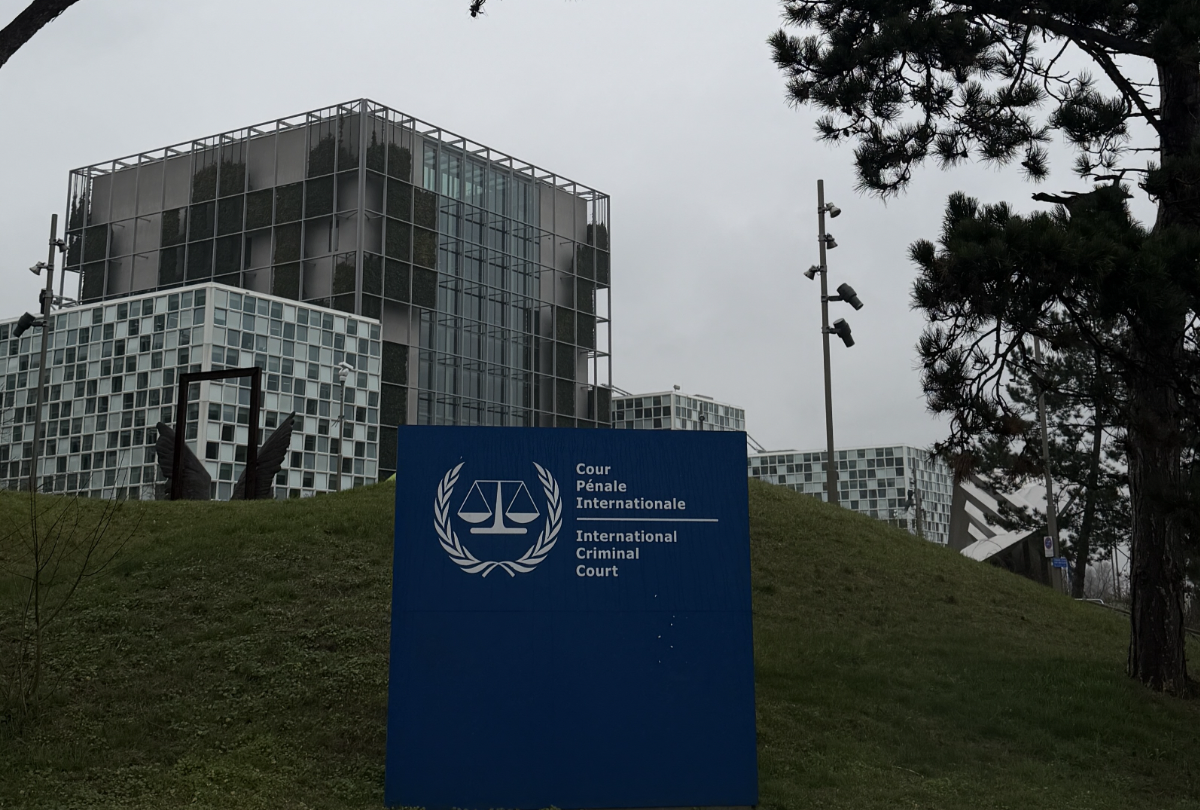
I felt that silence inside the public gallery of the Pre-Trial Chamber I of the International Criminal Court, where former president Rodrigo Duterte is currently detained on charges of crimes against humanity.
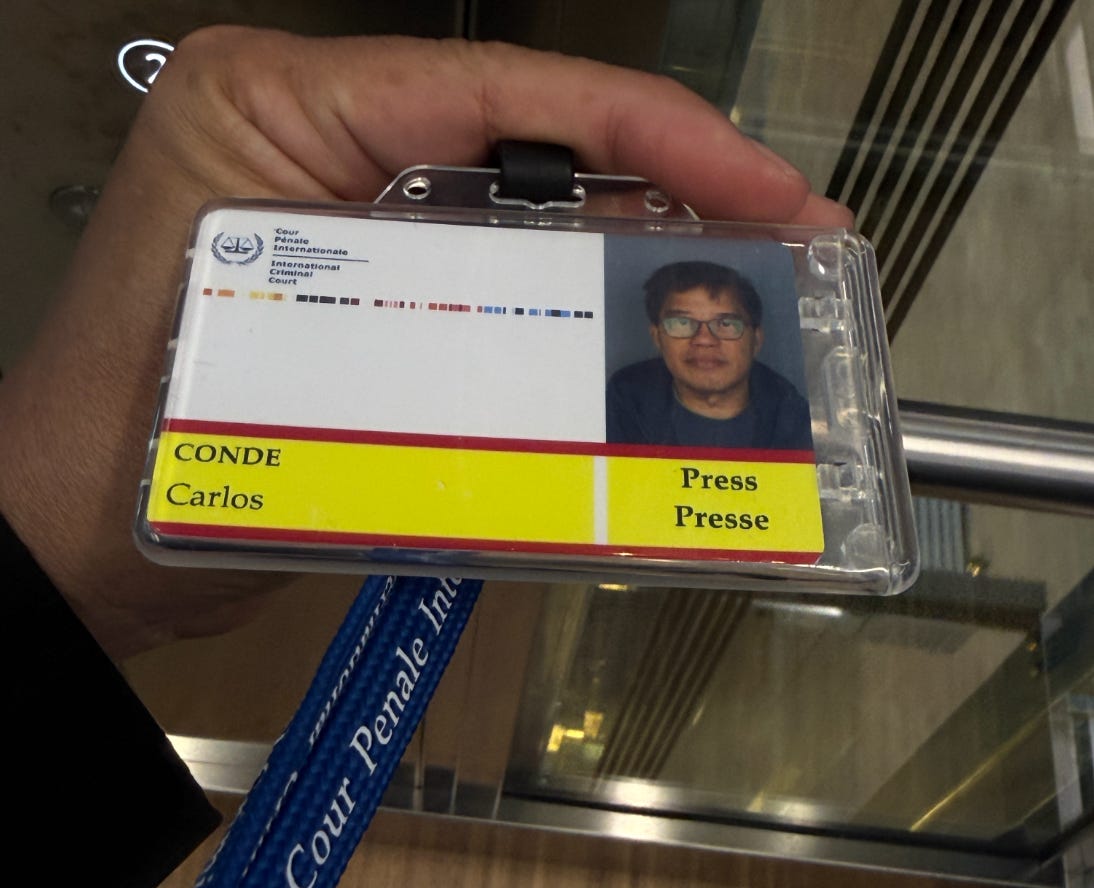
I was there as a monitor, watching the proceedings unfold, and at some point I had to remind myself to breathe. Because somewhere in that chamber, words I had written — research I had done or helped produce for Human Rights Watch, accounts I had gathered from people who had survived things no one should survive — were being mentioned and cited several times, used as part of a formal reckoning with what happened in the Philippines under Rodrigo Duterte.
I first documented Duterte when he was still mayor of Davao City. That was a long time ago. Back then, raising alarm about his methods felt like shouting into a void. Nobody in that city and pretty much elsewhere wanted to hear it. The pattern was visible — the brazenness, the body counts, the culture of impunity dressed up as peace and order — but the political will to confront it was not there. So you kept documenting. You kept going back, filing the reports, telling the stories, confident that the record would matter someday, even when someday felt impossibly far away.
Someday was The Hague.
I won’t pretend the experience was purely triumphant. It wasn’t. Sitting in that room, I felt pride and grief in almost equal measure, and I’m not sure the two can ever be fully separated in this line of work. Pride that the documentation held up. That the years of painstaking verification and careful language produced something durable enough to be cited in an international court. Grief because the reason any of this exists is that real people were killed, families were shattered. And no verdict, no matter how significant, returns anyone to who they were before.
What cut through the complexity for me was seeing the loved ones of the victims or those victimized by the violence. Not as abstractions or case numbers, but as people sitting in that space, present for a proceeding that acknowledged what was done to them. That acknowledgment — formal, institutional, on the record — is not nothing. For human rights work, it is often everything.
But I also want to say something about the people who were in that room with me — and those who made sure we could be there at all.
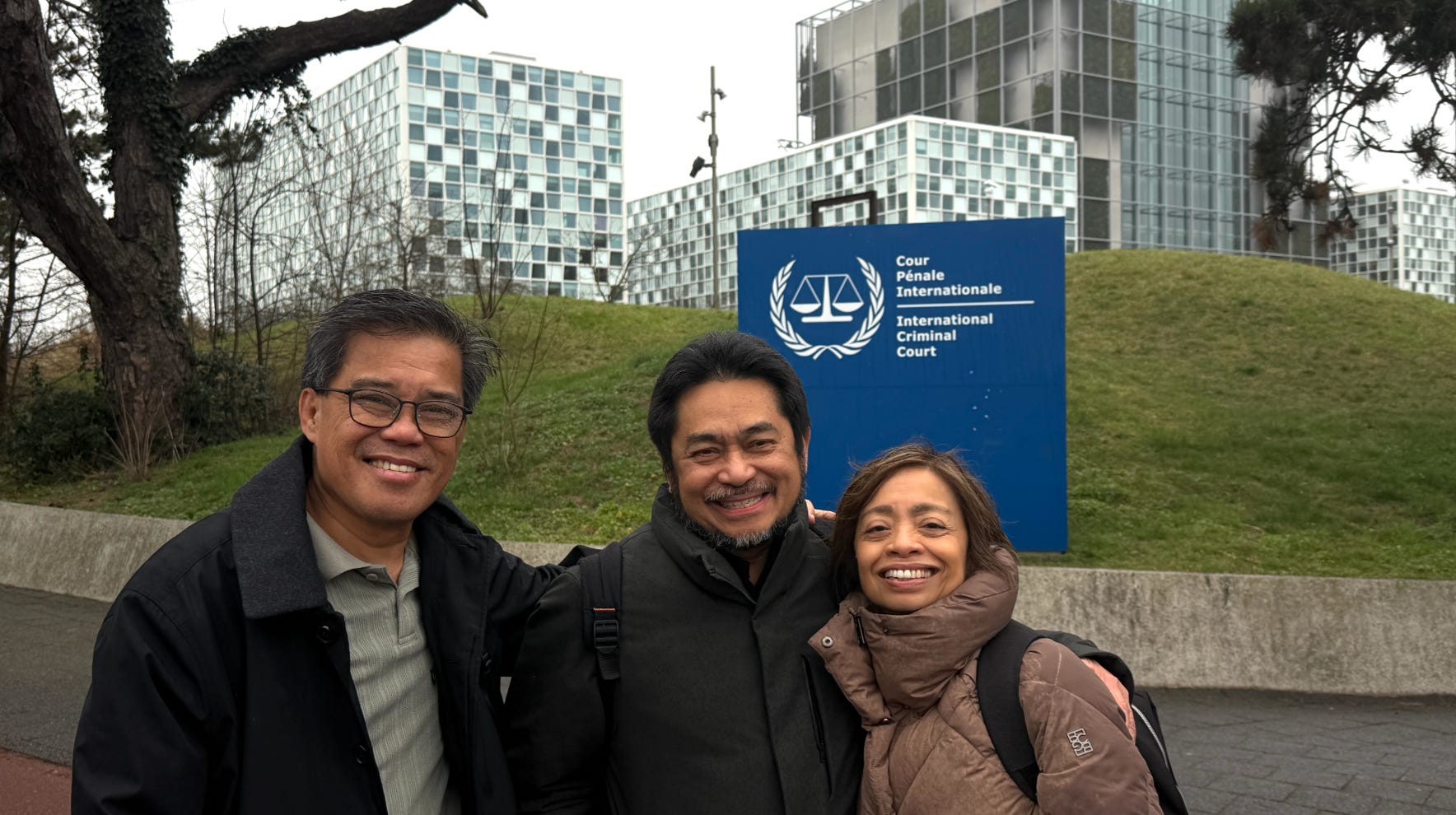
Father Albert Alejo was there, standing in, for all practical purposes, for our common friend Father Amado Picardal, who passed away a year ago but not before leading the struggle to expose the Davao Death Squad. For many of us in the human rights community, Paring Bert is more than a colleague — he is a guide, a conscience, the kind of presence that reminds you why the struggle is worth the cost. His decades of work alongside communities on the margins, his refusal to be intimidated, his capacity to hold both faith and fury without letting either consume the other — all of that was in the room with us. Seeing him there grounded something in me.
Sheila Coronel was there, too, and her presence carried its own particular resonance for me. It was her outfit, the Philippine Center for Investigative Journalism, that first published in 2000 the major investigative piece on the Davao Death Squad, a piece I wrote, back when documenting Duterte’s methods felt like an act of faith more than anything else. Sheila has since built one of the most respected journalism programs in the world at Columbia University, but she has never stopped being the colleague and editor who understood that some stories have to be told regardless of the consequences. Seeing her in The Hague, hearing her share her insights on what the proceedings meant, felt like a closing of a very long circle.
Raffy Lerma was there. If you have followed the drug war at all, you know his photographs — the bodies on the pavement, the mourners bent over them, the unbearable intimacy of grief captured in the dark. Raffy did not look away when it was easier to look away, and his images became part of how the world understood what was happening in the Philippines. As the defense lawyer castigated the media for publishing one of Raffy’s photographs, I could only feel pride, and gratitude that he does what he does.
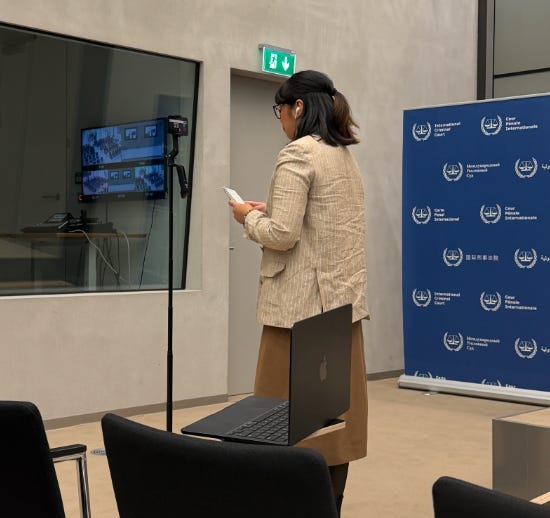
Lian Buan of Rappler was there, too. Lian has covered the legal dimensions of this story with a tenacity and precision that I deeply respect — the cases, the court filings, the procedural moves that most readers never see but that determine whether accountability happens at all. Tinay Palabay of Karapatan was there — a woman who has spent her life documenting state violence and standing with those whom the state would rather erase. Lawyer Krissy Conti, whose sharp legal mind has helped translate human rights principles into concrete action, was present as well. And then there was Nono Montalvan, a fellow Kagay-anon whose exposés on Duterte cost him dearly — the harassment, the threats, the pressure to go quiet. He did not go quiet. He was in The Hague.
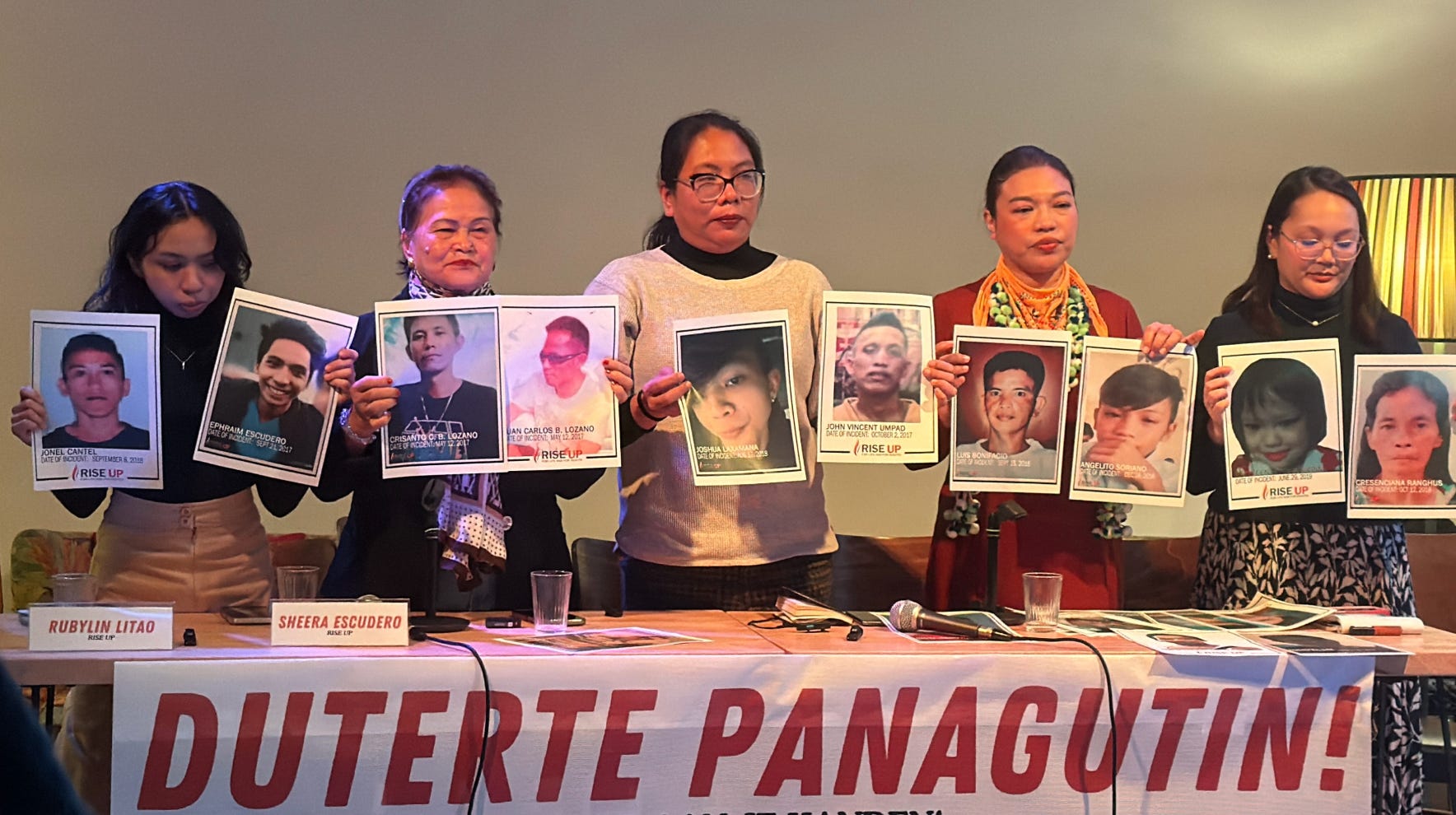
And then there were two former colleagues at Human Rights Watch whose fingerprints are all over the work that made it into that room. Elaine Pearson and Maria Elena Vignoli were instrumental in shaping, pushing, and producing the many HRW reports and investigations that I researched or helped document over the years, including the ones that were eventually cited in testimony before the ICC. Research is
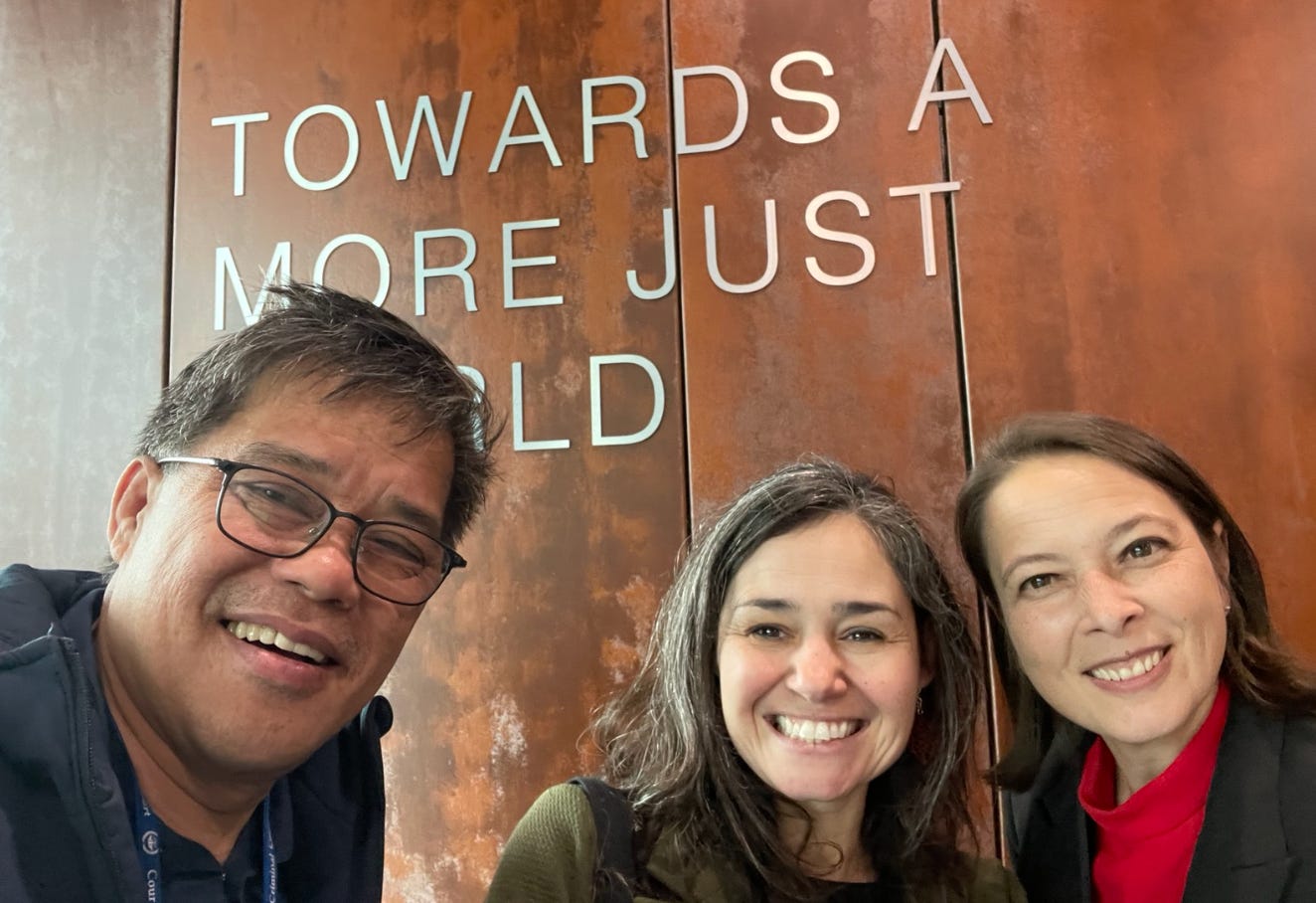
rarely a solitary act. Behind every published finding is an editor or supervisor who asked harder questions, a colleague who caught what you missed, a collaborator who understood the stakes as clearly as you did and refused to let the work be anything less than airtight. Elaine and Maria Elena and the many others at HRW were that for me, and for the work. Whatever credibility those documents carried into that courtroom, they share in it.
We were all there, in one way or another. Journalists, researchers, advocates, lawyers, a priest, an editor who decades ago made space for a story the world needed to read, and colleagues whose exacting standards ensured the work could withstand the scrutiny of an international court. People who had each, in our different ways, spent years on this story — who had absorbed its costs and kept going anyway.
There was something in that shared presence, physical and otherwise, that I did not expect to feel so strongly: not just professional solidarity, but genuine kinship. The kind that is forged not in celebration but in the long, grinding work of bearing witness when bearing witness is dangerous. We had all bet on this moment existing. And there we were, drawing courage from one another simply by being in the same room.
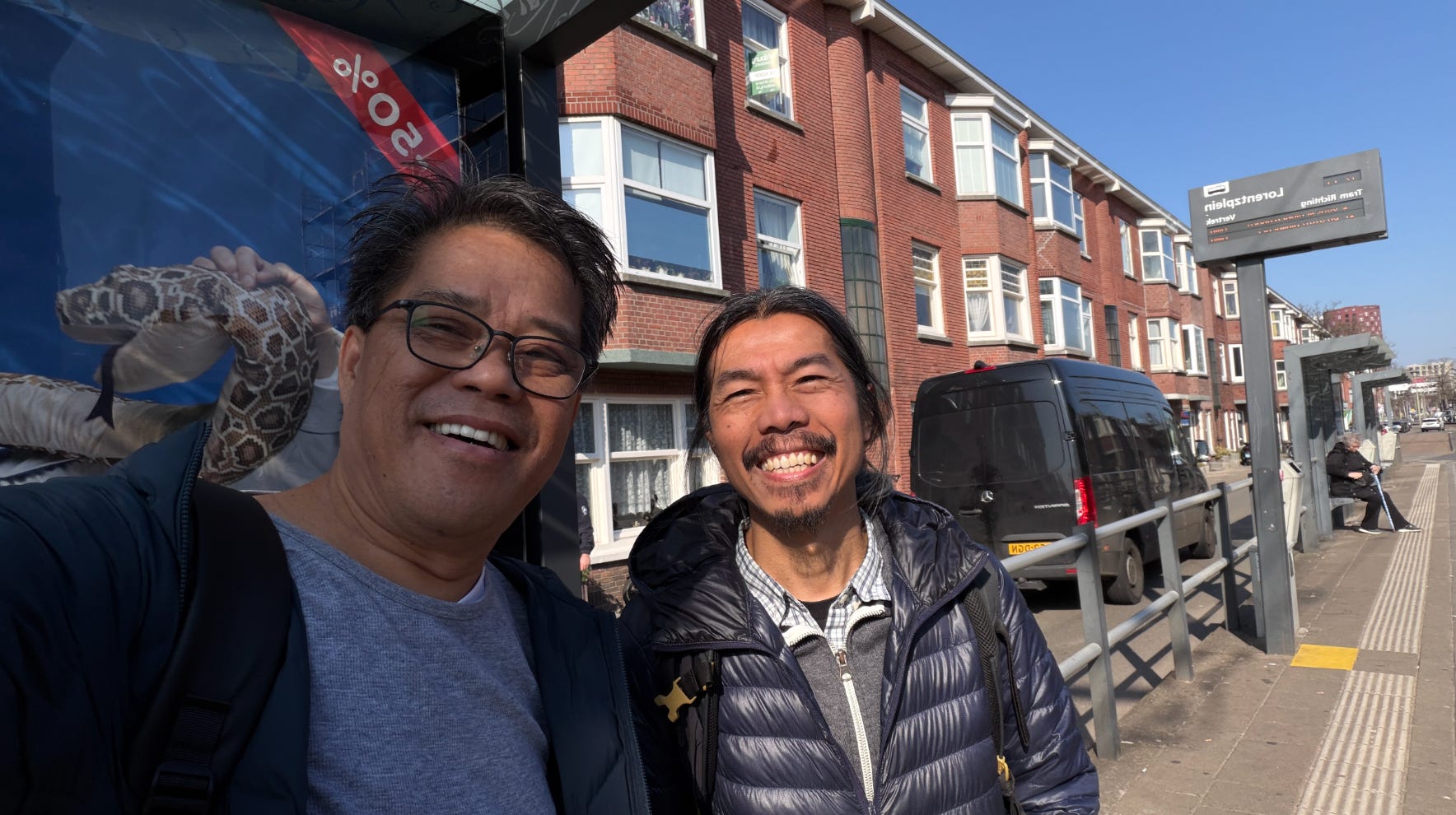
And we were not alone in that, either. Outside the court, and in the days surrounding the proceedings, overseas Filipinos — many of them living and working across Europe — showed up for us in ways that moved me deeply. Professor Men Abanes hosted me in his home for two weeks and we would spend nights talking about the Philippines and where it is headed. His housemate, a jolly Filipino woman named Ate Belle, nourished me with wondrous food, the warmth of her company easing the biting cold of winter. Others came out of their way to offer support, material and moral, to make sure we felt held. These are people who left home and built lives far from the Philippines, yet carried the Philippines inside them so completely that they could not stand aside when it mattered.
This was not without cost or risk on their part. Duterte’s supporters were also there — visible, boisterous, at times deliberately intimidating. The same tactics that were used to silence critics back home had followed the diaspora to Europe. And still, those who believed in accountability chose to be present, chose to stand on the right side of history even in a foreign city, even under pressure. That kind of courage — quiet, stubborn, unglamorous — deserves to be named.
Back home, my family was keeping watch. My wife Ayi and kids followed the proceedings from the Philippines, gathered around the television, trying to make sense of the momentous and the mundane all at once. I’m grateful because they knew my struggles, the challenges doing this job. My youngest son Max told me afterward that he had been scanning the ICC gallery on his TV screen, searching for my face. That image — my child looking for me in the crowd, in that room, in that moment — undid me a little.
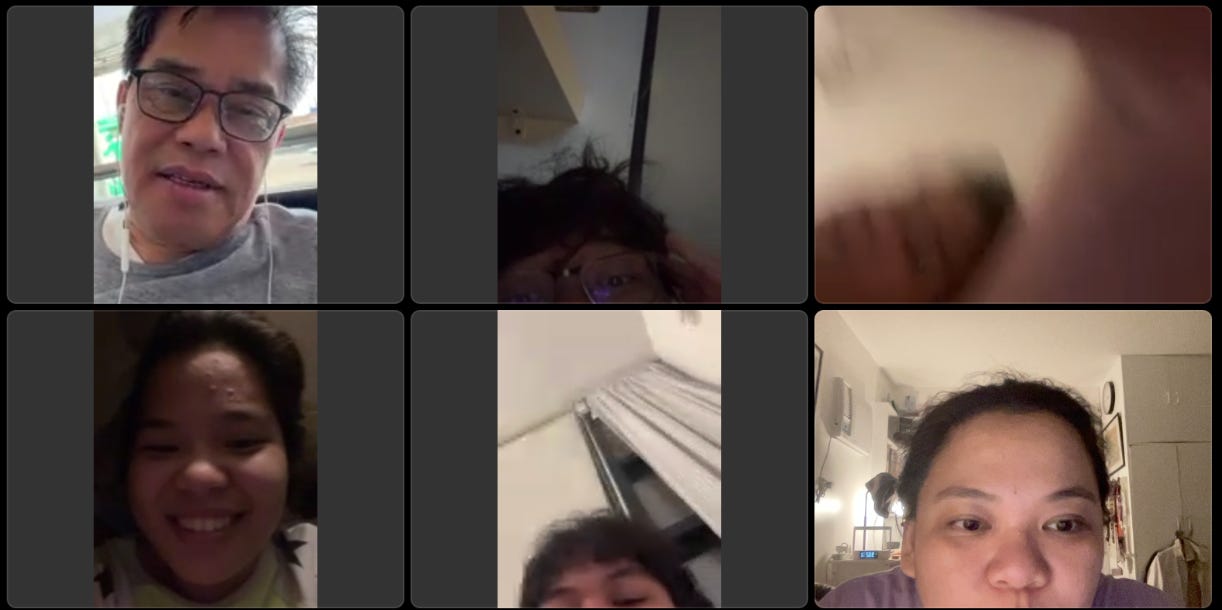
They said they were proud of me. But I am the one who is prouder, and I want to say that plainly: whatever I have managed to do in this work, I could not have done without the family that held things together while I was away chasing accountability in distant places, sometimes at considerable cost to all of us. They are my anchor in the dark times. They are why the work is worth it. My wife and children did not ask for a husband and father who does this kind of work, and yet they have given me nothing but support, patience, and love. That is its own form of courage — quieter than anything I witnessed in The Hague and no less profound.
I think about that courage sometimes when the work feels thankless, or when the risks outweigh the visible rewards, or when you wonder whether any of it makes a difference. Human rights journalism and advocacy can be a long and lonely road. The victories are partial and provisional. The losses are often total.
But I was in The Hague. My research and the research of other defenders and journalists were on the record. I was surrounded by people who understood, without needing to say it, why we do what we do. What we do matters, in ways that sometimes take years to become visible, but matter nonetheless.
That room taught me that again. I left inspired. (Rights Report Philippines)