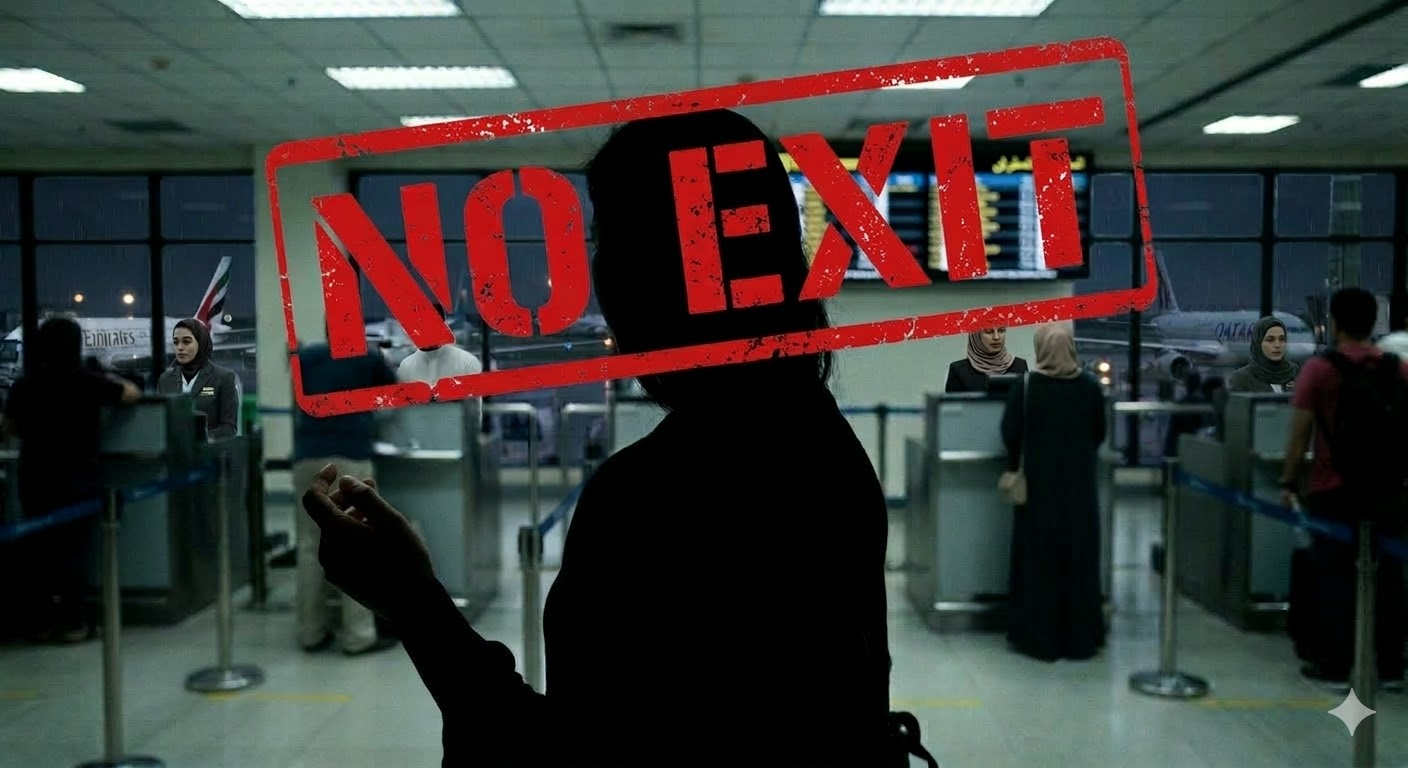

MANILA — In the middle of a congressional hearing last week, a lawmaker asked a question that cut through the Philippine government’s careful messaging about the crisis engulfing Filipino workers in the Middle East: What is the government doing for overseas Filipino workers who want to come home, but whose passports are being held by their employers?
The question, raised by Agimat Party-list Rep. Bryan Revilla during a joint session of the House Committees on Foreign Affairs and Overseas Workers Affairs, surfaced a problem that officials have largely left unnamed in weeks of press briefings and remittance updates. The answer from Department of Migrant Workers Secretary Hans Leo Cacdac was blunt: Withholding an OFW’s passport is illegal and constitutes a contract violation. Labor attachés, he said, routinely negotiate with employers and host governments to secure the release of travel documents.
What Cacdac did not say — and what no senior Philippine official has said publicly — is that the practice is not just common. It is structural. It is the kafala system, and it is why thousands of Filipino workers who want to board a plane home may not be able to, regardless of how many flights the government charters.
The Kafala System
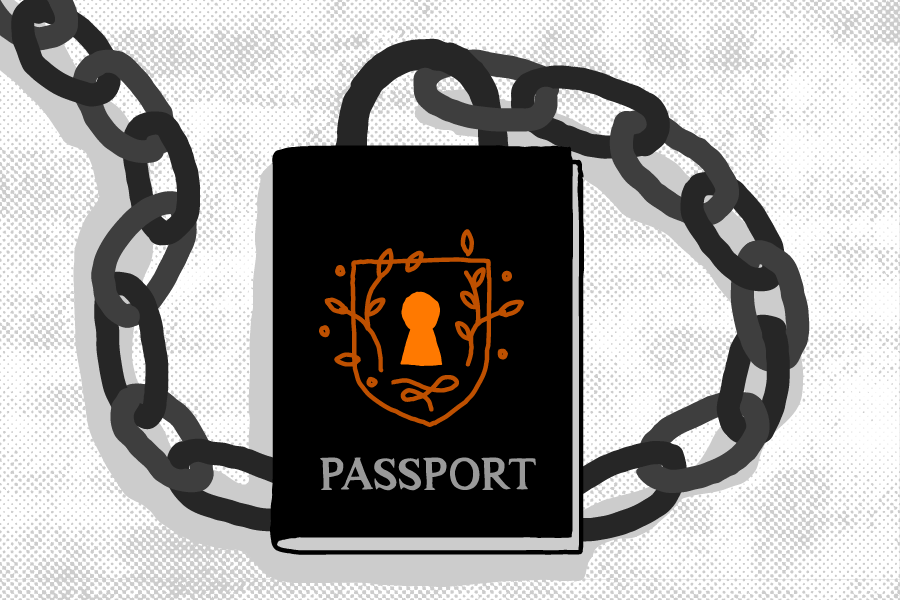
The kafala, or sponsorship, system is a legal framework used across Gulf Cooperation Council countries — Saudi Arabia, the UAE, Qatar, Kuwait, Bahrain, and Oman — as well as Jordan and Lebanon. Under it, a migrant worker’s residency status and right to remain in the country are tied to a specific employer. Workers generally cannot change jobs, leave the country, or access basic rights without their sponsor’s consent. The system exists not in the shadow of the law but as the law.
The consequences, in peacetime, are grim: confiscated passports, unpaid wages, and workers trapped in abusive homes with no legal path out. In wartime, those consequences become potentially lethal.
With more than 2.4 million Filipinos now in a region where the United States and Israel have struck Iran and Iran has retaliated across the Gulf, the kafala system has become a wartime trap. Domestic workers — the majority of them women, many of them living inside their employers’ homes — face a particular bind. Under kafala rules, leaving an employer’s home without permission is not merely a resignation. It is a criminal offense called “absconding.” Workers who flee can be arrested by host-country authorities, fined, detained, and deported — even if they are fleeing in the direction of a Philippine embassy shelter.
Human Rights Watch documented cases as recently as 2025 in which employers filed false “runaway” complaints against workers after those workers submitted abuse complaints, using the absconding charge as retaliation. The Council on Foreign Relations has noted that leaving a workplace without permission “results in the termination of the worker’s legal status and potentially imprisonment or deportation, even if the worker is fleeing abuse.”
Suspend Kafala
The Philippine government’s response to the crisis has focused on repatriation logistics: chartered flights, hotlines, OWWA shelter coordination, emergency funds. What it has not done is formally demand that host governments suspend kafala exit permit requirements for the duration of the conflict, a step that would cost Manila nothing diplomatically and could save lives.
That silence has a price. According to the Overseas Workers Welfare Administration, its repatriation guide instructs workers to obtain “an exit visa if the country requires it” as part of the process, a line that acknowledges the exit permit problem without confronting it. In Kuwait, HRW warned in June 2025 that authorities had just reinstated an exit permit requirement, calling it “an alarming step backward” that enables employers to trap workers. In Saudi Arabia, despite a June 2025 announcement claiming kafala had been abolished, HRW noted that domestic workers — the largest category of Filipino workers in the kingdom — were excluded from those reforms entirely and still require employer permission to leave.
The gap between government press releases and ground reality is not lost on the international labor rights community. On March 9, the Coalition on Labor Justice for Migrants in the Gulf, which includes Anti-Slavery International, the International Domestic Workers Federation, and the Building and Wood Workers’ International — issued an emergency statement naming kafala as the reason workers cannot self-evacuate. “Many migrant workers do not hold their own passports and are legally tied to their employers,” the coalition said. “This systemic lack of mobility further traps migrant workers in conflict zones, limiting their movement.”
The International Domestic Workers Federation was more specific. Its affiliates on the ground reported domestic workers “trapped inside houses or left out in the streets with no shelters to seek refuge and little to no resources to seek repatriation.” The federation demanded that employers immediately return all passports and personal documents — a demand that, in the kafala framework, has no legal enforcement mechanism.
The silence from the Marcos administration stands in notable contrast to its predecessor. During his final State of the Nation Address in July 2021, then-President Rodrigo Duterte called on Gulf states to dismantle kafala outright, declaring that “the Filipino is no slave to anyone anywhere and there is no room for modern day slavery.” At the United Nations General Assembly that same year, Duterte went further, telling the world body that “nothing can justify the continued existence of this system” — and warning Middle East host countries directly that kafala “has no place there because it’s a setup for slavery. Either you correct it or we will ask our workers, Filipino workers, to go home.” The Marcos administration, which inherited that diplomatic posture, has made no comparable public demand since the current conflict began.
Most at Risk
The broader numbers reveal who is most at risk. Philippine Statistics Authority data shows that six in 10 Filipino workers in the Gulf region are women. Most of them work as domestic helpers, caregivers, or cleaners — jobs that place them inside private homes, outside the reach of labor inspectors, and at the bottom of kafala’s protection hierarchy. Under kafala rules that persist despite reform announcements, domestic workers in most GCC countries remain excluded from national labor laws. They are governed solely by their employment contracts, contracts their employers can ignore with impunity.
The history of such crises offers a warning. When the Philippines evacuated workers from Syria during that country’s civil war, officials discovered that only around 800 of an estimated 17,000 Filipino workers in the country were formally registered with the government. Many of the rest were domestic workers who had gone undocumented — some after fleeing abusive employers, others after being trafficked in despite an ongoing evacuation. A subsequent report by the Inter-Agency Council Against Trafficking found that roughly 80 percent of those repatriated from Syria were trafficking victims, most from Maguindanao, Basilan, and Sulu.
There is no reason to believe the structural conditions are different now. The Daily Guardian reported this week that of more than 57,000 OFWs from Western Visayas now in the Middle East, only 106 of the 551 workers that Iloilo City officials had located had been confirmed safe — and those numbers covered only documented workers who migrated through official channels. The rest are invisible to the government’s counting.
Large-Scale Evacuation
The Philippine government spent P23 billion repatriating 1.7 million OFWs during the COVID-19 pandemic. It is now preparing for a potential large-scale evacuation that officials warn could cost P3.67 billion if just one percent of the region’s Filipino population needs to come home. Those are logistics costs. They do not include the cost of the kafala problem, because no Philippine government official has officially put that on the bill.
What Congress’s hearing this week made plain, even in its brevity, is that the problem exists and the government knows it. Passports are being held. Workers who want to leave cannot. The mechanism preventing them has a name.
The Philippines, which chairs the Association of Southeast Asian Nation this year and sends more workers to the Gulf than almost any other nation on earth, has the standing to demand that host governments suspend kafala exit requirements during an active armed conflict. It has not done so. The question now is whether it will — before the next Filipino worker needs to flee a neighborhood under fire and cannot. (Rights Report Philippines)
If you are an OFW or if you know of one who is unable to go home to the Philippines because of the kafala system, we would like to hear from you.