
JAKE IS 17. One day in February, he was on a tricycle with two friends heading home along Tibagan Road in a district called Sirang Lupa in barangay Canlubang, Laguna, when he noticed people milling around the trash site off the road. They got off to look.
The stench hit Jake before anything else. He described it as overpowering.
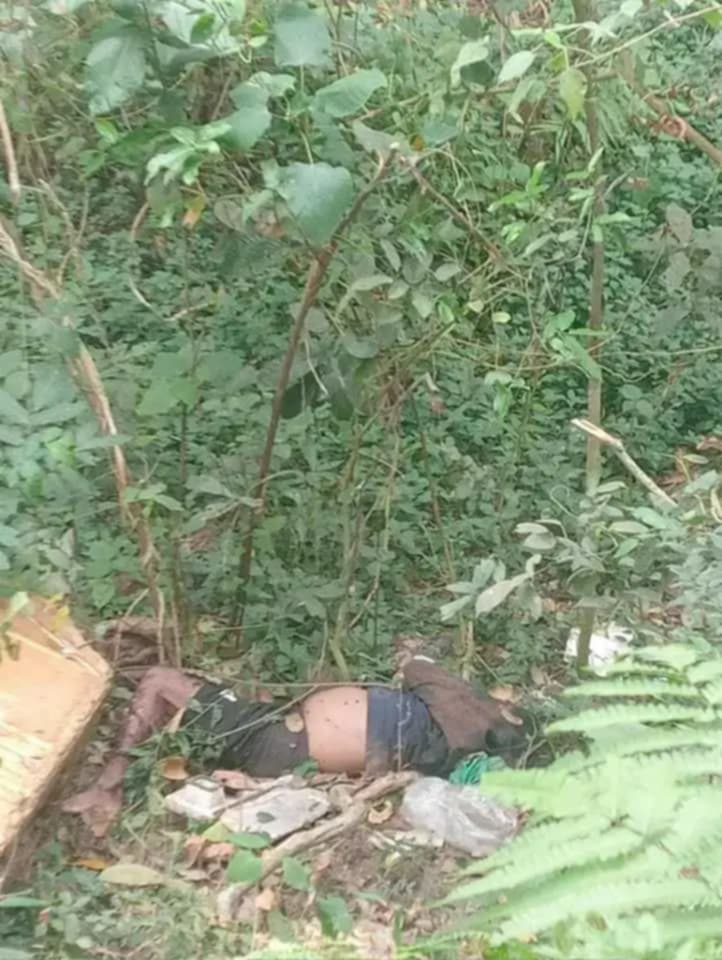
About 10 meters from the roadside, deep in the overgrown area past the garbage, was a body — a man, bloated and beginning to decompose in the heat, lying amid shrubs and debris. Jake said the body appeared to have been caught in the branches of a tree when it was thrown and had fallen to the ground. Word spread quickly through the community after that, and his mother heard the talk in the neighborhood: two more bodies had been found not far away. One of the victims, people were saying, appeared to be gay. No one could say for certain. The authorities have not said much at all.
Three dead people, no names, in a place called Damaged Land.

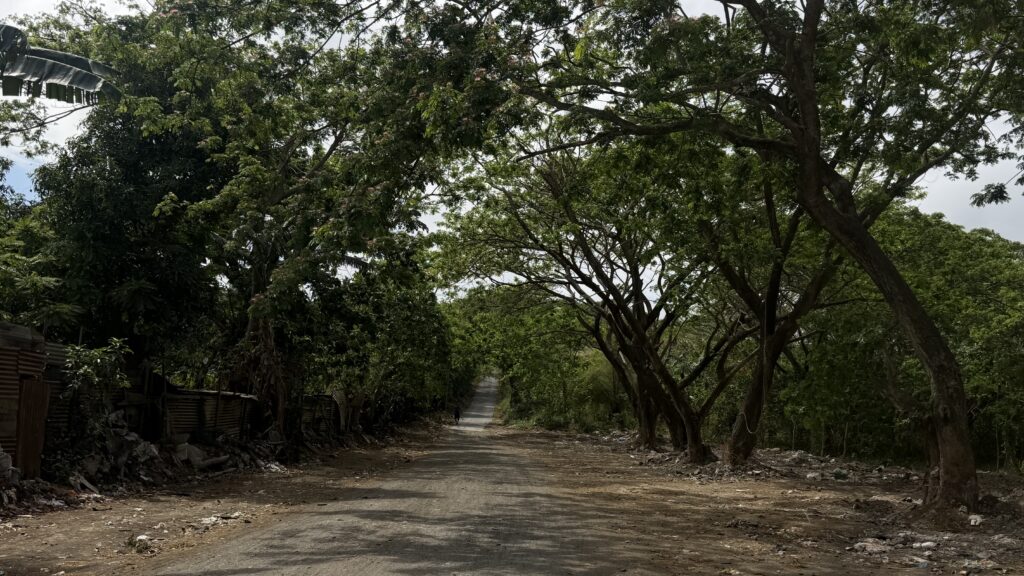
I WENT to the area one morning last week. You approach it along Tibagan Road, which is mostly unpaved and lined on both sides with large acacia trees whose canopy meets overhead, the way trees do on roads that have been there a long time. On the left, corrugated metal walls mark where the community begins — houses close to the road, close to everything. It is a poor, working-class neighborhood. Kids and teenagers ride helmetless on motorbikes along this road to reach the Palao market, about 10 minutes away. It is a well-used, ordinary road.
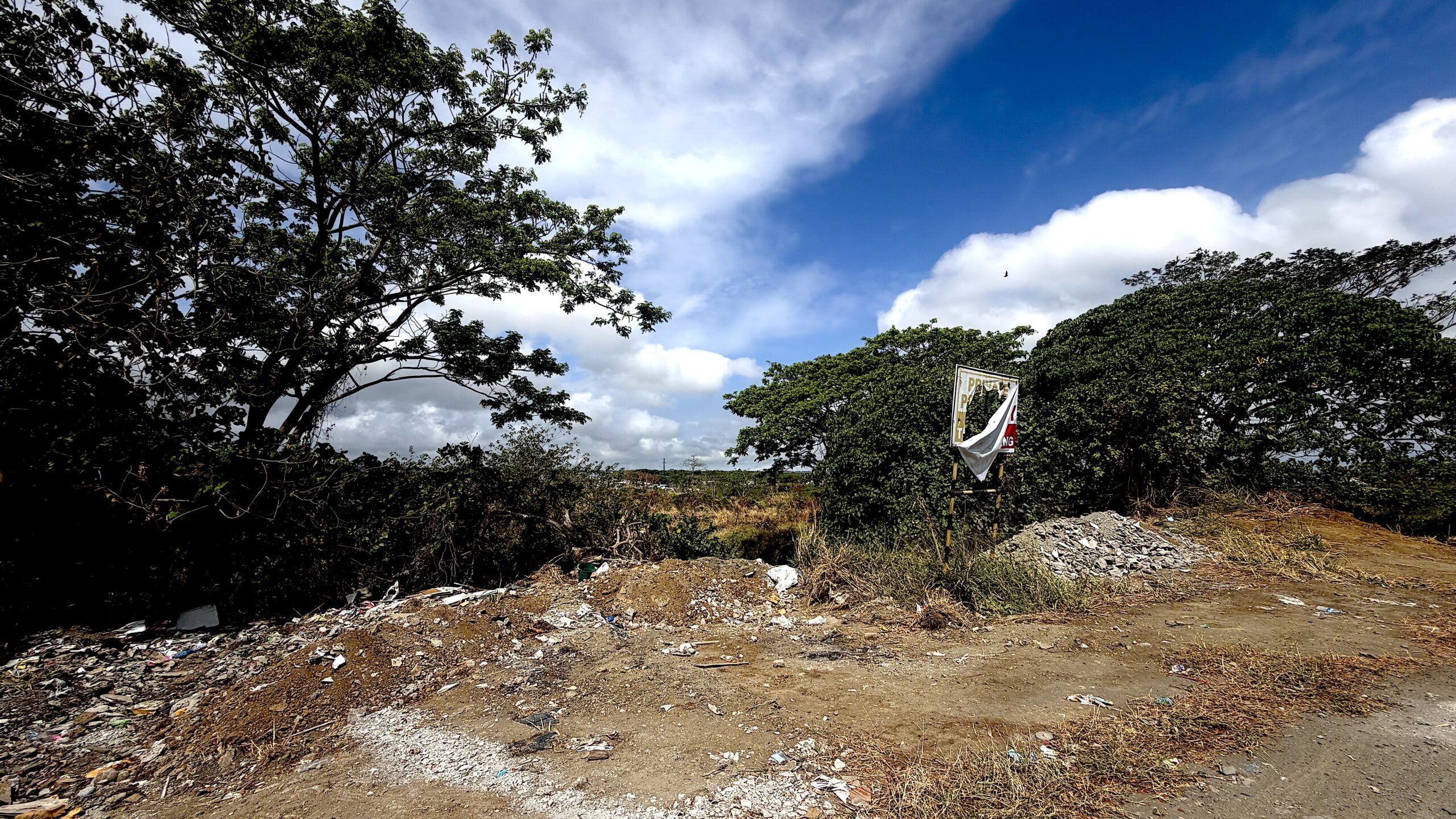
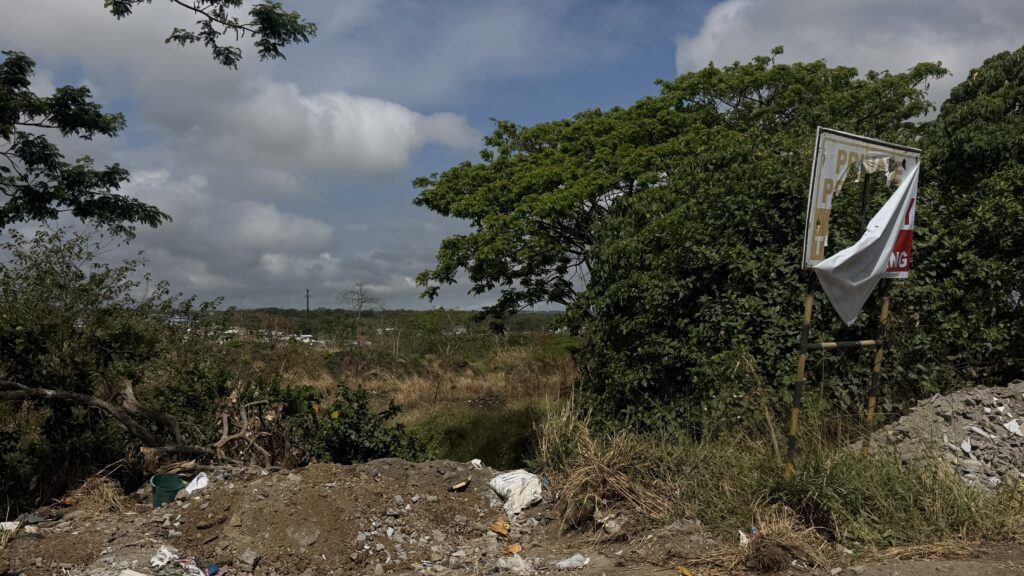
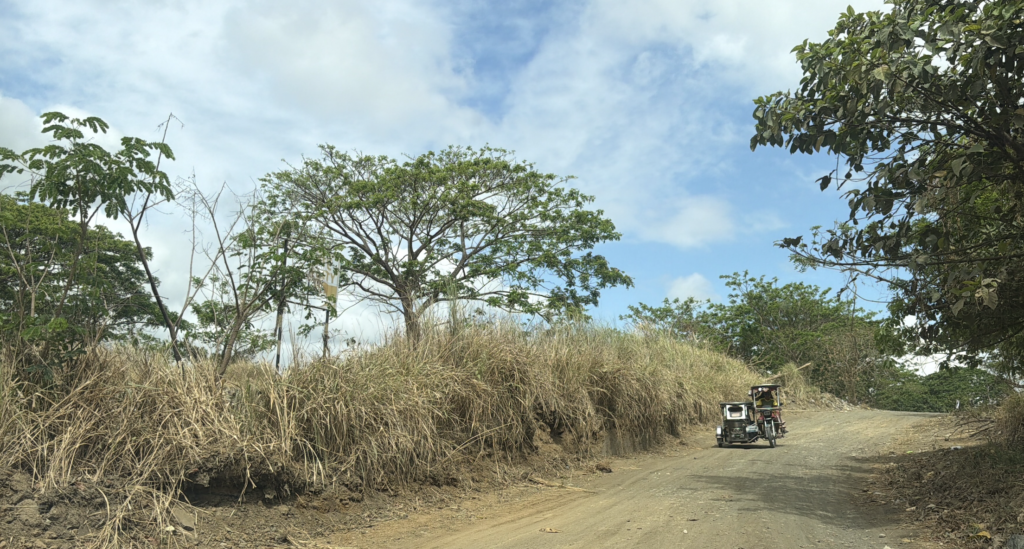
Then the trees open up and the land changes. The road climbs to higher ground, and on the right side the earth falls away — degraded, scrubby, strewn with broken concrete and plastic and the accumulated debris of years of open dumping. Rubble heaps, scorch marks, scattered trash as far as the tree line. At the edge of the drop, on a metal stake in the dirt, stands a sign. It is tattered now, mostly torn, the text barely legible. What remains of it says: Private Property.
Below the sign, the ground falls sharply. From up here you can see the communities in the distance — rooftops, a water tower, the low haze of the valley. You can also see, looking down, where the trees are thick enough and close enough to the slope that something thrown from this elevation would very likely catch in the branches on the way down.
That is what I think happened. That is what Jake’s account of the body in the tree describes: someone drove up here, to this high open ground, and threw the bodies – or the body, no one is certain – over the edge.
Not far from here, along the same stretch in sitio Majada, billboards advertise Nuvali, Ayala Land’s flagship township development in Southern Luzon. It used to be part of a vast sugarcane plantation but now, with its uniform — often grand — concrete houses and clubhouses, watched by roving security guards 24/7, it promises a master-planned life. A couple of resorts are nearby. The barangay hall is minutes away. There’s even a firing range. This is not the forgotten edge of the country. This is the periphery of one of the most aggressively developed real estate corridors in the northern Philippines, where the upper middle class is being sold a vision of the good — albeit compartmentalized — life, and where, a few hundred meters away, bodies are thrown off a ridge.
A man in a red shirt pulled up on a motorbike while I was there.
He said it had been a long time since bodies turned up at the site. In the ’90s, he said, it was common. “Ngayon na lang uli yan” — something like: it’s happening again now, after all this time. I texted a relative who grew up in Canlubang to ask if this was true; yes, he replied, at least once a month, bodies would be discovered hereabouts. I asked the man in the red shirt if anyone knew who the victims were, where they came from. He shook his head. Nobody knew. Nobody had come forward. Then: “May kuwento na baka asset ng mga pulis.”
There is talk, he was saying, that the victims may have been police assets — informants, people who worked with or for the police, now dead and dumped off the high ground at the end of Tibagan Road. He said it the way people in these communities say things like this: flatly, without drama, as a piece of information you either know what to do with or you don’t.
I forgot to ask his name. He didn’t offer it.

SALVAGING is the Filipino term for what may have happened here — the summary killing of a person, typically by police or vigilantes, the body discarded somewhere public. The word is borrowed from the idea of rescue. In Philippine usage it means the opposite. It has been in the Filipino vocabulary since at least the Marcos dictatorship of the 1970s, passed down through successive administrations like a habit nobody managed to break.
If the talk in Majada is true — if these were police assets — then the word takes on an additional weight. These would not be people the state identified as enemies. These would be people the state used, and then disposed of when they were no longer useful, or knew too much, or had simply been forgotten. Driven up to an elevated stretch of road with an open view of the valley and thrown over.

I ASKED Jake how he felt, standing there in Sirang Lupa with the stench in the air.
“It was awful but I wasn’t worried,” he told me in Tagalog. Then: “I’m used to seeing dead bodies.”
I found that hard to believe but he swore by it. A few months ago in fact, he said, a man was found shot dead behind an elementary school not far from where he lives. The body was discovered the day after the killing. Jake knew about it the way a 17-year-old in Majada apparently has to know about these things.
“Sanay na ako.” I’m used to it.
He said it without self-pity, without any attempt for sympathy. He said it the way you state a fact about yourself — the way you’d say you were used to the heat, or the noise, or the long commute. It is one of the more quietly devastating things I have heard in a while.
What does it cost a person, a child, to become used to this? Not traumatized by it — used to it. Trauma still implies that something has been violated, that the world has behaved in a way it should not have. Being used to it means the expectation itself has been revised. In my work as a human rights researcher documenting extrajudicial killings and the “drug war” violence, I have seen my share of dead, violated bodies, many of them children, some of them as young as Jake. But I could never say I got used to it. The trauma, in fact, lingered. But for Jake, the world is a place where you sometimes find dead people. Where bodies turn up behind schools and get thrown off high ground into tree branches. This is simply how it is.
Psychologists who study violence in young people describe something called moral injury — not just fear or grief, but a rupture in a person’s sense of how things ought to be. Is it indifference? Resignation? I’m not sure. But he says he’s used to it. Jake may be past the rupture. He may have already absorbed the revision. And if that is true, then whatever happened in Sirang Lupa has already taken something from him, too, even though he walked away.

CONSIDER the possibility that one of the three victims – again, nobody is certain – was gay, or was read that way by the people in the community. I can’t confirm it. Neither can anyone who is talking. But LGBT Filipinos can be disproportionately targeted in extrajudicial violence, and in many communities, being perceived as gay is itself enough to mark a person as an acceptable target. You don’t have to be gay to be killed for it. You only have to be seen that way by someone with a weapon and no fear of consequences.
That nobody can confirm it — that the detail circulates only as neighborhood talk — is part of the story. The victim’s identity, in death as perhaps in life, exists only in how strangers perceived them. That may be all they ever were to the people who killed them.

THE International Criminal Court opened a formal investigation into thousands of extrajudicial killings in the Philippines during Duterte’s drug war. Surveys taken at the height of the killing found his approval ratings consistently above 70 percent — though at least one peer-reviewed study suggests those numbers were inflated by fear, that people in areas with high police violence were simply less willing to say out loud that they disapproved. Which is, in its own way, another version of the same story.
Duterte didn’t build the dump site at the end of Tibagan Road. The man in the red shirt said bodies were common there in the ’90s — years before Duterte, across multiple administrations, beneath successive governments that came to power promising something different. What Duterte did was make that arrangement louder and prouder. Where before such violence was committed in the dark as if in shame, Duterte’s violence was not only open — he forced Filipinos to buy into it.
Perhaps it works like this: we, the people, will allow you to handle those we have decided are undesirable, and in return we will not ask what you did with them.
Before I went to Sirang Lupa that morning, I had just finished watching a documentary about Nazi Germany and how Germans regarded what was happening with a mixture of indifference, apathy, and acceptance. What struck me about the movie was its insistence on the immorality of indifference, its denunciation of the willingness of ordinary people to let atrocity happen around them without protest. The themes felt familiar.
While many Filipinos cheered Duterte on, most did not sign anything in this arrangement with the former president, even though many would argue that his popular election was, by definition, precisely that. They had simply gone quiet about the violence, which amounts to the same thing. The tattered Private Property sign at the edge of the drop in Sirang Lupa has been there long enough to fall apart. The dump beside it has been there longer.

JAKE IS 17 years old. He lives in a community where a man can be found shot dead behind a school and a month later nobody talks about it anymore. Where three bodies can appear off a dirt road and the main thing that moves through the neighborhood is a rumor — about who they might have been, about who might have put them there, about whether the people responsible are powerful enough that the question itself is dangerous to ask.
Sanay na ako.
Maybe it changes for him. Filipinos have a history of absorbing the worst of what their country could do and turn it into refusal, even dissent — from the ilustrados who wrote against colonial brutality to the crowds who stood at EDSA and decided they had had enough. Filipinos have surprised themselves more than once.
Or maybe it doesn’t change. Maybe what Jake has already learned becomes simply the weight of living here — until the day he rides his motorbike past the high ground in Sirang Lupa and barely registers what the place is, and the brief, quiet relief he feels that he doesn’t recognize the faces is so familiar by then that he doesn’t even notice it anymore.
That relief is the real cost of all of this, not just the dead. There are organizations that count the dead, and the numbers are staggering, and they don’t seem to change anything. The cost is in what happens to the living. In what gets quietly revised, over time, in a person, in the 17-year-old who has already learned that this is the world, and adjusted accordingly.

BY THE community’s own telling, three people were found dead in Sirang Lupa that February. One was caught in the branches of a tree on the way down. One may have been gay, or read as gay, which in this country can come to the same thing. There is talk they may have been police assets — people who served some purpose and then stopped. Their names are not known. Nobody is being held.
A few days after the bodies were found, bulldozers came through. The trash heap was pushed to the edge. A good stretch of Tibagan Road was scraped and graded — they are widening it, apparently, making more room for trash, or for the motorbikes and the tricycles and the kids going to the Palao public market. When I drove through that morning last week, you would not know just by looking at it that anything had happened there, that nameless bodies had been found there. The ground is flat and open and unremarkable. Whatever was there has been pushed aside or covered over.
That, too, is how this works. The road gets wider. The old trash is buried or moved away. The dead stay nameless. And the place where they were found becomes, in time, just another stretch of road that people pass through without stopping, on their way to somewhere else.
(Rights Report Philippines)