Kalasag taps a growing civil society coalition to protect activists, journalists, lawyers, and community leaders at risk
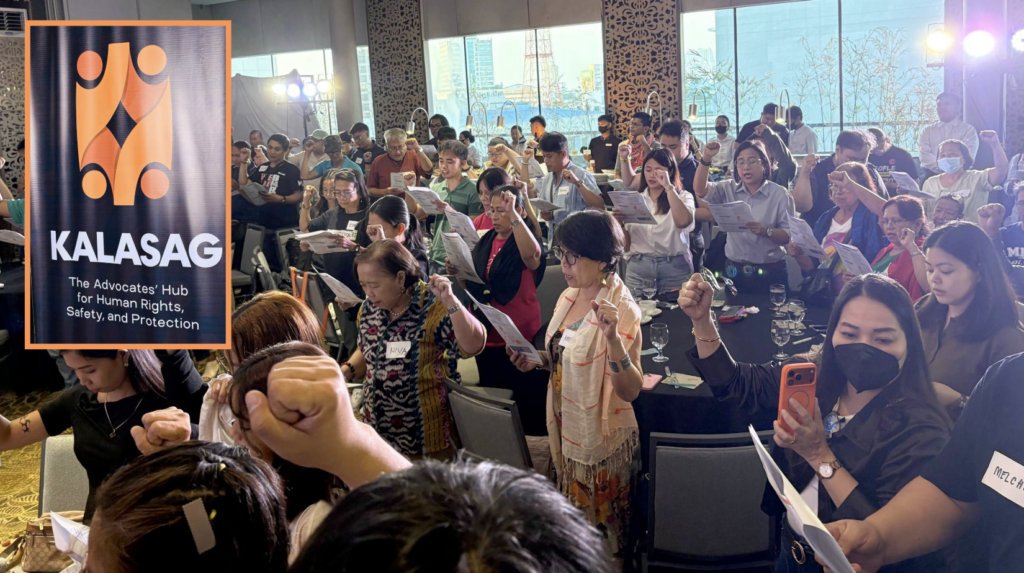
A NEW national advocacy hub has been launched to strengthen the safety, legal standing, and collective voice of human rights defenders (HRDs) across the Philippines, a country that remains one of the most dangerous in the world for activists and community leaders.
Kalasag: The Advocates’ Hub for Human Rights, Safety, and Protection (Shield-HR), was recently launched to address the persistent — and in many cases, escalating — dangers faced by those who speak out against injustice in the Philippines. The national initiative aims to ensure that community leaders, activists, journalists, lawyers, environmental defenders, and civil society organizations can do their work safely and effectively.
The name carries deep cultural weight. Kalasag is the Filipino word for “shield,” a weapon carried by pre-colonial warriors to protect themselves and their communities. The hub effectively reclaims that symbolism for the modern human rights movement: a collective shield for those who defend the rights of others.
A Growing Coalition
Among the first organizations to formally join the Kalasag consortium is Alyansa Tigil Mina (ATM), a national alliance campaigning against harmful large-scale mining operations in the Philippines.
ATM National Coordinator Jaybee Garganera said the group was pleased to be part of Kalasag as it strives to equip partners and grassroots communities with the necessary skills and know-how on safety protocols and emergency response, monitoring and documentation, as well as policy and advocacy engagement.
Garganera also pointed to the specific risks that environmental defenders face, noting that rights defenders fighting against environmental destruction and human rights violations caused by large-scale mining constantly face threats, intimidation, and harassment from both state and non-state actors.
“We hope that through this initiative, we can foster democratic civic spaces, where HRDs exercise their rights and freedoms without fear of reprisals,” Garganera said. “We also commit to helping exact accountability from perpetrators of human rights abuses and obtain justice for victims.”
The Philippine Alliance of Human Rights Advocates (PAHRA), a civil society network founded in 1986 and one of the country’s longest-running human rights coalitions, is among the organizations that organized and formed Kalasag.
The Stakes
The launch comes at a critical moment. A UN committee expert noted that there had been 305 killings of human rights defenders in the Philippines since the last UN review, with the Philippines ranking third globally for killings of rights defenders.
The country has also drawn repeated international condemnation for the practice of “red-tagging” — labeling activists, lawyers, journalists, and civil society workers as communist sympathizers or terrorists. In many cases, this practice does not only delegitimize human rights work but also exposes defenders to heightened risks of arbitrary arrest, prolonged detention, and even assassination.
Progress, however slow, is being made at the local level. On Dec. 9, 2024, Baguio City became the second local government unit in the Philippines — and the first in Luzon — to pass an ordinance formally protecting human rights defenders, prohibiting red-tagging, and penalizing political vilification. The first was Isabela City in Basilan, which passed a similar measure through Ordinance 22-717. Human rights groups have welcomed both measures, but say they underscore the urgent need for a national law.
The UN Special Rapporteur on freedom of expression has called for the adoption of a Human Rights Defenders law currently before the House of Representatives, which would provide a legal framework for the protection of those doing rights work.
What Kalasag Aims to Do
According to its consortium members, the hub is designed to go beyond declarations. Its agenda includes practical safety training, rapid emergency response, documentation of abuses, and structured policy advocacy — giving defenders not just solidarity, but tools they can use on the ground.
Kalasag aims to strengthen the protection, leadership, and collective capacity of defenders across the Philippines — a mission that takes on added urgency as the country heads into a politically charged election season, when rights groups say defenders historically face heightened risks.
For the thousands of Filipinos who defend land, labor, life, and liberty every day — often at great personal risk — Kalasag represents something simple: the promise that they will not stand alone. (Rights Report Philippines)