

A month after a military operation in Negros Occidental left 19 people dead, mishandled evidence, submerged remains, and a frightened community stand between investigators and the truth. Marchel P. Espina reports from Toboso, Negros Occidental.
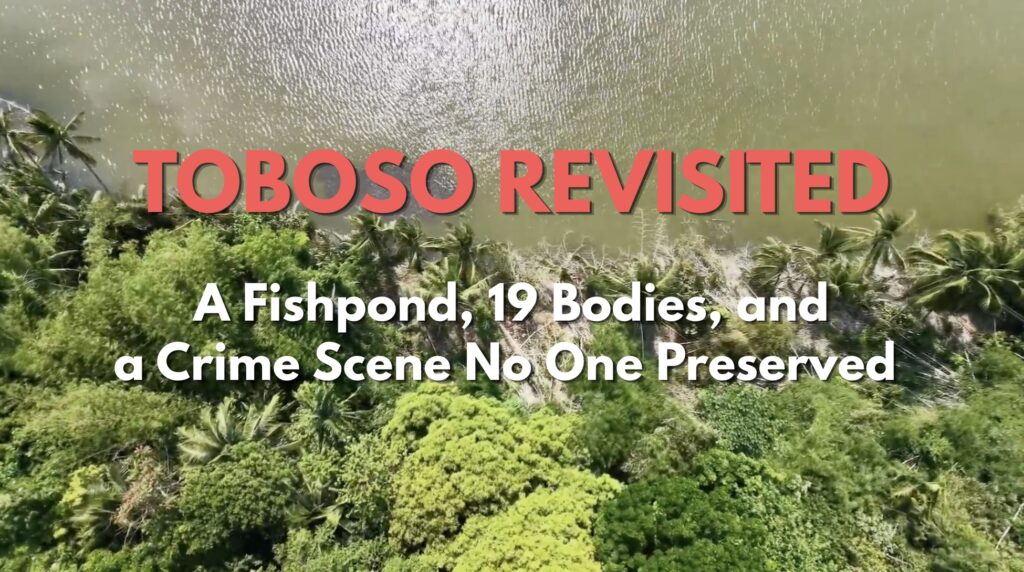
TOBOSO, NEGROS OCCIDENTAL — The fishpond in Sitio Plarending, Barangay Salamanca of this town holds one of the biggest unanswered questions surrounding the April 19 incident that left 19 people, including two children, dead: Was it the site of what the military called an encounter, or was it merely where the bodies were found?
A month after that skirmish between the Philippine Army and the New People’s Army (NPA) guerrillas in Plarending and Sitio Sinugmawan, authorities have yet to clearly establish the primary crime scene or determine where those killed were actually shot.
Editor’s Note: Rights Report Philippines is using the phrase “crime scene,” which was also used by the sources interviewed for this story, as shorthand for a spot that is — or should be — the focus of investigation, not necessarily a place where an actual crime was committed.
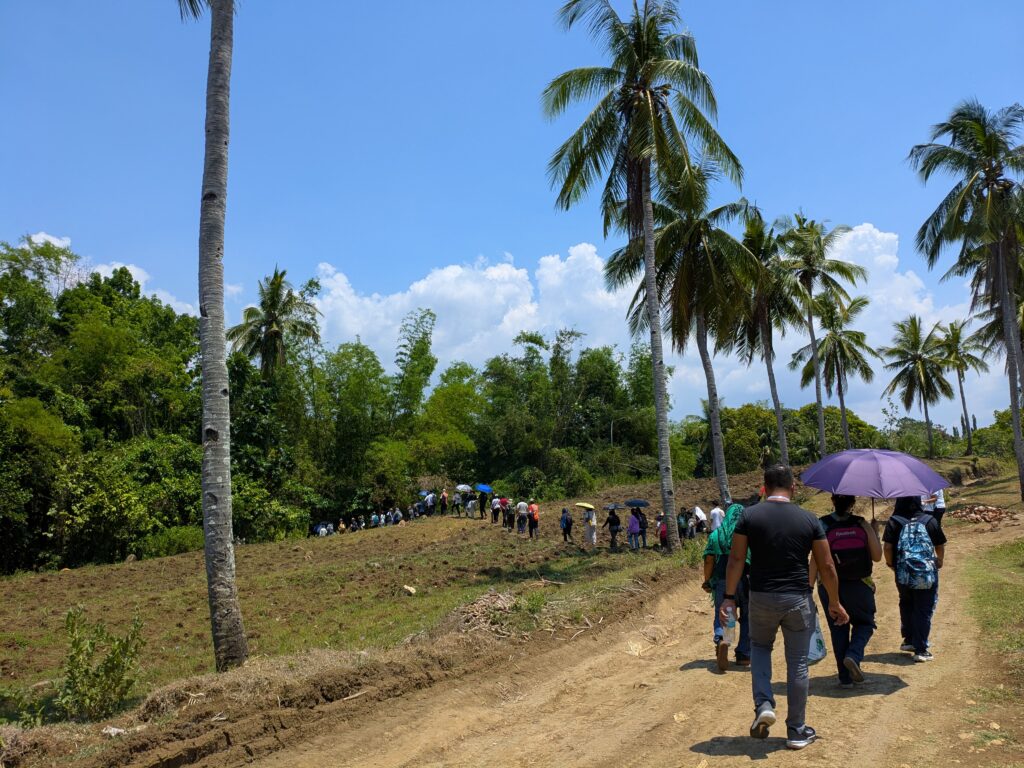
But among the important findings of a fact-finding mission in Toboso on May 14 suggests that the Armed Forces of the Philippines was lying when it claimed earlier that all the fatalities were NPA members and combatants. Residents the team spoke with said they knew at least six of the fatalities as civilians. The NPA earlier said only 10 of the 19 were combatants and that nine were noncombatants. The residents, according to the fact-finding team, knew some of the civilians, saying they had spoken with them about agrarian issues and had never seen them carrying firearms.
“The Armed Forces of the Philippines was really spreading falsehoods by claiming that six of the 19 were combatants. Based on our interviews, especially in Sitio Sinugmawan, residents knew Alyssa, Errol, RJ, Kai, Lyle, and Mau. They lived among the farming community and talked with residents about their land issues,” said lawyer Maria Sol Taule, who was part of the mission.
The residents said they had never seen these individuals armed or carrying weapons, according to Taule. “That’s why they themselves were confused as to why photos circulating on social media showed firearms beside their bodies. They never saw them holding weapons or carrying guns. None of the people we interviewed ever said anything like that. So now, it is very clear to us that the AFP is lying to make it appear that these individuals were combatants and to justify why they massacred the Negros 19.”
Errors and Lies
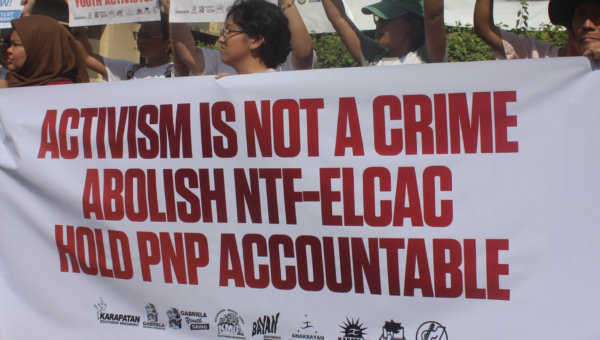
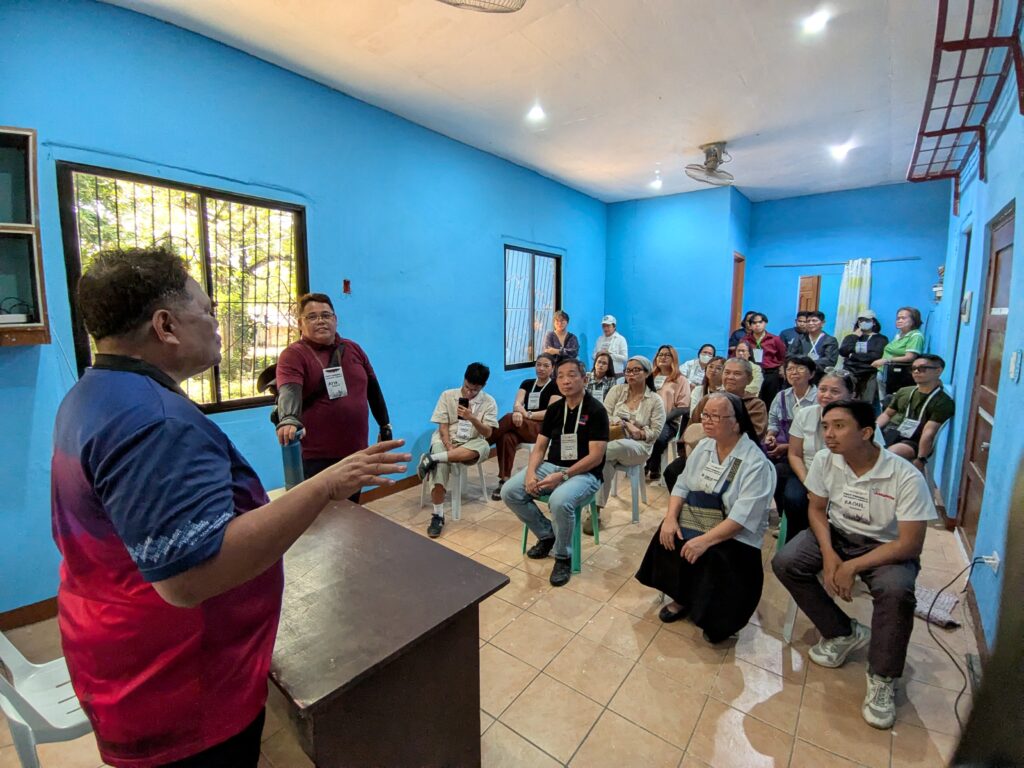
Human rights lawyer Kristina Conti, secretary-general of the Metro Manila chapter of the National Union of People’s Lawyers (NUPL), said they have “to explore all the possibilities and eliminate the clear errors and lies” as authorities have yet to confirm the primary crime scene. Conti was among those who joined the national fact-finding and solidarity mission on May 14 in this town. The mission included more than 100 human rights workers, Makabayan bloc lawmakers, activists, church workers, and youth leaders.
“We don’t have pictures of the crime scene. That’s crucial. How the fatalities were shot should be reconstructed at the crime scene,” Conti said in an interview with Rights Report Philippines. “We don’t have a crime scene. The military’s stories are incomplete.”
She questioned why the military — and not the Philippine National Police, which processed the crime scene — has been issuing statements about details of the incident. “We can’t expect the killers to tell an accurate story of what happened because it will always favor them,” Conti said. “Yung storya nila, sila ang bida-bida doon (In their version of the story, they are always the heroes).”
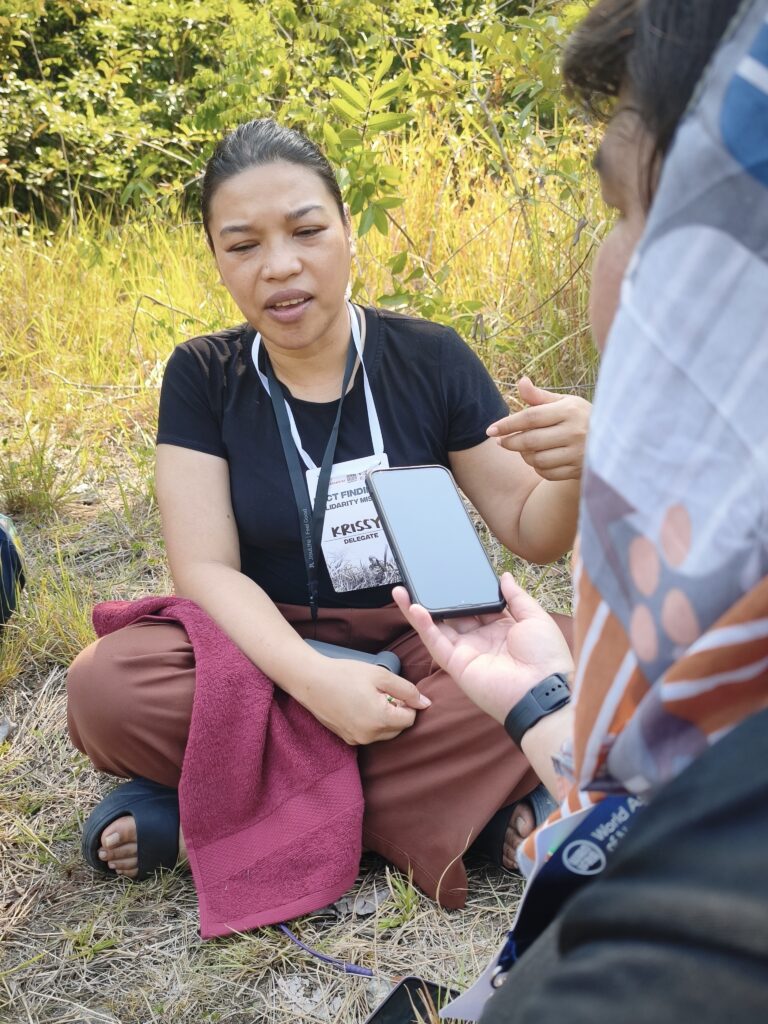
Conti, who was retained by the families of three victims — Lyle Prijoles, Kai Sorem, and Alyssa Alano — also said the NUPL decided to join the fact-finding mission because “we have to be here to make sense of what happened.”
She said that when forensic pathologist Dr. Raquel Fortun released autopsy results for five of the 19 fatalities, Fortun wanted a crime scene reconstruction to “make things clearer” as “it’s not simply that this person died this way, but why these people died.” Conti said such a reconstruction was almost impossible at this point.
READ: 19 Dead Bodies and the Army’s Claims That Don’t Add Up
She said three of the five bodies were already in an advanced state of decomposition. “Hopefully, the other bodies could also be autopsied because that would be crucial in determining what really happened,” she said.
“With forensic pathology, the results you get from the body essentially establish the cause of death. But beyond the cause of death, you also have to determine where the gunshots entered, which wound was fatal, and so on,” Conti said. “One case in particular raised questions because the cause of death was not simply gunshot wounds, but bleeding to death. There were injuries to the head and body, but they were not fatal and were not through-and-through wounds. The injury to the leg hit a blood vessel, and it bled out,” Conti added.
In a press briefing last week, Fortun raised the likelihood that the death of that individual could be a war crime. “Of the multiple gunshot wounds, which one killed her?” Fortun said. “Can you explain how it happened?… It means she bled at the scene, and you did nothing.”
In an interview with Rights Report Philippines on Tuesday, Fortun doubled down on the question and why it must be answered.
Why the Fishpond?
Conti said the relevance of the fishpond is that placing the bodies there — whether antemortem, postmortem, or while victims were still barely alive — could affect the condition of the bodies.
READ: Why the Laws of War Matter in Places Like Negros — and Why They Are Routinely Ignored
“Putting bodies in water accelerates decomposition. Decomposition happens much faster in water, making it difficult to determine the timeline. Not necessarily the cause of death, but if there are wounds or openings, they can close up or bloat,” she pointed out. Fortun echoed this on Tuesday, affirming that, yes, bodies tend to decompose quicker when submerged in water and exposed to the elements.
Submersion would also make fingerprinting difficult and a paraffin test nearly useless, Fortun said. Paraffin tests, she said, are meaningless, their forensic value debunked long ago. The military has claimed that some of the bodies recovered in Plarending were positive in paraffin tests.
Conti said paraffin tests “also become nearly impossible with a wet body, especially in farmland areas. As Dr. Fortun explained, even something as simple as handling peanuts can leave nitrates present. Then conclusions can be influenced by the location where the body was found. The bodies recovered from the fishpond were in worse condition than the others as regards to forensic pathology,” Conti said.
According to the fact-finding team, the bodies were recovered only on April 21 — two days after the incident — and were brought to the funeral homes. “There is no actual documentation of the processing before the recovery of the bodies. There is clearly mishandling of the bodies with the switch of Errol Wendel to another person,” it added.
In the interview with Rights Report Philippines, Fortun criticized the way the authorities treated the crime scene and the fatalities. Families were not allowed to view the faces of the dead, she said. When coffins arrived sealed, survivors were told not to open them.
READ: #Toboso19: Concerns Over Botched Evidence Handling; Army Pushes Back on Forensic Expert’s Findings
The personal effects of the victims fared no better, Fortun said. Clothing was stripped from the bodies before they were turned over. Items collected were placed in bags and labeled inconsistently — one bag bearing the name of one victim, Errol Wendell, was found to contain items that his family did not recognize as his. A second bag, apparently belonging to someone else, had been packed alongside his body. The mother, shown the contents, could not identify them, Fortun said.
The forensic pathologist placed responsibility for the botched handling not squarely on the two funeral parlors — who received the bodies after the fact — but on the PNP’s Scene of the Crime Operatives (SOCO), which she said should be investigated for how they processed the crime scene.
Were They Funneled to Their Deaths?
Conti, meanwhile, said she believed the fatalities may have been led toward the fishpond and cornered there. Fortun also supported the theory.
“My initial impression was that there appeared to be some sort of trap. According to some locals, it seemed there was a trap set up by the military. Based on the terrain, it looked like they were being funneled into one area. I don’t know if the intention was really to kill them. If anything, they could have just been arrested,” Conti said.
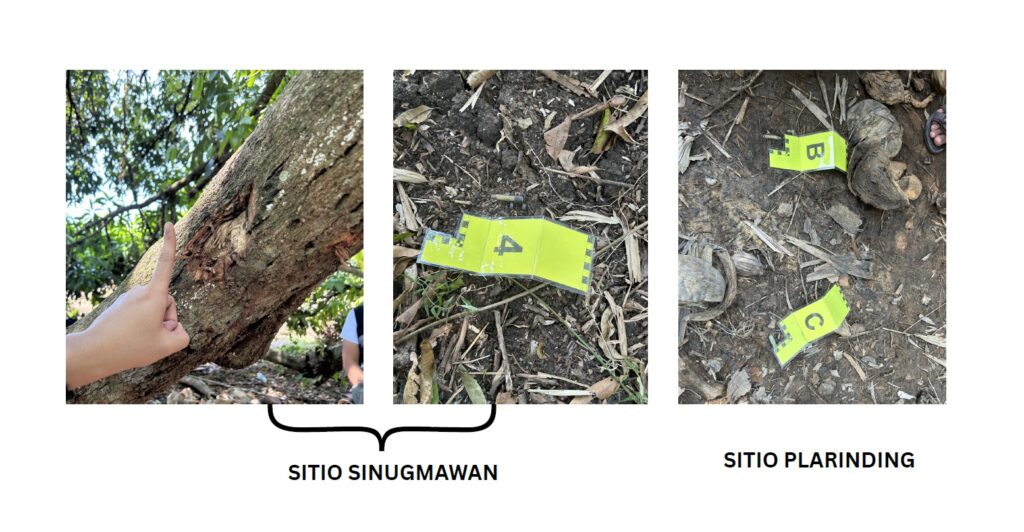
Conti pointed out that there were bullet marks found on trees, on the bodies of the fatalities and on the ground. The fact-finding team also documented several pieces of evidence at the alleged encounter sites in Sinugmawan and Plarending, including unfired bullets, bullet clips, and a bullet casing.
“Photos that have surfaced show that some pieces of evidence, such as the pouch seen on top of RJ Ledesma’s body, appeared to have been planted. The photos also show the victims lying on their backs,” the fact-finding team further noted in its initial report. Fortun, during the briefing on her findings, said gunshot wounds were found on the backs and sides of the victims.
How Did Victims End Up in the Fishpond?
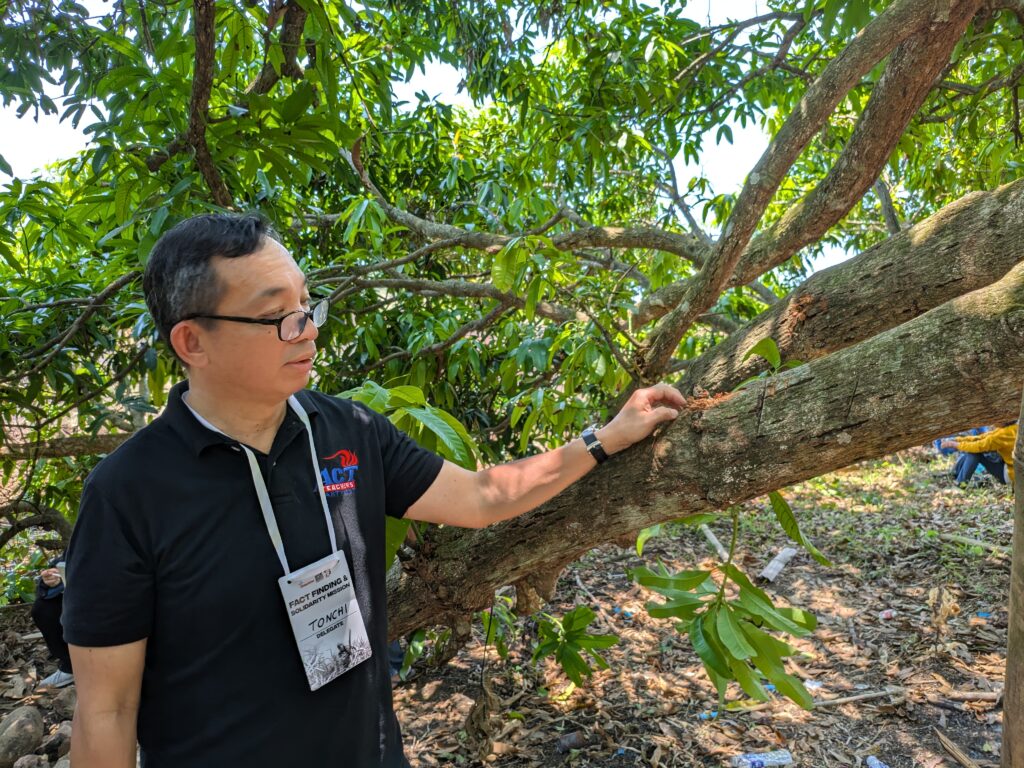
Human rights lawyer Maria Sol Taule, who also serves as deputy secretary-general of Karapatan, which organized the national fact-finding and solidarity mission, said she became curious about how the fleeing rebels were able to reach Plarending from Sinugmawan given the area’s rugged terrain.
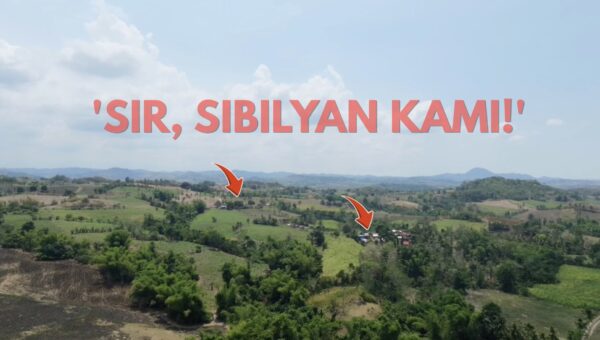
Sinugmawan is more than two kilometers from the main road and is accessible only on foot; vehicles cannot reach the area. Reaching the sitio requires more than a 30-minute trek across rugged, open terrain and crossing a small river.
READ: By Spinning Toboso Killings Before Credible Probe, Marcos Govt Violates International Law
After the clash first broke out in Sinugmawan after 3 a.m. on April 19, the rebels’ group fled on foot to the north, toward Plarending, where they were eventually trapped at the fishpond and died there. To reach the area, they would have had to traverse very steep slopes, narrow rugged paths, elevated fields, and forested terrain. Sinugmawan sits in the uplands more than two kilometers from Plarending — a journey of more than an hour on foot.
“I became curious and looked at Google Maps to see what other sitios surrounded Sinugmawan and Plarending. I wanted to understand where they all could have gone and what nearby places were around the area,” Taule said. “To me, it didn’t fit the narrative of a 13-hour gunfight and then suddenly everyone was found there (Plarending),” Taule said. It is not yet clear how many bodies were found in the fishpond or elsewhere.
“What I kept thinking was: if they fled from Sitio Sinugmawan, what route did they take?” Taule asked. “I thought maybe something didn’t fit in the narrative. It’s possible that some people were killed in one sitio and then all the bodies ended up in another place.”
She pointed out that they do not know the exact time of death of the victims, which could have helped determine whether they all died at the same time or whether some died earlier than the others. “Some of the bodies were already in the early stages of decomposition and had been submerged in water for two days,” she said.
The question on top of Taule’s mind is: “How exactly did this happen?”
READ: Toboso 19: The Communists Named Their Own Fighters. Now the Government Owes Answers About the Rest.
She admitted that reaching the fishpond was challenging because of the extremely steep, almost vertical terrain, which had very few trees or branches to hold onto.
“It was difficult. I didn’t expect it to be that difficult. I thought that since it was a fishpond, it would just be a straight path and mostly flat land,” Taule said. “We were surprised because the route going down was very steep. Apparently, during high tide, the dike path becomes submerged, which is supposed to be the only land route across the water. When we went there, it was high tide, so we had no choice but to take the very steep route leading to the fishpond. It was difficult, rocky and slippery, with very few trees or branches to hold onto. You practically had to crawl. In fact, that’s what I did. I crawled my way down,” she added.
She said the fact-finding team could not establish whether the rebels and the civilians were deliberately led to the fishpond. “But the questions in my mind are: if the gunfight really lasted that long, were they all chased and eventually ended up in that one place? Did no one die during the chase? These are the kinds of questions we can no longer reconstruct now because many factors have already blocked our ability to determine the truth,” Taule said.
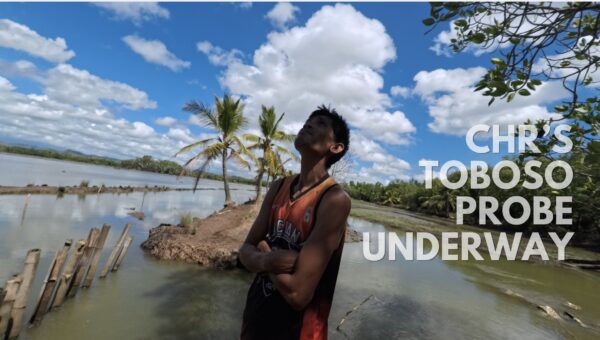
READ: Toboso Probe Underway: CHR Subpoenas Army Files on Clash, but Some Families Refuse to Talk
Not Established
Taule said it remains unclear how the nine civilians ended up with the 10 rebels. “That’s also one of the questions we’ve been asking. Although residents from Sinugmawan testified that they knew six of them, the question remains: why did they end up in that area? Were they taken there? Were they with the rest of the 19?” she said. “There are still many unresolved issues that need to be established. We’re having difficulty reconstructing that now.”
She said these questions should have been asked of their key informants, who later refused to talk because they were terrified by the military’s presence in the community. “Those are among the challenges in piecing together the full narrative,” she added. (Rights Report Philippines)
Fact-Finding Team Claims Harassment, Surveillance
MEMBERS of the fact-finding team said they experienced various forms of harassment during their visit to the village. Delegates reported being tailed by a suspicious individual on a motorcycle who was seen taking photographs of the convoy’s vehicles.
During a courtesy call at the barangay hall, around five unidentified individuals were also observed openly photographing the delegates, raising serious concerns about surveillance and intimidation aimed at obstructing independent human rights documentation efforts, the fact-finding team said.
Meanwhile, Sadie Stone, an American pastor and member of the International Coalition for Human Rights in the Philippines (ICHRP), was disallowed entry in the Philippines for being blacklisted — allegedly for participating in “political activities” in 2016, the fact-finding team said. Stone was supposed to join the fact-finding and solidarity mission.
Peace Rally
On the day of the national fact-finding mission on May 14, the 3rd Civil-Military Operations Battalion, based at Camp Martin P. Jaen Sr. Headquarters in Iloilo, issued a press release stating that Salamanca residents and barangay officials, led by Barangay Chairman Romeo Sultan, gathered at the village plaza for a peace rally condemning the violence and atrocities allegedly perpetrated by the NPA.
“The activity served as a collective expression of the community’s opposition to armed violence and their call for justice for innocent civilians who have been affected by the conflict in the Negros Island Region,” the press release said.
The statement also said community members shared their sentiments regarding the recent visit of representatives associated with the Makabayan bloc, claiming that residents openly rejected their presence and urged them to leave the area.
In the morning, when the fact-finding team arrived in the barangay, it first proceeded to the barangay hall for a courtesy call with Sultan, who warmly received the group. He also asked two barangay kagawads to accompany them.
Sultan later took selfies with the human rights lawyers, Makabayan bloc lawmakers, and activists following the courtesy visit. (Rights Report Philippines)
‘Errol Was Researching Land Issues in Negros’
ARIEL Casilao, former Anakpawis representative and chairperson of the Unyon ng mga Manggagawa sa Agrikultura (UMA), said one of the fatalities, Errol Wendel, who was from Makati, was in Negros Occidental to document several cases of land grabbing and land disputes involving haciendas in the province. Casilao said these cases were presented by the National Federation of Sugar Workers (NFSW), a member of UMA, during their Kampuhan ng Mambubukid last year.
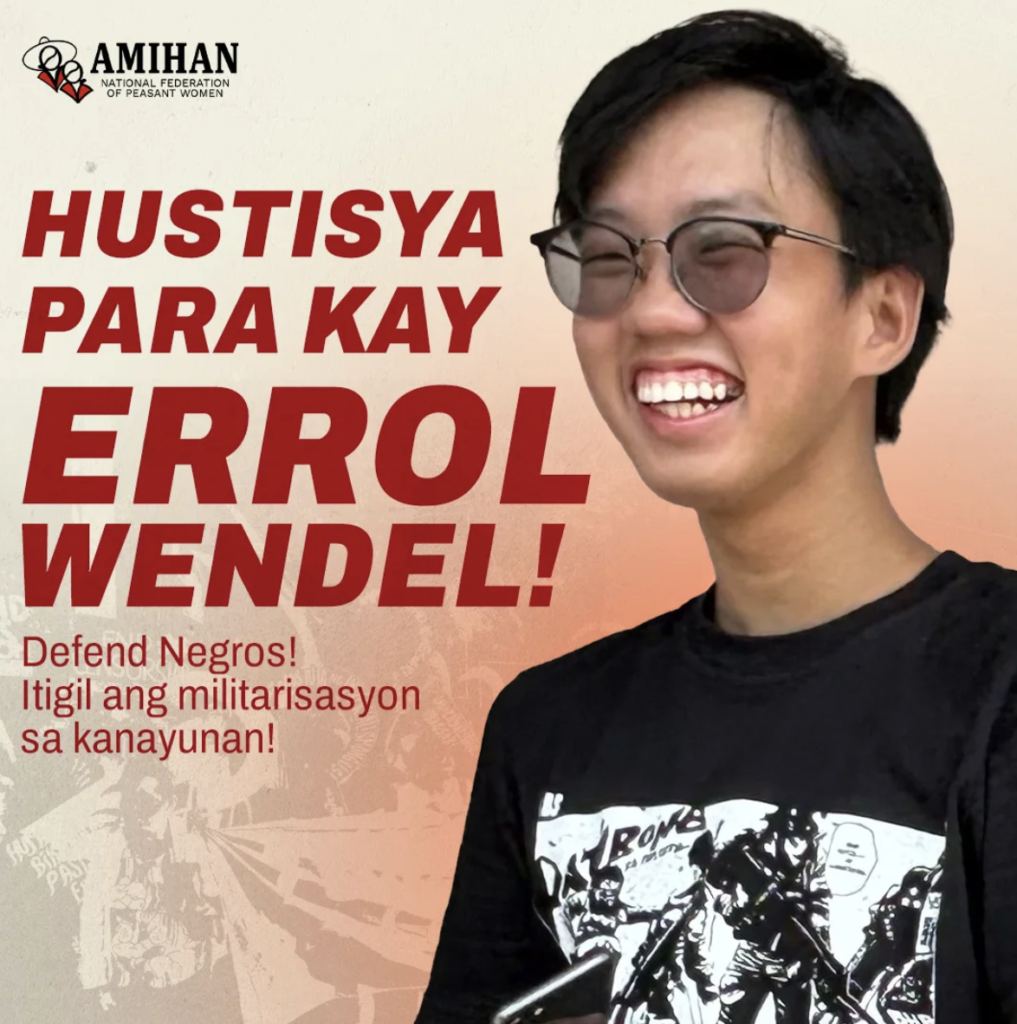
“Because of that, we decided to reinforce and add personnel for research work and further gather data for possible cases to be filed with the Department of Agrarian Reform (DAR),” Casilao said. In fact, he added, “during Errol’s month-long research and organizing work here in Negros, not only in Candoni but also in Toboso, he forwarded basic documentation on a land case in Toboso, particularly the local struggle of the hacienda farmers in Sinugmawan.”
According to Casilao, Wendel went there on March 17, a month before the encounter. “Our agreement was that once he completed the case profile, he would prepare it for possible filing with the DAR,” he added.
He said many of these cases never even reach the central office and instead remain pending for years at DAR regional offices. “That’s why when we brought these issues up last October, we recognized the need to further substantiate the data and facts. We also needed to organize the farm workers involved in the land disputes,” Casilao said. (Rights Report Philippines)