
An unjust law applied to an adversary is still an unjust law. writes Cong Corrales
“I DISAPPROVE of what you say, but I will defend to the death your right to say it.”
This famous principle — often misattributed directly to the French philosopher Voltaire, but actually written by Evelyn Beatrice Hall in her 1906 biographical study The Friends of Voltaire, as a paraphrase of his beliefs — seems to have been forgotten by our own ranks.
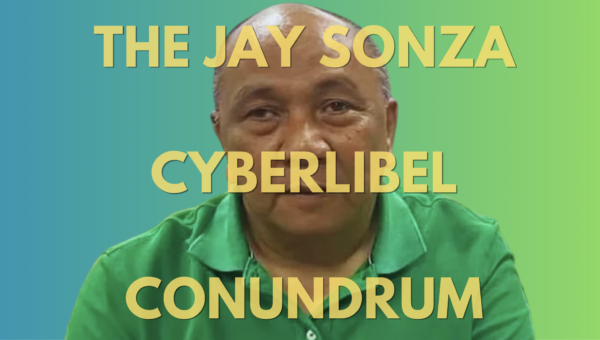
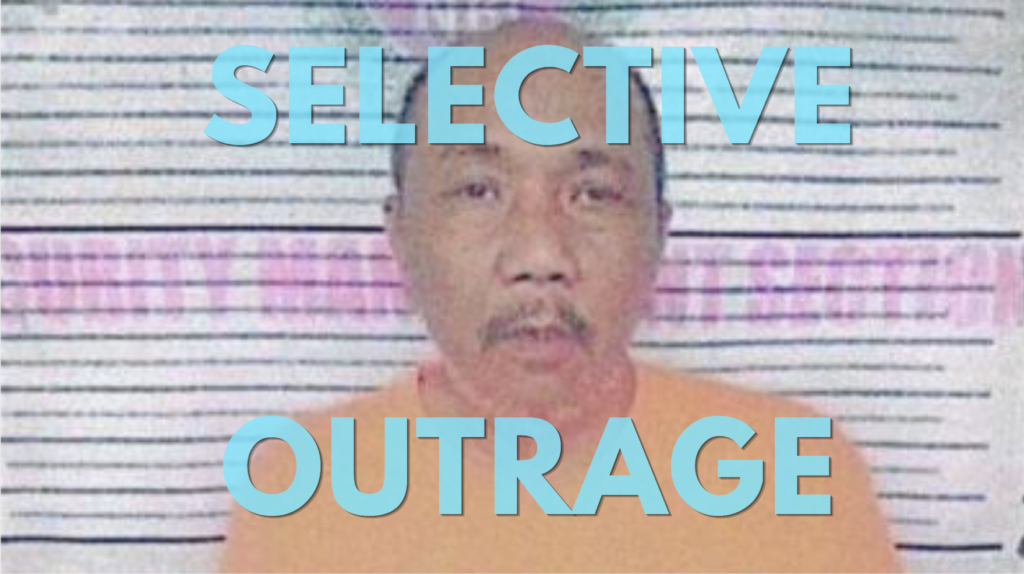
The recent arrest of former broadcaster Jay Sonza for cyberlibel and unlawful publication was met with a glaring, uncomfortable silence from the very groups that usually champion press freedom.
The National Union of Journalists of the Philippines (NUJP) — of which I am a member — and other prominent media organizations had nothing to say. No statements of condemnation. No sweeping declarations about the chilling effect on free speech.
Just crickets.
Now, I’ll be the first to acknowledge that this case is not a clean one.
Sonza wasn’t arrested for writing a scathing column, for publishing a harsh opinion, or even for saying something deeply unfair about the President. He was arrested for allegedly spreading fabricated medical records — manufactured documents purporting to show that President Marcos suffered from a condition serious enough to impair his fitness for office. That’s a different category of speech from the kind we usually defend, and anyone who glosses over that distinction is not being honest about the argument.
But here’s the thing: the law used against him doesn’t distinguish between the two.
The Cybercrime Prevention Act — the same law that has been weaponized against legitimate journalists, ordinary citizens, and dissenting voices for years — is blunt by design. It does not ask whether the speech was false or true, fair or malicious, opinion or fabrication. It simply exposes anyone accused of online defamation or unlawful publication to criminal prosecution, with all the coercive machinery of the state behind it. And that is precisely why we have long called for its reform.
So when that machinery was turned on Sonza, the most honest response was not silence. It was to say: this law remains dangerous, and the most alarming proof of that is how easily it can be used — against anyone, by whoever holds power at the moment.
There’s also the matter of the arrest warrant itself. The Pasay City Regional Trial Court initially classified the charge as non-bailable — an error the court later corrected — but not before Sonza, a 71-year-old man, spent a long weekend in detention. His lawyer was right to call that out. The practical effect of arresting someone on the eve of a holiday weekend, on a warrant that turned out to be legally erroneous, is a deprivation of liberty that no principled advocate for due process should dismiss — regardless of who the accused is.
This was not a missed strategic opportunity. It was a missed moral obligation.
Since 2016, trolls and staunch supporters of former President Rodrigo Duterte have relentlessly maligned, discredited, and attacked legacy media. Many of these figures made a living out of turning the press into a public punching bag. Sonza was among them. None of that is in dispute.
But that history is precisely why our silence is so damaging now.
Our long-standing argument against cyberlibel has never been that accused people are innocent. It has been that criminal prosecution is the wrong remedy for speech — that jailing someone over what they publish, whether it is false, malicious, or merely inconvenient, is a disproportionate response that no democratic society should normalize. The moment we abandon that argument because we find the accused repugnant, we have abandoned the argument entirely.
Advocating for the decriminalization of cyberlibel cannot be a selective enterprise. It should not matter whether we agree with the accused, whether we align with their politics, or whether we find their online persona repulsive.
Freedom of speech and expression is a constitutionally guaranteed right, not a VIP privilege reserved only for those who belong to our “right” circles or share the “correct” opinions.
When our media groups choose to stay silent on Sonza’s arrest, we dilute our own message. We make it dangerously easy for the public to dismiss our press freedom campaigns as nothing more than partisan posturing. Defending the principle means defending it precisely when it is least comfortable — not just when the person invoking it is someone we would invite to our press freedom forums.
Perhaps NUJP and others made a considered judgment: that this was a disinformation case rather than a press freedom case, and that speaking up would muddy the advocacy. That’s a defensible position. But if so, it deserved to be said out loud. Silence reads as endorsement — or worse, as relief.
The ultimate test of free speech is not how we treat our allies, but how we react when our adversaries are silenced.
If the Philippine media community genuinely wants to dismantle draconian cyberlibel laws, we must be inclusive in our outrage. To be clear, that doesn’t mean defending everything Sonza allegedly did — it means insisting that a criminal statute is the wrong tool to deal with it, and that a law dangerous enough to silence journalists is dangerous enough to demand our opposition whoever it targets.
An unjust law applied to an adversary is still an unjust law.
Until we recognize that defending the freedom of expression is a universal obligation — not a courtesy extended only to ideological allies — our fight for decriminalization will remain incomplete, fractured, and ultimately, hypocritical.
It is time to decide: are we defending a constitutional principle, or are we just defending our friends? (Rights Report Philippines)