
NEWS ANALYSIS: The latest fatwa by the Bangsamoro Darul-Ifta’ is a landmark edict banning forced marriage of rape survivors. Can that and other fatwas accumulate enough religious and social weight to change what no law from Manila has managed to change?
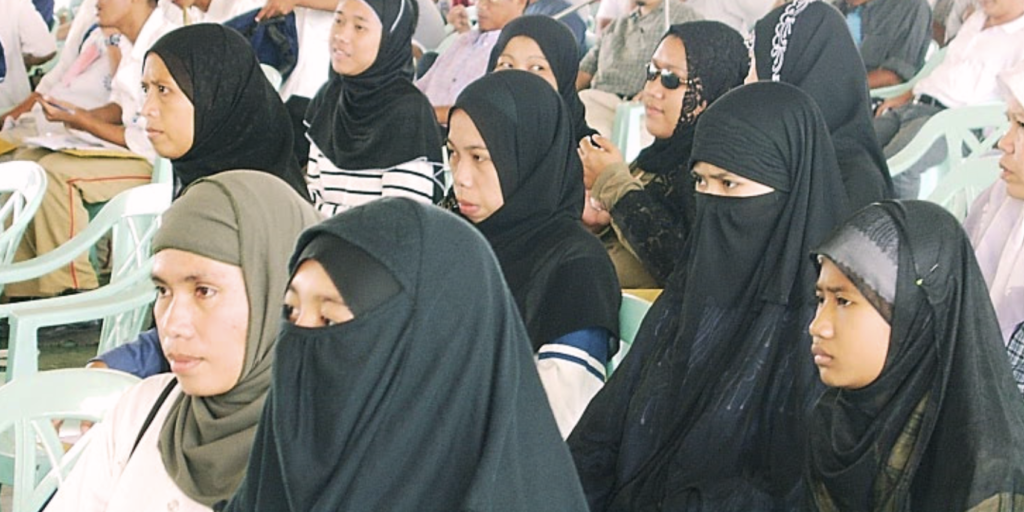
WHEN the Bangsamoro Darul-Ifta’ issued a religious ruling last month declaring it forbidden to force a rape victim to marry her attacker, it was easy to read it as a single, welcome act of conscience from an unlikely corner of the country. It was something more deliberate than that.
The edict —Fatwa No. 05, issued Feb. 13 and released publicly in early March — is the latest in a quiet, two-decade-long effort by the highest Islamic religious authority in the Bangsamoro Autonomous Region in Muslim Mindanao (BARMM) to use religious rulings as a tool for women’s rights reform. The body has done this before, on family planning, on reproductive health, on gender-based violence. Each time, it has moved carefully, on its own terms, and largely out of national view.
That last part is a problem. Because what the BDI is doing — building an Islamic jurisprudential case for women’s rights, ruling by ruling, in the only Muslim-majority autonomous region of a predominantly Catholic country — is one of the more consequential and underreported stories in the Philippines today.
The ruling declared that compelling a woman to marry the man who assaulted her is “haram” — forbidden under Islamic Shariah law — because it would impose two unbearable burdens on her: the trauma of the assault itself, and a lifetime bound to her attacker as his wife.
“It is not permissible in the Islamic Shari’ah to compel a woman to marry the man who assaulted and raped her,” the fatwa said. Sheik Abdulrauf Guialani, the Bangsamoro’s grand mufti (Islamic jurist), said the body reviewed the issue meticulously before issuing the ruling, which was signed off by 11 Islamic jurists.
Women’s rights groups praised it immediately. On Monday, Oxfam Philippines issued a statement of support. “The fatwa affirms the fundamental rights of women and girls and emphasizes that sexual violence must be met with justice: victim-survivors should not be trapped in a cycle of violence and perpetrators should not evade persecution.”
Lilak Purple Action of Indigenous Women (LILAK) said in a statement that “marriage is a commitment and should be a consensual process from both parties.”
MindaNews, the primary journalism outlet dedicated to Mindanao coverage, reported it thoroughly. But other than that and a brief item in the Philippine Daily Inquirer, the matter got no attention. That’s a significant lapse, because the ruling lands in the middle of a set of unresolved legal and social tensions that go to the heart of how the Philippines treats women under its most marginalized legal framework.
“Marry Your Rapist” Law
To understand why this fatwa matters, it helps to know what it’s pushing against, legally and culturally.
The Philippines still carries what critics call “marry-your-rapist” provisions in their legal code, a holdover from Spanish colonial law that has never been fully repealed. Under this arrangement, a rapist’s criminal liability can be extinguished if he marries his victim. Women’s rights campaigners have fought to eliminate this for years, with limited success at the national level.
Inside the BARMM, a separate legal framework applies. The region operates under both Philippine national law and its own Shariah-based system, governed in part by Presidential Decree No. 1083, the Code of Muslim Personal Laws enacted by President Ferdinand Marcos Sr. in 1977. This decree has its own troubled history on women’s rights, having long permitted girls as young as 12 to marry with a Shariah court’s approval.
No law passed in Manila has much reach in communities where religious authority — not the state — shapes daily life.
The Philippines passed a law banning child marriage in December 2021. But that national law has barely dented the practice in the BARMM. A UNICEF study released in October 2025 found that 15 percent of girls in the region are married before age 18, and 2 percent before age 15, both higher than the national average. The Bangsamoro Women Commission estimated in 2021 that roughly 88,600 girls in the region had been married before their 18th birthday. One local official in Tawi-Tawi, quoted in the UNICEF study, said he wasn’t even aware a ban existed.
No law passed in Manila, it turns out, has much reach in communities where religious authority — not the state — shapes daily life.
The Fatwa as Reform Tool
This is precisely why what the BDI has been doing matters, and why the forced-marriage ruling is best understood not as a standalone event but as the latest step in a longer, deliberate campaign.
The BDI has been building a body of progressive Islamic rulings — quietly, incrementally — for more than two decades.In 2004, it issued a fatwa clarifying that family planning is not forbidden in Islam. In 2015, it tackled early marriage, releasing a ruling that discouraged marriage before puberty while stopping short of fixing a minimum age. In 2019, with support from the UN Population Fund, it released a broader set of rulings on reproductive health. And in March 2022, in a ceremony marking International Women’s Day, it formally launched five fatwas on gender-based violence, covering rape, human trafficking and other abuses.
Women’s rights advocates inside the BARMM government have been deliberately and strategically using the fatwa as a reform instrument, one issue at a time.
The 2026 forced-marriage ruling is the fifth in a numbered fatwa series. This is not a coincidence.
But the BDI hasn’t been acting alone. A crucial and underreported force behind these rulings is the Bangsamoro Women Commission, the BARMM’s own gender-equality body. Its former chair, Hadja Bainon Karon, described in 2022 the work of convincing the Grand Mufti and Islamic scholars to issue rulings on violence against women as a significant milestone in itself — the first time, she said, that the male leadership of the BDI had taken the protection of women seriously. Women’s rights advocates inside the BARMM government have been deliberately and strategically using the fatwa as a reform instrument, one issue at a time. The BDI has been willing to move — just slowly, and on its own terms.
The Child Marriage Question
Which brings us to the harder question: does all of this point toward a fatwa that eventually bans child marriage outright?
The honest answer is: not yet, and maybe not soon.
The 2015 ruling on early marriage was notably cautious. It encouraged marriage “when the necessary conditions are met” — language that deliberately left room for post-puberty unions involving minors. It declined to set a minimum age, noting that “Islam does not precisely fix any marriageable age.” That’s a far cry from a prohibition. And the BDI has not publicly signaled any intention to issue one.
The deeper problem is that child marriage in the BARMM is driven by overlapping forces that a fatwa alone cannot resolve. Poverty is central: families in one of the Philippines’ poorest regions sometimes marry off daughters to ease financial pressure or to secure what they see as protection during conflict. Displacement after the Marawi siege in 2017 worsened the problem dramatically. And the same logic that once justified forcing rape victims to marry their attackers — that a woman’s value is tied to her sexual purity, and that marriage “repairs” its loss — also drives families to marry daughters young, before any dishonor can occur.
These are not problems a religious ruling resolves on its own. UNICEF has been clear that ending child marriage in the BARMM requires not just laws or rulings but poverty reduction, girls’ education, stronger social services, and sustained engagement with religious and community leaders.
Why the Silence?
Still, the BDI’s willingness to use Islamic jurisprudence as a vehicle for women’s rights is significant — and the near-total absence of national coverage is worth naming directly.
This is a story about the highest religious authority in the Philippines’ only Muslim autonomous region issuing a ruling that directly challenges one of the country’s most entrenched abuses of women. It arrived during National Women’s Month. It came from a body whose rulings carry more practical weight in many communities than anything the national Congress passes. And it is part of a documented, decade-long pattern of reform-minded religious leadership.
The next ruling worth watching isn’t the one the BDI issues. It’s the one Congress has been putting off for years.
That pattern has been documented almost entirely by one outlet — MindaNews, the Mindanao-based news service that has covered the BARMM’s evolution longer and more carefully than anyone. The national press, meanwhile, has treated the Bangsamoro as a story mainly when there is conflict, an election dispute, or a political crisis. The slow, complicated work of social reform happening inside the region’s religious institutions hasn’t made the cut.
That itself reflects a broader failure of the Philippine media landscape to take the BARMM seriously as a site of civic and social development, rather than just a security beat.
What the Law Says — and Doesn’t
The BDI’s ruling carries moral and religious authority within the BARMM, but it is not a civil or criminal law — and that distinction matters. Under the Philippine legal system, forced marriage of a rape victim is not explicitly criminalized at the national level. Article 266-C of the Anti-Rape Law of 1997 — the so-called “forgiveness clause” — remains on the books, allowing a rapist’s criminal liability to be extinguished if he subsequently marries his victim.
The Philippine Commission on Women has long called for its repeal, and multiple bills to do so have been filed in the House and the Senate across successive Congresses. As of 2025, none have been enacted. This means the fatwa and Philippine national law are, for now, pulling in the same direction on paper — both saying forced marriage should not extinguish a rapist’s accountability — but only one of them is legally enforceable, and it has a gaping loophole the other does not.
The gap between the fatwa and actual law also has implications for the Philippines’ standing under international human rights commitments. The Philippines ratified the Convention on the Elimination of All Forms of Discrimination Against Women (CEDAW) in 1981 — the first country in Southeast Asia to do so — and has since been found in violation of its CEDAW obligations four times, including in two cases directly involving the handling of rape.
The CEDAW Committee has repeatedly flagged the forgiveness clause and the provisions of Presidential Decree 1083 as incompatible with the convention. Under CEDAW’s General Recommendation No. 19, forced marriage is explicitly classified as a form of gender-based violence — the same ground the BDI fatwa now stands on as a matter of Islamic jurisprudence. The alignment is notable: the Philippines’ top Islamic religious body and the U.N.’s primary international treaty on women’s rights have now arrived at the same conclusion through different legal traditions. What remains is for the Philippine Congress to catch up with both.
What Comes Next
The BDI did not arrive at Fatwa No. 05 by accident. It got here through two decades of incremental rulings, sustained pressure from women’s advocates inside the BARMM government, and a willingness — however cautious and gradual — to use Islamic jurisprudence as an instrument of social change. That is not nothing. In a region where a fatwa carries more practical authority than a law passed in Manila, it may in fact be the most effective reform tool available.
But the trajectory has limits, and honesty requires acknowledging them. The BDI has not moved on child marriage. It has not fixed a minimum age. It has not publicly committed to doing either. And the poverty, displacement, and deep cultural currents that drive the abuse of women and girls in the BARMM are not problems any religious ruling, however well-intentioned, can resolve alone.
What the 2026 fatwa does is sharpen the question. The Philippines’ top Islamic religious body and the U.N.’s primary international treaty on women’s rights have now arrived at the same conclusion — that forcing a woman to marry her attacker is indefensible — through entirely different legal traditions. The national legislature has done neither. The next ruling worth watching isn’t the one the BDI issues. It’s the one Congress has been putting off for years. (Rights Report Philippines)