

KARAPATAN, the human rights alliance, has renewed its opposition to the judicial appointment of a Quezon City judge it accuses of enabling state abuses, urging the body that screens court nominees to reject her application for the third time.
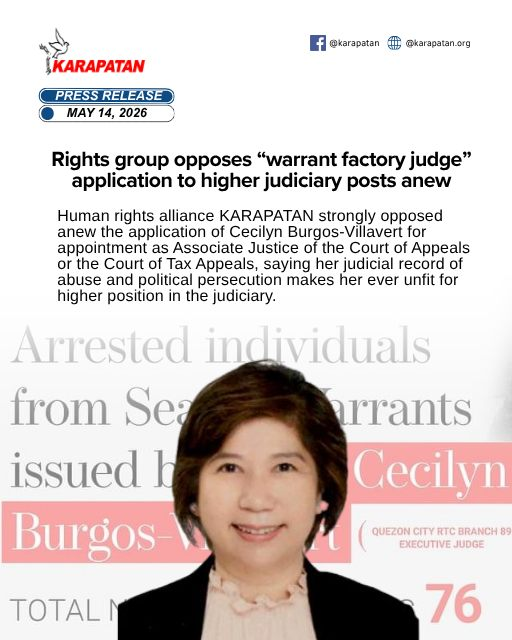
Karapatan filed its objection this week against Cecilyn Burgos-Villavert — widely referred to by activists as the “warrant factory judge” — who is seeking a seat on either the Court of Appeals or the Court of Tax Appeals.
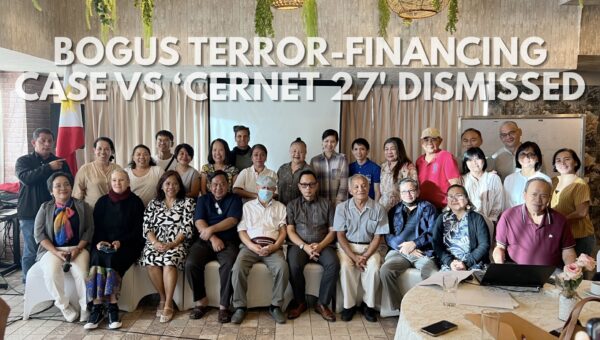
The group’s case rests on a documented pattern: between 2018 and 2020, Villavert issued warrants that put at least 76 activists behind bars on firearms and explosives charges. Most of those charges have since collapsed. Fifty-seven of the 76 have had their cases dropped or walked free after acquittal, many of them only after courts voided the warrants as legally defective. Nearly all those arrests followed a well-worn script: red-tagging first, then the raids.
“For the victims of illegal raids, fabricated charges, arbitrary detention, and state violence, the possible elevation of Cecilyn Burgos-Villavert to a higher court is not merely a judicial appointment issue,” said Cristina Palabay, Karapatan’s secretary general. “It is a question of whether impunity will continue to reign in the Philippine justice system.”
Red-Tagging as a Pipeline to the Courts
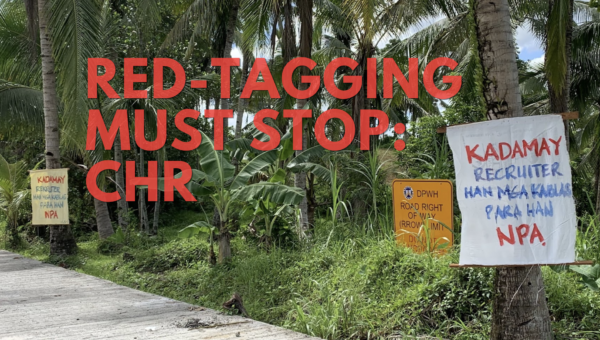
Before the warrants came the labels. Red-tagging — the practice of branding activists, journalists and community workers as communist sympathizers or terrorists — has long served as the pretext for the kind of operations Villavert’s warrants authorized. The Commission on Human Rights released a new inquiry report this month calling for it to stop, its second in six years. The CHR found the practice systematically endangers those it targets, and that the government has so far ignored its earlier recommendations.
The warrants Villavert issued authorized coordinated police and military raids — the operational end of the red-tagging pipeline — against activists and labor organizers. Possession of firearms and explosives was the standard charge. In most cases, it did not hold up.
Several warrants were later voided by other courts. A Bacolod judge quashed one warrant against a sugar workers’ union leader in 2021, ruling it too general to satisfy the constitutional requirement that a search warrant precisely identify the place and items in question. A Mandaluyong court did the same for warrants used to arrest journalist Lady Ann Salem and trade unionist Rodrigo Esparrago.
The case of activist Reina Mae Nasino drew the widest attention. Arrested while pregnant in November 2019, Nasino carried her baby almost to full term in detention, delivered at a Manila hospital, and was separated from the infant a month later. The baby, known as Baby River, died in October 2020 from acute respiratory distress syndrome, drawing condemnation from rights groups and foreign observers. The Supreme Court later upheld the voiding of Villavert’s warrant in that case, finding it violated constitutional rules on specificity. The broader pattern of red-tagging followed by legal harassment has been documented across the country for years.
What International Law Requires
The Philippines ratified the International Covenant on Civil and Political Rights in 1986, binding itself to its standards on judicial conduct. Article 14 of the ICCPR guarantees everyone the right to a fair hearing before a tribunal that is competent, independent and impartial — a standard the UN Human Rights Committee has said is absolute and cannot be waived.
The Committee’s General Comment No. 32 requires states to set objective criteria for judicial promotions, and holds that a judge must be free of bias toward any party and must give no reasonable grounds — to anyone looking on — to doubt the court’s fairness.
The same standards require that judicial work remain independent of law enforcement, and that the rules governing who gets promoted onto the bench be codified in law rather than left open to influence. Critics argue that elevating a judge whose warrants systematically served police and military operations cuts directly against that principle.
Repeated Opposition
Karapatan first opposed Villavert’s promotion in 2024, then again in April 2025. Last July, the Makabayan bloc in Congress also wrote to President Ferdinand Marcos Jr., urging him to block her nomination. Her decision to apply again, Palabay said, only sharpens the urgency.
The Judicial and Bar Council, which evaluates nominees on criteria that include integrity and independence, has not publicly addressed the latest submission. Villavert has not publicly responded to the allegations.
“Judges are expected to serve as guardians of constitutional rights, not rubber stamps for abusive state security operations,” Palabay said. “A judge whose actions contributed to the weaponization of the courts against ordinary persons and government critics has no place in the appellate courts.” (Rights Report Philippines)