
After a deadly clash left 19 people dead, including two children, soldiers swept through a remote farming community, searching homes and leaving residents too frightened to step outside for days. Marchel P. Espina reports from Toboso.
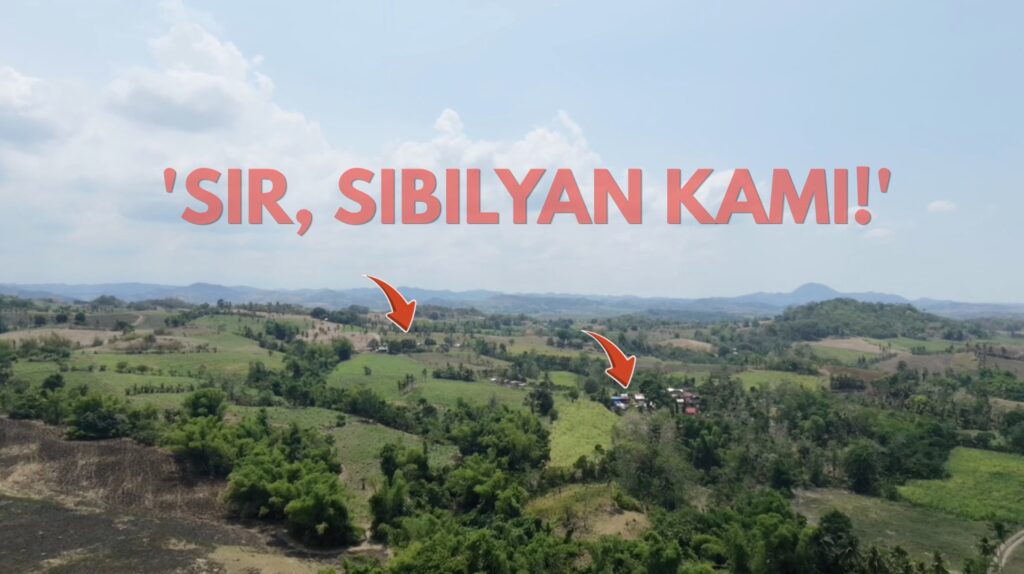
BEFORE dawn on April 19, residents of Sitio Sinugmawan in Barangay Salamanca in Toboso town, Negros Occidental, were awakened by sudden bursts of gunfire. When the shooting stopped, residents said several soldiers stormed their houses and searched for fleeing communist guerrillas.
It was in Sinugmawan where the first encounter between the Philippine Army and the New People’s Army (NPA) erupted and spread to neighboring Sitio Plarending, leaving 19 people dead, among them two children and seven civilians. [Editor: Later testimony puts the civilian count at six; verify before publication.]
What followed the gunfire, residents said in interviews conducted as part of a national fact-finding mission, was a sweep through the community that left families trembling, unable to go outside for days, and uncertain whether the rice in their kitchens or the hammocks in their homes might be taken as evidence of rebel ties.
Residents said they first heard gunfire shortly after 3 a.m. By morning, they said that Army soldiers had gone from house to house, searching.
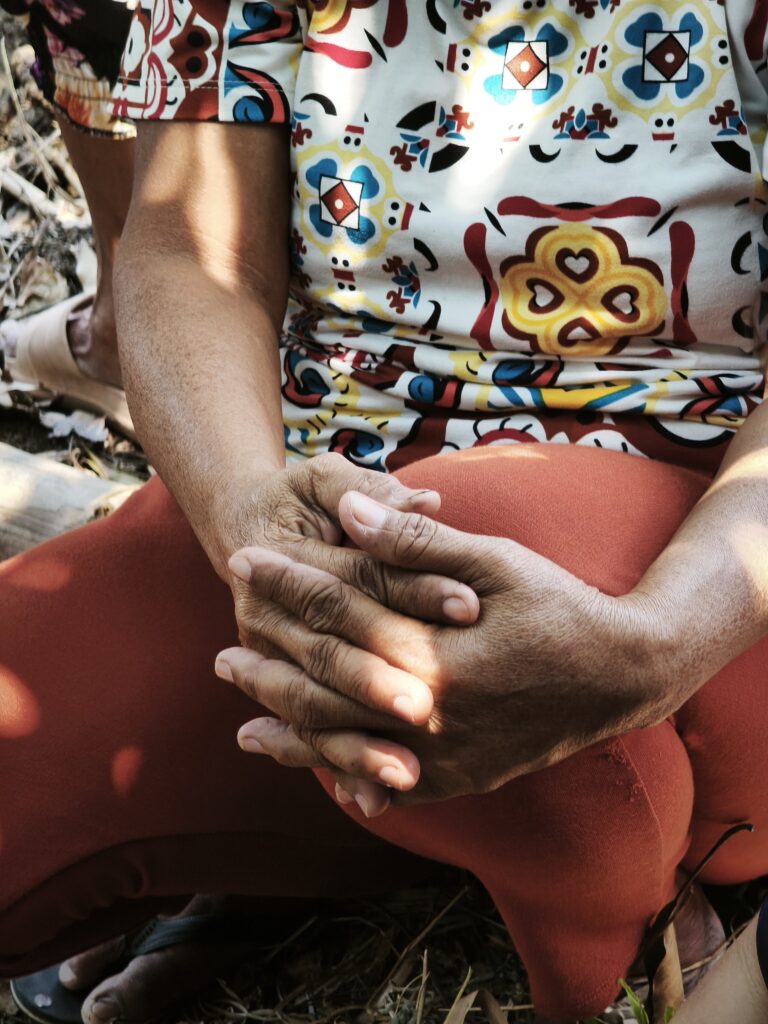
A 58-year-old woman, whose identity is being withheld for security reasons and who spoke to several journalists on May 14, said that around 7 a.m., six soldiers armed with high-powered rifles went to her house looking for their “kontra” (enemy).
She was terrified, she said, when a soldier pointed what she described as an M14 rifle at her and her husband.
“Sir, sibilyan kami (Sir, we’re civilians),” the woman recalled pleading after seeing the gun raised in their direction, remembering how she kurog (trembled). She said they were then instructed to leave the house as the soldiers entered and searched for anyone in hiding.
“Gin-tagsa-tagsa amon balay, gin-saka kami (They went through each of our houses and searched them one by one),” she told reporters on the fact-finding mission organized by human rights groups on May 14.
She said the soldiers who went to her brother-in-law’s house also harassed them. “Sa akon bayaw, gin-pamangkot ang pag-umankon ko kung sino ni ang usa ka sako na bugas, ingon ang soltero, amoa man na ah (In my brother-in-law’s house, they asked my nephew who owned the sack of rice, and he said it was theirs),” she said. The Army, she added, appeared to be insinuating that the rice had come from the NPA.
Another resident, a 70-year-old woman, said that one soldier came directly to her house to charge his power bank. She let him in without question so as not to arouse suspicion.
She was also asked who owned the house and how she had been able to afford it. She said it belonged to her and that she had paid for it by selling three carabaos.
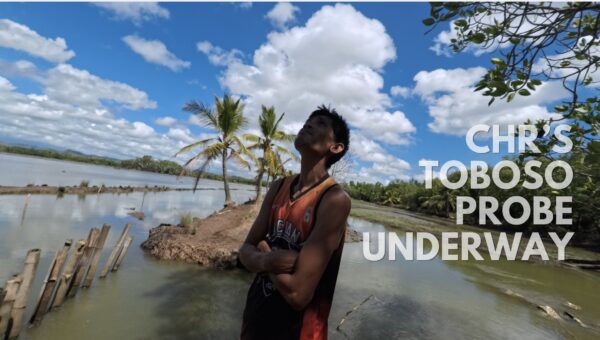
READ: Toboso Probe Underway: CHR Subpoenas Army Files on Clash, but Some Families Refuse to Talk
She said she was also questioned about belongings inside, including a duyan, or hammock. She said she believed soldiers were insinuating that the NPA had been helping them.
She also said the soldiers told her they would sleep in her house that night. She said she waited, but “wala man nagtulog diri (they didn’t sleep here after all).”
She also pointed out that there was one soldier in the group whom she described as “maayo” (kind), and who told her that the rebels were already gone. She recalled telling the soldier that it was what they wanted — for everything to return to normal.
She recalled that when the gunfire started past 3 a.m., her eight-year-old grandson started crying and kept telling her, “Managan ta, Lola (Let’s run, Grandma).” But she replied: “Dili magdalagan kay ngitngit. Indi ta ka-kita. Diri lang ta, hapa lang…ako nag-pungko lang, namati sa lupok (Don’t run because it’s dark. We can’t see anything. Let’s just stay here and lie low…I just sat there and listened to the gunfire).”
Both women said they were so frightened that they stayed inside and did not leave for four days. “Pinukuay, minaw sa panahon kay kulba (We stayed inside and remained alert to what was happening because we were afraid),” one of them said.
She said that although they were unable to go to work for four days, they still had enough to eat. “May ara man kami na preparar bisan ano kami ka pobre. Dili ma wad-an gamiton sa adlaw. May stock (We were prepared no matter how poor we are. We did not run out of supplies for those days. We had stock),” she said.
READ: In #Toboso19 Aftermath, the Struggle for Healing
More than 30 soldiers went from house to house that morning and visited around 20 homes in the community, residents said.
Further Harassment
Another resident, who is in her 30s, said the soldiers returned to their community after the April 19 incident and stayed for four days, from April 24 to 27. She said they set up camp behind one of the houses they had searched.
On May 6, she said she noticed two men lurking at night. When she pointed her flashlight at them, they ran away.
Some residents also said there were men surveilling the area on the night of May 13, the eve of the national fact-finding mission that brought more than 100 human rights workers, Makabayan bloc lawmakers, activists, church workers, and youth leaders to the community.
The residents who spoke with journalists and members of the fact-finding team said they simply want to live peacefully. “Linong na wala Army. Mabuang kami ana, ma-trauma kami na (It’s peaceful without the Army around. We might lose our minds from this — we’re traumatized),” one of them said.
But another resident who spoke with Rights Report Philippines said she did not experience what her neighbors went through — her house was farther away.
“Wala kami gin-pahog…Gin-hambalan kami na indi pagwaa ang mga bata kay wala pa natapos (We were never threatened. We were told not to let the children go outside because it was not yet over),” she said. The military arrived in their community past 5 a.m., she said.
They stayed inside and kept their doors locked until the situation had settled. She said they only came out around 7 a.m.
Two more residents interviewed by Rights Report Philippines said they were also awakened by loud gunfire past 3 a.m. and stayed inside their homes until around lunchtime. They said they did not evacuate to the barangay hall, unlike residents from neighboring Sitio Plarending, and did not mention harassment by the Army following the early-morning encounter.
One resident said no bodies were found in the sitio even though the first encounter started there. All 19 bodies were recovered in Sitio Plarending, more than two kilometers away.
A Community Cut Off
Sinugmawan sits more than two kilometers from the nearest main road, accessible only by a narrow dirt path near Toril Elementary School — no vehicles can reach it. Getting there requires a trek across rugged open terrain and a river crossing.
Residents of Plarending said that by 5 a.m., augmentation forces of the Philippine Army had already positioned themselves in the area, anticipating that fleeing rebels would escape through that route.
The rebels fled on foot from Sinugmawan toward Plarending, traversing more than two kilometers of rugged upland terrain — a route of steep slopes, narrow dirt paths, elevated fields, and forested areas. Residents said the trek takes more than an hour on foot because of the terrain.
The rebels were eventually trapped at a fishpond bordered by steep terrain that offered a tactical vantage point. It was here where many of the bodies were found.
Civilians and Combatants
Of the 19 dead, the NPA said that only 10 were combatants, while the remaining nine — including the two children — were noncombatants.
Residents interviewed by the national fact-finding team said that six of the dead were civilians, saying they had personally spoken with them about agrarian issues in their communities. The fact-finding team said residents also maintained that the six were not carrying firearms at any point.
They were Alyssa Alano, a University of the Philippines Diliman student councilor; Errol Wendel, a member of the Unyon ng mga Manggagawa sa Agrikultura; RJ Nichole Ledesma, a community journalist from Bacolod City; Kai Sorem of Seattle, Washington [Editor: verify affiliation]; Lyle Prijoles with the International Coalition for Human Rights in the Philippines, based in San Francisco; and Maureen Keil Santuyo, a member of the National Network of Agrarian Reform Advocates-Youth.
The fact-finding team also documented evidence at the encounter sites in Sinugmawan and Plarending, including unfired bullets, spent magazines, and shell casings.
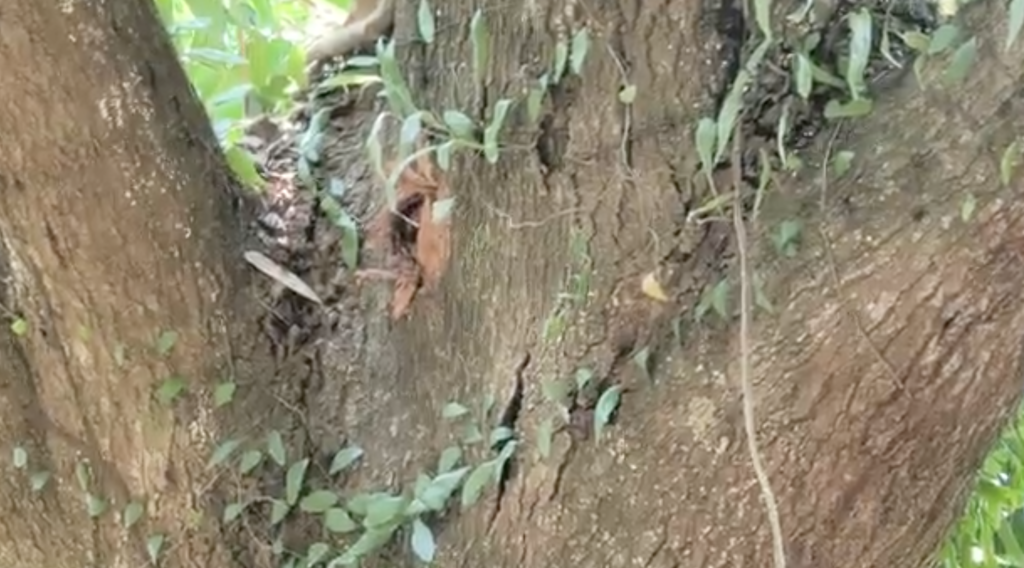
In Sitio Sinugmawan, several bullet marks were also found on a large mango tree in an elevated field. It was not established whether the area had been occupied by military forces or the rebels.
What the Law Requires
The armed conflict between the Philippine Army and the NPA is governed by wartime rules that apply to fighting within a country’s own borders. The Philippines acceded in 1952 to the four Geneva Conventions and ratified their Additional Protocol II in 1986. Common Article 3, shared by all four conventions, requires that civilians not taking part in hostilities be treated humanely and shielded from violence and degrading treatment — not only during a battle but in its immediate aftermath. That protection does not depend on whether a soldier is still in pursuit; it covers anyone who is not actively fighting.
Additional Protocol II, which applies specifically to internal conflicts, goes further. Its Article 13 specifically prohibits any act or threat of violence aimed primarily at terrorizing civilians.
Republic Act 9851, the Philippine law that brought those obligations into domestic criminal law in 2009, makes it a crime to commit “outrages upon personal dignity, in particular humiliating and degrading treatment” in the context of an internal armed conflict. The conduct described by Sinugmawan residents — weapons pointed at unarmed couples, household belongings scrutinized as possible rebel supplies — falls within the range of acts those provisions were designed to prohibit.
Human rights law applies alongside these wartime rules, not in place of them. The International Covenant on Civil and Political Rights, which the Philippines has ratified, protects individuals from arbitrary interference with their home by the state.
Section 2 of Article III of the Philippine Constitution reinforces that, barring unreasonable searches and requiring a warrant based on probable cause. The 1998 Comprehensive Agreement on Respect for Human Rights and International Humanitarian Law — signed between the government and the National Democratic Front of the Philippines, the political umbrella organization that includes the Communist Party of the Philippines and the NPA — commits both sides to protecting civilians in conflict zones.
Human rights groups say that agreement remains a binding standard even though formal peace negotiations have since collapsed. (Rights Report Philippines)