
The Commission on Human Rights issues its most urgent call yet for full reparations to Filipina survivors of Japanese wartime sexual slavery, warning that time is running out. The continued denial of reparations and justice is a violation of international law.
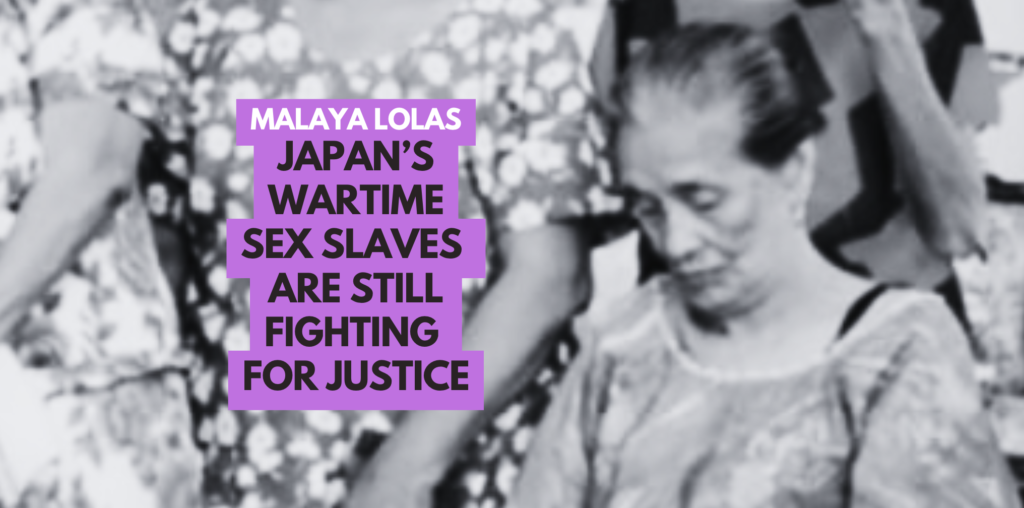
MORE than eight decades after being dragged from their homes and forced into sexual slavery by Japanese Imperial Army soldiers, the aging Filipina survivors known as theMalaya Lolas are still waiting for justice. The Commission on Human Rights of the Philippines wants that to end — now.
In an advisory issued this week, the CHR called on the Philippine government to deliver full reparations, official recognition, a formal apology, and continuing medical and psychosocial support to the surviving members of the group, whose name translates to “Free Grandmothers.” The CHR described justice for the Malaya Lolas as an “urgent human rights obligation,” and stressed that reparations are not a form of charity — they are a legal duty grounded in international law.
The advisory is the most pointed statement yet from the rights body on a case that has dragged on for three decades, outlived dozens of the women at its center, and exposed the failures of both Manila and Tokyo to reckon with one of the most brutal chapters of World War II in Asia.
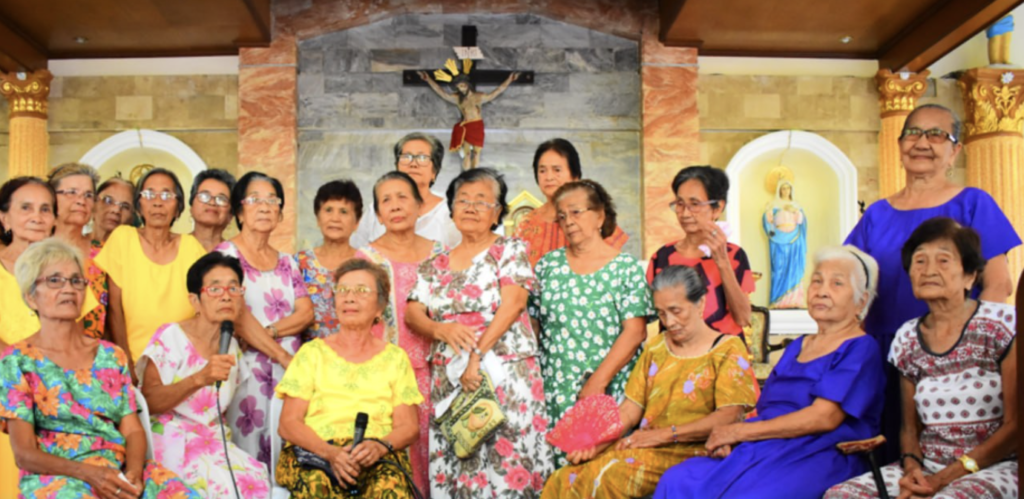
The CHR advisory did not specify how many Malaya Lolas are still alive. The Northern Dispatch listed 18, while this 2023 story says there are 20, “mostly bedridden or in declining health.” The Center for International Law put the number at 21 in 2023.
What Happened in Mapaniqui
As The New York Times reported in 2005, Japanese soldiers stormed through the village of Mapaniqui, in Pampanga, on Nov. 23, 1944, burning down houses and killing the Filipino men they could find. They then herded dozens of women to a red mansion in the adjacent town of San Ildefonso, Bulacan, that had been turned into a garrison, where soldiers took turns violating them — raping a mother and her daughter at the same time in one of the many rooms. The Bahay na Pula, or Red House, is now nothing but a ruin after it was partially demolished in 2016 — and survivors say they cannot look at it without reliving what was done to them there.
The women taken to the Red House were detained there for anywhere from one day to three weeks, subjected to repeated rape, other forms of sexual violence, torture, and inhumane detention conditions. The long-term consequences included physical injuries, post-traumatic stress, and permanent damage to their reproductive health.
The soldiers took more than 100 young girls, women and elderly women to the Red House, where they were systematically raped, according to evidence provided to the Women’s International War Crimes Tribunal on Japan’s Military Sexual Slavery in 2000. Some victims were as young as eight years old at the time.
After the war, most of the survivors kept their ordeal secret for decades, shielding themselves from a society that would have shamed rather than supported them. It was not until the 1990s — inspired by the emergence of similar movements in South Korea — that the women began to organize and speak publicly.
A Landmark Ruling, an Incomplete Response
The Malaya Lolas have spent decades fighting on every front available to them. In 2004, the group brought their case before the Philippine Supreme Court, seeking to compel the state to support their demands for reparations from Japan. The court dismissed the petition in 2010, ruling that only the president — not the courts — could decide to represent the women’s claims against a foreign government. A subsequent appeal was also rejected in 2014.
They also tried Japan’s own courts directly, but those cases were thrown out on the grounds that the group lacked legal standing under international law and that their claims required sponsorship by the Philippine government. It was a trap with no exit.
So the women went to the United Nations.
In November 2019 — chosen deliberately to coincide with the International Day for the Elimination of Violence Against Women — 28 Malaya Lolas filed a complaint with the U.N. Committee on the Elimination of Discrimination Against Women (CEDAW), with support from the Center for International Law and the European Center for Constitutional and Human Rights.
In March 2023, CEDAW found that the Philippines had failed to address the ongoing discrimination and suffering experienced by the survivors. The committee called on Manila to provide full reparations — including material compensation — and to issue an official apology. CEDAW committee member Marion Bethel called it “a symbolic moment of victory for these victims who were previously silenced, ignored, written off and erased from history in the Philippines.”
The ruling was historic. It set a precedent across Asia and beyond, affirming that a state’s failure to act on behalf of survivors of gender-based slavery constitutes an ongoing rights violation — even when that state was not itself responsible for the original crime.
But nearly three years on, the reparations have not come. And by the time CEDAW issued its ruling in March 2023, four of the complainants had died.
The CHR acknowledged that the government has taken some steps — forming an inter-agency technical working group and issuing Joint Memorandum Circular 2025-1, which provides humanitarian aid to survivors. But the commission stressed that these measures must lead to permanent legislative solutions — a comprehensive, rights-based reparations framework that genuinely recognizes the harm done.
Why They’re Still Waiting
The Philippines has long hidden behind a convenient excuse: the 1956 Reparations Agreement between Manila and Tokyo, which the government has argued settled all war-related claims. Lawyers for the Malaya Lolas have pushed back firmly, noting that the treaty’s compensation provisions cover only war veterans, their widows, and orphans — not civilian victims of sexual slavery.
During President Marcos Jr.’s trip to Japan in February 2023, the Department of Foreign Affairs told reporters the Philippine leader would not raise the comfort women issue with his Japanese counterpart, saying the government’s position was that compensation claims were “already settled.”
Japan, for its part, has maintained that it addressed the issue through a combination of expressions of regret and the Asian Women’s Fund, a private 1995 initiative that channeled donations from Japanese citizens to “comfort women” across Asia. But survivors and advocates have criticized the fund as insufficient, noting that it came from private citizens rather than the Japanese government, and that private apologies made through it do not bind any succeeding Japanese government. The Malaya Lolas were excluded from the fund entirely, on the grounds that the women had not been abused for a long enough period.
In the Philippines, proposed legislation to provide domestic reparations has stalled. The Department of Justice said it would ask Congress to pass a law to provide reparations after the CEDAW ruling in 2023, but legislation has not progressed.
Meanwhile, the women are dying. When the Malaya Lolas first brought their case to domestic courts in 2004, 70 members were still alive. By the time CEDAW issued its decision in 2023, only 21 remained.
What the Law Says — and Who’s Responsible
The CHR’s advisory leans heavily on international law to build its case. The obligations are layered and fall on multiple parties.
The Philippines is a signatory to CEDAW, and the committee’s rulings bind states party to the convention. CEDAW found that the Philippines’ repeated dismissal of the Malaya Lolas’ claims constituted a breach of its obligations under the convention, not because Manila committed the original crimes, but because its inaction perpetuated ongoing discrimination against the survivors.
Japan bears direct responsibility for the crimes themselves. The institutionalized system of wartime sexual slavery established by the Imperial Japanese Army constituted crimes against international law as it existed at the time — specifically the 1926 Slavery Convention and the 1933 Convention for the Suppression of the Traffic in Women of Full Age. Beyond those treaties, the crimes also violated what are now recognized as customary prohibitions on crimes against humanity and sexual violence as a weapon of war — principles later codified in the Rome Statute of the International Criminal Court and in U.N. Security Council Resolution 1325 on women, peace, and security.
The international community also carries some responsibility for allowing the matter to remain unresolved. A U.N. expert found as early as 1996 that the abuses suffered by comfort women amounted to crimes against humanity. Yet no binding enforcement mechanism has compelled Japan or the Philippines to act. The CHR’s advisory implicitly calls attention to this gap, urging all relevant stakeholders — not just Manila — to close it.
Justice Delayed
The CHR emphasized that humanitarian assistance initiatives must not be mistaken for the kind of comprehensive, rights-based reparations framework the situation demands — one that meaningfully recognizes the full scope of the harm the survivors endured.
Survivor Maxima dela Cruz, already in her 70s when The New York Times visited Mapaniqui in 2005, spoke about her ordeal with chilling clarity even then: “I will never forget that horrible day.” Most of the women who were alive to say those words two decades ago are now gone. (Rights Report Philippines)