Ma. Salome Ujano’s acquittal is the latest blow to a security framework critics say is built on thin evidence
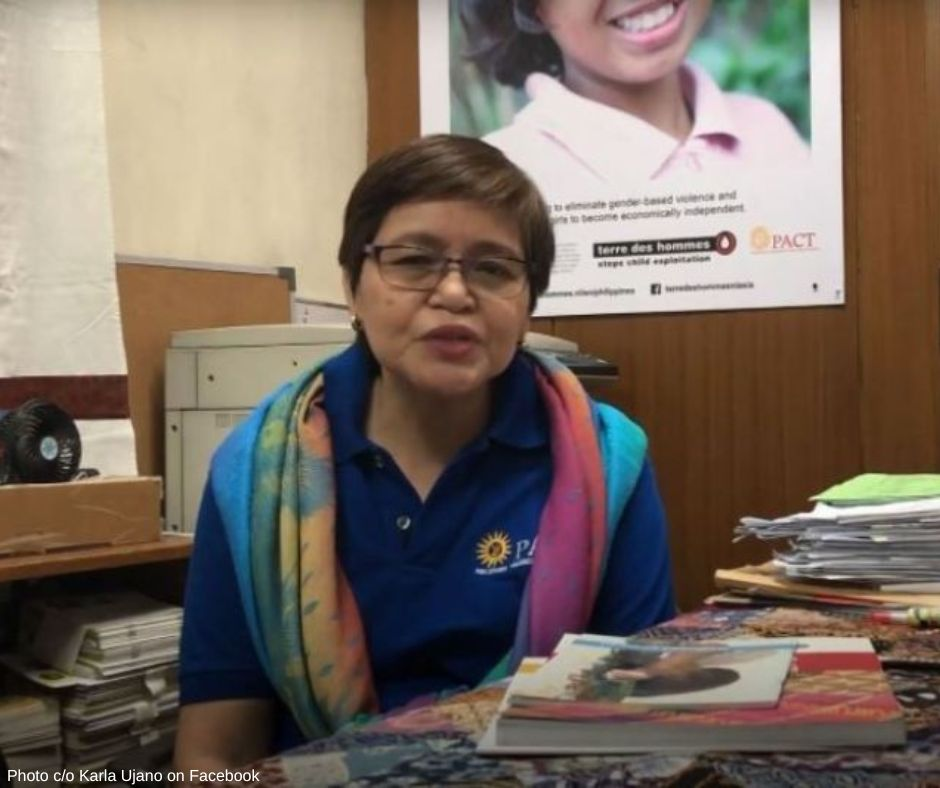
THE Court of Appeals has overturned the rebellion conviction of Ma. Salome Ujano, a women’s and child rights advocate jailed since 2021, and ordered her immediate release.
The ruling is more than a personal vindication. It is the latest in a mounting series of legal defeats exposing cracks in the state’s use of rebellion, terrorism, and firearms charges to silence activists — and raising uncomfortable questions about whether security agencies have been weaponizing the justice system to do what politics alone cannot.
The court ruled on March 23 that prosecutors failed to prove Ujano’s guilt beyond reasonable doubt, finding the evidence fell short of “the required moral certainty” needed to sustain a rebellion conviction. It fully reversed the Taguig Regional Trial Court’s 2024 decision sentencing her to 10 to 17 years in prison.
It did not arrive in a vacuum. From a former senator held for nearly seven years on charges her allies called a political hit job, to a young mother who lost her infant daughter while in pretrial detention, to 34 activists cleared of terrorism charges in a single Bulacan courtroom — the Philippine judiciary has been handing the executive branch a string of embarrassments.
Again and again, cases that security agencies presented as airtight have collapsed the moment they faced real scrutiny. In a country where other branches of government have largely fallen in line behind the national security narrative, the courts have emerged as the last meaningful check on what critics call systematic lawfare against civil society.
As Rights Report Philippines documented just days before the Ujano ruling, courts across the country have rejected terrorism financing and related charges against activists, rural aid workers, labor organizers, and clergy — in most cases because the evidence rested on the unverified testimony of alleged former rebels.
Defending Survivors
Ujano built her career over more than four decades working with survivors of gender-based violence. She helped push for Republic Act 9262, the Anti-Violence Against Women and Their Children Act of 2004 — the first Philippine law to define and penalize physical, sexual, psychological, and economic abuse in intimate relationships. UN Women Philippines recognized her contributions to human rights advocacy in 2023.
At the time of her arrest, she was serving as national coordinator of Philippines Against Child Trafficking. Authorities accused her of involvement in a 2005 Quezon Province military ambush — an incident that, her supporters note, occurred while she was executive director of the Women’s Crisis Center, actively promoting protections against domestic violence.
For her son, Klaro Ujano, the acquittal closed a chapter of prolonged anguish. “The red-tagging, uncertainty, and Mama’s imprisonment despite being innocent were heavy burdens,” he said. “This acquittal restores not only her freedom, but also our faith that truth and justice can still prevail.” Ujano put it simply: “Finally, truth and justice prevailed. Miracles do happen.”
Unraveling in Court
The practice of “red-tagging” — labeling individuals or organizations as communist-linked without due process — has drawn sustained condemnation from rights groups, the UN, and the courts. Human Rights Watch, in its World Report 2024, described red-tagging as having placed activists and critics at serious risk, with government officials repeatedly using media to accuse groups of ties to the communist insurgency.
In May 2024, the Philippine Supreme Court declared the practice a threat to life, liberty, and security, affirming it can be grounds for a writ of amparo, a legal remedy allowing people to seek court protection.
The situation has only worsened since. Just two days before Ujano’s acquittal, the country had been added to the CIVICUS Monitor’s international watchlist for rapid deterioration of civic freedoms — on top of its existing “Repressed” rating, the second worst a country can receive. The watchlist addition cited a pattern of mass arrests at protests, the use of anti-terror laws against critics, and what CIVICUS Monitor Asia researcher Josef Benedict called a “chilling effect for many in the Philippines who seek to speak out and organize.”
UN Special Rapporteur Irene Khan, after an official visit in early 2024, urged President Marcos to denounce red-tagging and disband the National Task Force on Local Communist Armed Conflict, the agency most associated with driving the practice.
Not an Isolated Story
Ujano’s case fits a wider, documented pattern of Philippine courts acquitting activists after prolonged detention. Rights Report Philippines noted that the same apparatus of repression bearing down on prominent cases is also ensnaring hundreds of activists, human rights defenders, and development workers across the country — often with far less international attention.
Former Sen. Leila de Lima, who investigated extrajudicial killings under Duterte’s drug war, was arrested in February 2017 on charges her supporters called fabricated retaliation. She spent nearly seven years behind bars before posting bail in November 2023. The last remaining charge against her was dropped on June 24, 2024.
Activist Reina Mae Nasino paid an even more devastating personal price. Arrested in November 2019 and charged with illegal possession of firearms while pregnant, she gave birth in jail. Her three-month-old daughter, Baby River, died while Nasino remained in custody. A Manila court acquitted her and two co-accused in July 2023, citing insufficient evidence and contradictory witness testimony.
In January 2023, a Quezon City court acquitted 10 defenders from Karapatan, the Rural Missionaries of the Philippines, and Gabriela of perjury charges their supporters said were filed in retaliation for their own human rights work. In September 2024, a Bulacan court acquitted 34 people facing terrorism charges, with the National Union of People’s Lawyers calling the collapse of at least five such cases “not an anomaly but part of a disturbing trend.”
The government, meanwhile, has not slowed down. As Rights Report Philippines reported, the operation to build terrorism financing cases against activists was internally codenamed “Project Exit the Greylist,” a reference to the country’s placement on the Financial Action Task Force’s watch list for weak anti-money laundering controls. The Philippines was removed from the FATF grey list in February 2025, but even after the delisting, new terrorism financing charges kept being filed against civil society groups and activists.
What the courts keep signaling — across jurisdictions, across years — is that thin evidence dressed up in national security language will not hold. For the family and supporters of Nanay Sally, that signal, however long in coming, was everything.
“Thank you to everyone who stood with us through this long and painful journey,” Klaro Ujano said. “This victory belongs to everyone who fought for truth and justice.” (Rights Report Philippines)